
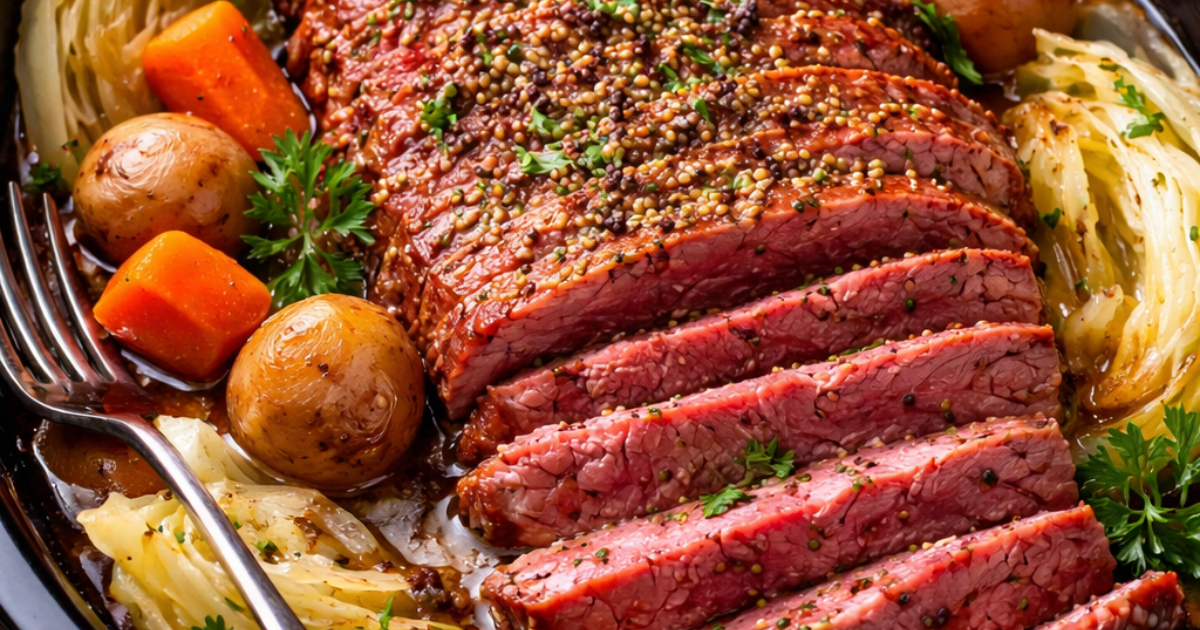

There’s a reason corned beef in the crock pot has become the go-to method for so many home cooks — and it has nothing to do with laziness. It’s pure logic. Corned beef is a tough, collagen-dense cut of meat that begs for long, moist, low-temperature cooking. That description fits a crock pot so perfectly it almost seems designed for it. While the oven and stovetop methods can produce excellent results, they require active monitoring and careful timing. The crock pot lets time do the heavy lifting while you get on with your day.
The result? Deeply flavoured, fork-tender corned beef that practically melts under light pressure — the kind of texture you’d pay good money for at a proper Irish-American diner. This guide covers everything: how to choose the right brisket flat, which spices to use, whether to add beer (yes), what order to layer the vegetables, and how to avoid the most common mistakes that lead to disappointing results. Whether you’re cooking for St. Patrick’s Day, a cosy Sunday supper, or simply because you’ve discovered that corned beef deserves a place in regular dinner rotation, this is the recipe and method to trust.
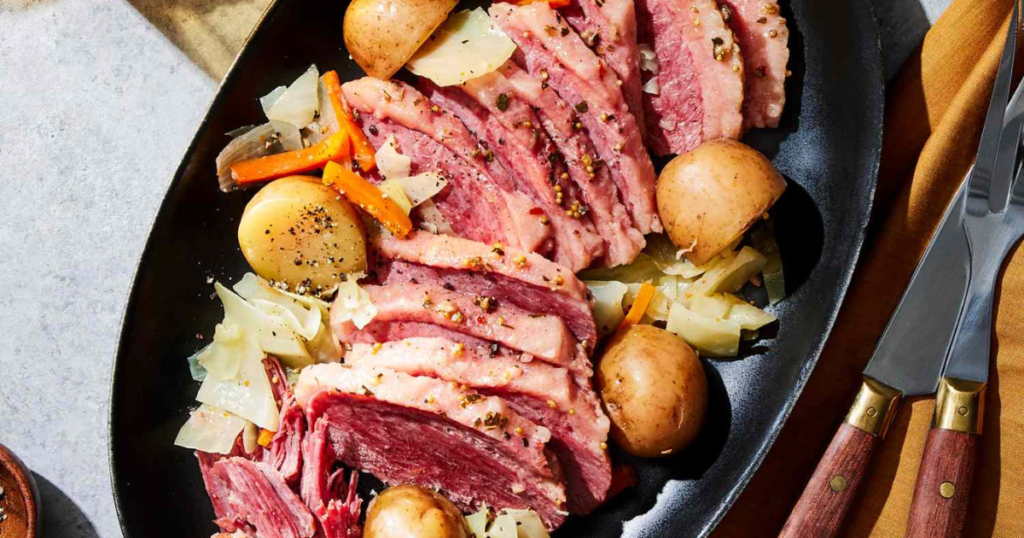
What Is Corned Beef — And Why Does the Crock Pot Suit It So Well?
Corned beef starts as beef brisket — specifically the flat cut — that has been cured in a brine of salt, sugar, and spices (including the cracked peppercorns, coriander seeds, and bay leaves that make up the characteristic “pickling spice” blend) for several days to over a week. The curing process deeply seasons the meat, gives it its distinctive pinkish-red colour (from sodium nitrate in the brine), and begins to break down some of the tough connective tissue.
But curing only does so much. Brisket is a working muscle — it supported the weight of the animal for years — and it’s loaded with collagen and dense muscle fibres that require sustained heat over a long period to fully relax and tenderise. That’s where the crock pot shines. The slow cooker maintains a gentle, consistent temperature (typically between 82–93°C / 180–200°F on the LOW setting) for hours, which is precisely the sweet spot for converting tough collagen into silky gelatin without drying out the lean muscle fibres. The sealed lid traps moisture, essentially creating a self-basting environment that keeps the meat from ever drying out.
Compare that to oven roasting, where temperature management takes more attention, or stovetop simmering, which requires occasional checking and the risk of boiling too vigorously (bad for brisket texture), and the crock pot advantage becomes clear. It’s genuinely the most forgiving and consistent method for cooking corned beef at home.
Choosing the Right Corned Beef Brisket
Most grocery stores sell corned beef as a pre-brined, vacuum-sealed package in the beef section, especially in the weeks leading up to St. Patrick’s Day. Year-round, you may need to visit a proper butcher or order online. Here’s what to look for:
Flat Cut vs. Point Cut
This is the most important decision you’ll make at the butcher counter. Brisket comes in two sections — the flat and the point — and they behave differently in the crock pot.
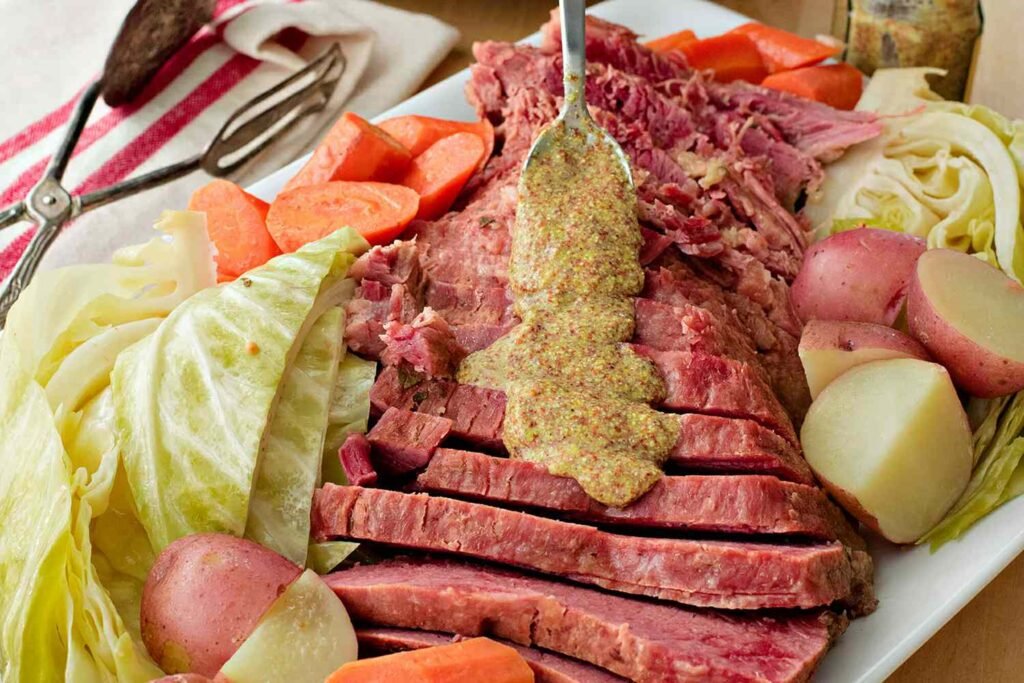
The flat cut (also called the “first cut”) is leaner, more uniform in thickness, and slices cleanly into neat, presentation-ready pieces. It’s the default choice for most supermarket corned beef packages, and it’s what you want if you’re planning to serve sliced corned beef for a dinner plate or sandwiches. Because it’s leaner, it benefits especially from the moisture-retaining environment of the slow cooker.
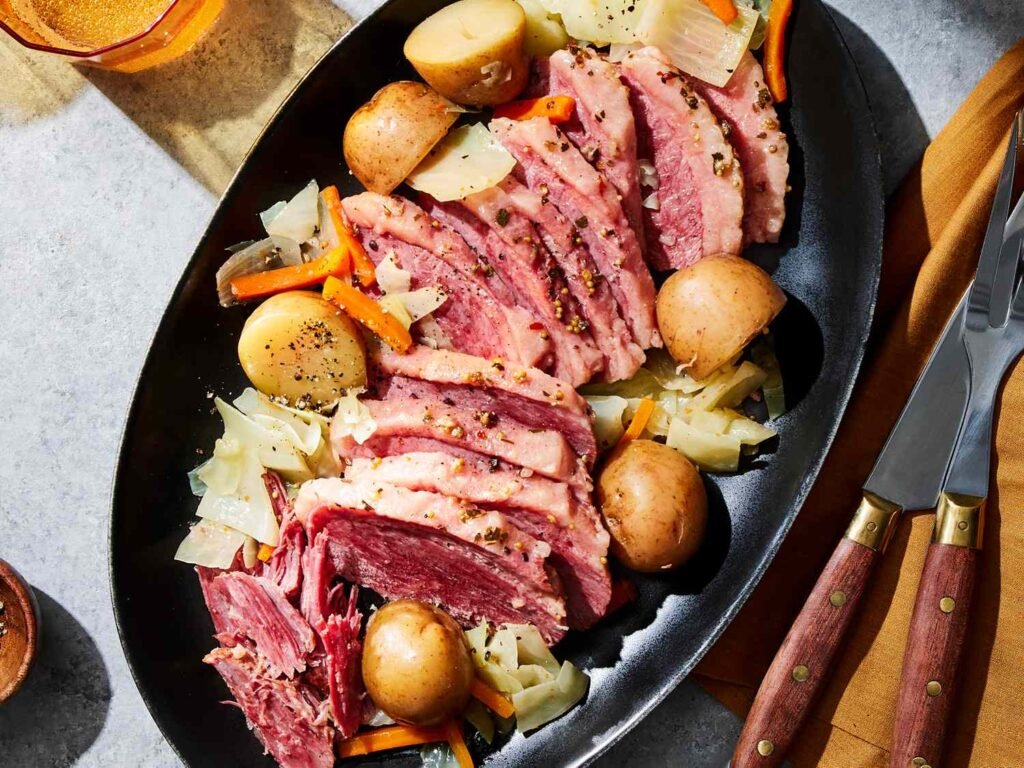
The point cut (also called the “second cut” or “deckle”) is thicker, fattier, and riddled with rich marbling. It doesn’t slice as cleanly, but the flavour is noticeably deeper and the texture is even more lusciously tender. If you’re planning to shred the corned beef for Reuben sandwiches, hash, or tacos, the point cut is exceptional. It’s also slightly more forgiving if you accidentally overcook it.
Size
For a standard 5–6 quart (4.7–5.7L) crock pot, a 1.5–2kg (3.3–4.4 lb) brisket flat is ideal. It will fit comfortably, have enough room for vegetables, and feed 4–6 people generously. If your brisket is larger, it can be trimmed to fit or folded slightly — just make sure the lid sits flush. Avoid forcing a too-large piece of meat into the pot; uneven heat distribution will lead to uneven cooking.
Pre-Packaged vs. Butcher-Brined
Pre-packaged corned beef from the supermarket is perfectly good and absolutely acceptable. Many come with a small spice packet included — more on that in a moment. If you have access to a butcher who brines their own corned beef in-house, that’s worth seeking out; the flavour tends to be more complex and the salt level more nuanced. Some home cooks also make their own corned beef from scratch, brining a raw brisket for 5–7 days — an excellent project if you’re planning ahead.
The Spice Packet Question
Most packaged corned beef comes with a small envelope of pickling spices. Should you use it? Yes — but supplement it. The included packets are generally decent but often on the conservative side in terms of quantity and variety. Using the packet as a base and adding to it produces a noticeably more aromatic result.
A complete spice blend for crock pot corned beef should include: black peppercorns, coriander seeds, yellow mustard seeds, allspice berries, whole cloves, red pepper flakes, bay leaves, and dried dill (optional but lovely). If you have all or most of these on hand, you can skip the packet entirely and use about 1.5–2 tablespoons of mixed whole spices. If not, use the packet and add a few extra peppercorns and a bay leaf or two.
Do not grind the spices. You want them whole so they infuse the cooking liquid gently rather than making it muddy and intensely spiced. They’ll be strained out or left in the pot when you remove the meat.
Ingredients
This recipe serves 4–6 people and includes the classic corned beef and cabbage combination.
The Main Event
- 1.5–2 kg (3.3–4.4 lbs) corned beef brisket flat, with spice packet
- 1 tbsp extra whole black peppercorns
- 2 extra bay leaves
- 1 tsp whole coriander seeds (if not included in spice packet)
- 4 cloves garlic, smashed (not minced)
- 1 medium yellow onion, quartered
- 355ml (12 oz) Guinness or other dark stout beer (see note)
- 500ml (2 cups) low-sodium beef broth
- 1 tbsp brown sugar (optional, but balances the salt beautifully)
- 1 tbsp apple cider vinegar
- 1 tsp Worcestershire sauce
The Vegetables (added later)
- 450g (1 lb) baby potatoes or small Yukon Gold potatoes, halved
- 3 medium carrots, cut into 5cm (2-inch) chunks
- ½ medium head green cabbage, cut into 4–6 wedges through the core (so wedges hold together)
Note on beer: The Guinness is not mandatory, but it adds a malty, slightly bitter depth to the braising liquid that genuinely improves the finished dish. If you’d prefer not to cook with alcohol, replace it with an additional cup of beef broth plus 1 tablespoon of soy sauce and a splash more Worcestershire. The result is still excellent — just slightly less complex.
Step-by-Step Instructions: Corned Beef in the Crock Pot
Step 1: Rinse the Brisket
Remove the corned beef from its packaging and rinse it thoroughly under cold running water. This step is important and often skipped — rinsing removes excess surface brine, which is extremely salty and can make the finished dish unpleasantly oversalted if left on. Pat the brisket dry with paper towels after rinsing. You’re not washing away the cure or the flavour that’s been absorbed deep into the meat; you’re just removing the excess surface salt.
Step 2: Optional — Sear the Brisket
This step is technically optional, but it’s one of the most worthwhile five minutes you can spend on this recipe. Heat a tablespoon of oil in a large skillet over high heat until shimmering. Pat the brisket completely dry (again) and sear it fat-side down for 3–4 minutes until a deep mahogany crust forms, then flip and sear the other side for 2–3 minutes. You’re not cooking the meat — you’re building flavour through the Maillard reaction, creating hundreds of savoury flavour compounds on the surface that will dissolve into the braising liquid and infuse the entire dish.
If you’re short on time or simply not interested, skip the sear and proceed directly. The dish will still be excellent — you’ll just be leaving some flavour on the table.
Step 3: Layer the Aromatics
Place the quartered onion and smashed garlic cloves in the bottom of the crock pot in a single layer. This creates a natural rack that lifts the brisket slightly off the bottom of the insert, allowing the braising liquid to circulate underneath and promoting more even cooking.
Step 4: Add the Brisket
Place the corned beef brisket on top of the onion and garlic, fat-side up. Positioning it fat-side up is intentional — as the fat renders during the long cook, it bastes the meat below it continuously, keeping the leaner flat cut moist and flavourful throughout.
Step 5: Add Spices and Liquid
Sprinkle the spice packet contents (and any additional whole spices) over and around the brisket. Add the smashed garlic, bay leaves, and extra peppercorns. Pour the Guinness and beef broth around the sides of the meat — not directly over it, which would wash the spices off the surface. Add the brown sugar, apple cider vinegar, and Worcestershire sauce directly to the liquid and give it a gentle stir. The liquid should come about halfway up the sides of the brisket; you don’t need it fully submerged.
Step 6: Add the Potatoes and Carrots
Nestle the halved baby potatoes and carrot chunks around and alongside the brisket. Root vegetables go in at the beginning because they take the longest to cook and benefit from the full duration in the flavourful braising liquid. Tuck them in as best you can — they don’t all need to be submerged.
Step 7: Cook Low and Slow
Put the lid on, set the crock pot to LOW, and walk away. Cook on LOW for 9–10 hours. This is the strongly recommended setting — the extended, gentle cook produces consistently better texture than the HIGH setting. If you genuinely cannot fit 9–10 hours, cook on HIGH for 4.5–5 hours, but understand the texture will be slightly less yielding and the flavour slightly less developed.
Resist the urge to lift the lid during cooking. Every time you remove the lid, steam escapes and you add 20–30 minutes to the cook time. Trust the process.
Step 8: Add the Cabbage
About 1.5–2 hours before you plan to serve, open the lid and add the cabbage wedges on top of the brisket and vegetables, pressing them down gently so they’re partially submerged in the braising liquid. Replace the lid and continue cooking. Cabbage cooks relatively quickly and goes in late deliberately — add it at the beginning and it turns mushy and loses its character entirely. Added in the last stretch, it becomes tender, deeply flavoured, and still has enough structure to hold its wedge shape on the plate.
Step 9: Rest and Slice
When the cook time is up, carefully transfer the corned beef to a cutting board and tent loosely with foil. Let it rest for at least 15 minutes before slicing — this allows the internal juices to redistribute and makes the meat easier to slice cleanly. Locate the grain direction (the lines of muscle fibres running through the meat) and slice firmly against it, about 6–8mm (¼ inch) thick. Slicing with the grain produces stringy, chewy results; slicing against it gives you clean, tender pieces.
Serve the vegetables alongside with a ladle of the strained braising liquid spooned generously over everything. The braising liquid is extraordinarily flavourful — don’t discard it.
Making the Most of the Braising Liquid
After hours of cooking, the braising liquid at the bottom of your crock pot is essentially liquid gold — rich, beefy, spiced, and loaded with the flavour of the corned beef and vegetables. Don’t waste it. Here are three things to do with it:
Serve it as a jus. Strain the liquid through a fine mesh sieve and ladle it over the sliced beef and vegetables at the table. It adds moisture, flavour, and that glossy, restaurant-style finish.
Use it to cook egg noodles or mashed potatoes. A cup of the braising liquid stirred into mashed potatoes in place of some of the butter and cream adds incredible depth. Similarly, cooking egg noodles directly in the strained braising liquid gives them exceptional flavour.
Save it for corned beef hash the next day. The braising liquid makes a brilliant base for loosening and flavouring leftover hash in the skillet. Store it in a jar in the fridge for up to 5 days or freeze it.
Timing Guide: Planning Your Cook
One of the biggest advantages of the crock pot is how flexible the timing is. Here’s how to plan your cook for different scenarios:
For a 6:00 PM dinner: Start the crock pot at 7:00–8:00 AM on LOW. Add the cabbage at 4:00–4:30 PM. Rest and slice from 5:45 PM. Dinner is on time.
For a midday Sunday lunch: Start the crock pot at 10:00 PM the night before on LOW (the crock pot switches to WARM automatically on most models when the cook time is complete, or you can simply start it slightly later). A 9–10 hour cook finishing at 7:00–8:00 AM gives you beautifully cooked beef that can rest in the pot on WARM until ready to serve. Add the cabbage 1.5–2 hours before serving.
Working from home or flexible schedule: Start on LOW first thing in the morning. The corned beef is very forgiving — it holds well on WARM for up to 2 hours after the cook time is complete without deteriorating.
Common Mistakes to Avoid
Skipping the rinse. The surface brine on pre-packaged corned beef is intensely salty. Skip the rinse and you risk a finished dish that’s borderline inedible. Thirty seconds under cold water makes a real difference.
Cooking on HIGH when you don’t need to. The LOW setting genuinely produces better corned beef. HIGH works in a pinch, but the texture suffers — the muscle fibres tighten more aggressively at higher temperatures before the collagen has time to fully break down. If your schedule allows, always choose LOW.
Adding the cabbage too early. Cabbage added at the start of a 9-hour cook will be an unrecognisable, grey-green mush by the time you serve it. It needs only 1.5–2 hours. Set a timer and add it late.
Slicing with the grain. This is one of the most common reasons home cooks end up with stringy, chewy corned beef even when it’s been cooked perfectly. Take a moment to identify the direction of the muscle fibres and cut perpendicular to them. The difference is dramatic.
Not resting the meat. Cutting into the brisket immediately after removing it from the cooker causes the juices — which have been driven to the centre of the meat by the heat — to pour out onto the cutting board rather than redistributing through the meat. A 15-minute rest is not optional if you want juicy results.
Using too much liquid. The crock pot traps all the moisture it generates — very little evaporates compared to stovetop or oven cooking. You don’t need the brisket fully submerged. Halfway up the sides is plenty. Too much liquid dilutes the flavour of both the meat and the vegetables.
Creative Ways to Use Leftover Crock Pot Corned Beef
Leftover corned beef might actually be better than the original serving. The flavour deepens overnight and the cold, sliceable texture opens up a world of next-day possibilities.
Classic Reuben Sandwich. The gold standard for leftover corned beef. Pile thinly sliced corned beef onto rye bread with sauerkraut, Swiss cheese, and Thousand Island or Russian dressing. Butter the outside of the bread and griddle until golden and the cheese is molten. Non-negotiable alongside a dill pickle spear.
Corned Beef Hash. Dice leftover corned beef and potatoes (or use fresh diced potato), fry in a cast iron skillet with diced onion and a little butter until everything is crispy and browned, then top with a fried or poached egg. A classic American diner breakfast that makes Sunday morning something to genuinely look forward to.
Corned Beef Tacos. Shred leftover corned beef and warm it in a hot skillet. Serve in small corn tortillas with quick pickled cabbage, a smear of spicy mustard or horseradish crema, and sliced jalapeños. The salty, spiced beef is a natural in a taco format.
Corned Beef Grilled Cheese. Simpler than a full Reuben — sliced corned beef and sharp cheddar between thick slices of sourdough, buttered and griddled until golden. Add a smear of whole-grain mustard for brightness.
Corned Beef and Potato Soup. Dice leftover corned beef and potatoes, simmer in chicken or beef broth with sautéed leeks and a splash of cream, and finish with fresh chives. Hearty, comforting, and a genuinely excellent use of every last piece.
Serving Suggestions and Accompaniments
The classic corned beef and cabbage plate is hard to improve upon for a reason — it’s balanced, satisfying, and the brassiness of the cabbage cuts the richness of the beef perfectly. That said, there are a few accompaniments worth adding to the table:
Whole-grain or Dijon mustard is the classic condiment alongside corned beef, and it earns its place. The sharpness and acidity are a perfect foil to the salty, fatty meat.
Horseradish cream — prepared horseradish stirred into sour cream with a squeeze of lemon — is an exceptional alternative or addition to mustard, especially with the leaner flat cut.
Irish soda bread alongside a corned beef and cabbage dinner is traditional and practical — the dense, slightly tangy bread is ideal for mopping up braising liquid.
A cold Guinness or Irish stout is, of course, the beverage pairing that requires no argument.
Corned Beef in Crock Pot FAQs
How long does corned beef take in the crock pot?
On the LOW setting, corned beef in the crock pot takes 9–10 hours for a 1.5–2kg (3.3–4.4 lb) flat cut brisket. On HIGH, the same piece of meat takes approximately 4.5–5 hours. LOW is strongly recommended for the best texture and flavour. Larger pieces (2.5kg / 5.5 lbs and above) may need an additional hour on either setting.
Do I need to submerge the corned beef in liquid?
No — and this is a common misconception. The corned beef only needs to be partially submerged, about halfway up its sides. The crock pot traps all steam and moisture inside, creating a self-basting environment. Fully submerging it actually dilutes the flavour of both the meat and the vegetables by adding unnecessary liquid volume. Halfway is the sweet spot.
Can I cook corned beef in the crock pot overnight?
Yes, and many people do exactly this for a ready-by-morning result. A 9–10 hour cook on LOW overnight works well. Most modern crock pots switch to a WARM setting automatically once the programmed cook time ends, which keeps the meat at a safe holding temperature without overcooking it. If your crock pot doesn’t have an automatic WARM function, consider a model that does for overnight cooking, or time the cook to finish shortly before you wake up.
Why is my crock pot corned beef tough?
Tough corned beef from the crock pot is almost always the result of insufficient cooking time rather than overcooking. Unlike lean cuts that can dry out, brisket becomes more tender the longer it cooks (up to a point). If your corned beef is tough after 7–8 hours on LOW, it simply needs more time. Add another 1–2 hours. Check doneness by trying to pierce the thickest part with a fork — it should slide in with minimal resistance and the meat should begin to separate along its grain with light pressure.
Can I cook frozen corned beef in the crock pot?
It’s not recommended. Cooking frozen meat in a slow cooker means the outer layers spend too long at temperatures in the bacterial danger zone (4–60°C / 40–140°F) before the interior reaches a safe temperature. Always thaw corned beef completely in the refrigerator (allow 24–48 hours for a 1.5–2kg piece) before placing it in the crock pot.
What if my corned beef is too salty after cooking?
If the finished dish tastes overly salty, there are a few remedies. Serving it alongside unsalted starchy sides (plain boiled or mashed potatoes with no added salt) helps balance the perception of saltiness. For leftovers, briefly rinsing the sliced meat under warm water before using it in hash or sandwiches can help. Going forward, make sure to rinse the raw brisket thoroughly before cooking and use low-sodium beef broth. Some cooks also soak the rinsed brisket in cold water for 30–60 minutes before cooking, which pulls out additional surface salt.
Is corned beef the same as brisket?
Not exactly — corned beef is made from brisket, but they’re not interchangeable terms. Brisket is the raw cut of beef from the lower chest of the animal. Corned beef is brisket that has been cured (or “corned”) in a seasoned salt brine for several days. The curing process changes the colour, flavour, and texture of the meat significantly. You can cook a raw brisket in the crock pot using a similar method, but the result will taste like pot roast rather than the distinctive, deeply seasoned flavour of corned beef.
Recipe at a Glance
Prep time: 15 minutes | Cook time: 9–10 hours on LOW (or 4.5–5 hours on HIGH) | Total time: ~10 hours | Serves: 4–6 | Difficulty: Easy
Crock pot corned beef is one of those recipes that rewards patience with almost zero effort. You spend 15 minutes on prep, walk away for most of the day, and return to a kitchen filled with an aroma that makes everyone wander in asking what’s for dinner. The long, slow cook does all the work — you just need to plan ahead and let it happen.
Whether this is your first time making corned beef at home or you’ve been doing it on the stovetop for years and are curious whether the crock pot really is better (it is), give this method a try. The fall-apart tenderness, the spiced braising liquid, the cabbage and carrots that have absorbed every bit of that flavour over hours of cooking — it’s a complete meal that costs far less and tastes far better than most people expect.
Made this recipe? We’d love to hear how it turned out — drop a comment below and let us know if you used the Guinness, whether you went flat or point cut, and what you did with the leftovers. The Reuben sandwich debate alone is worth the conversation.