
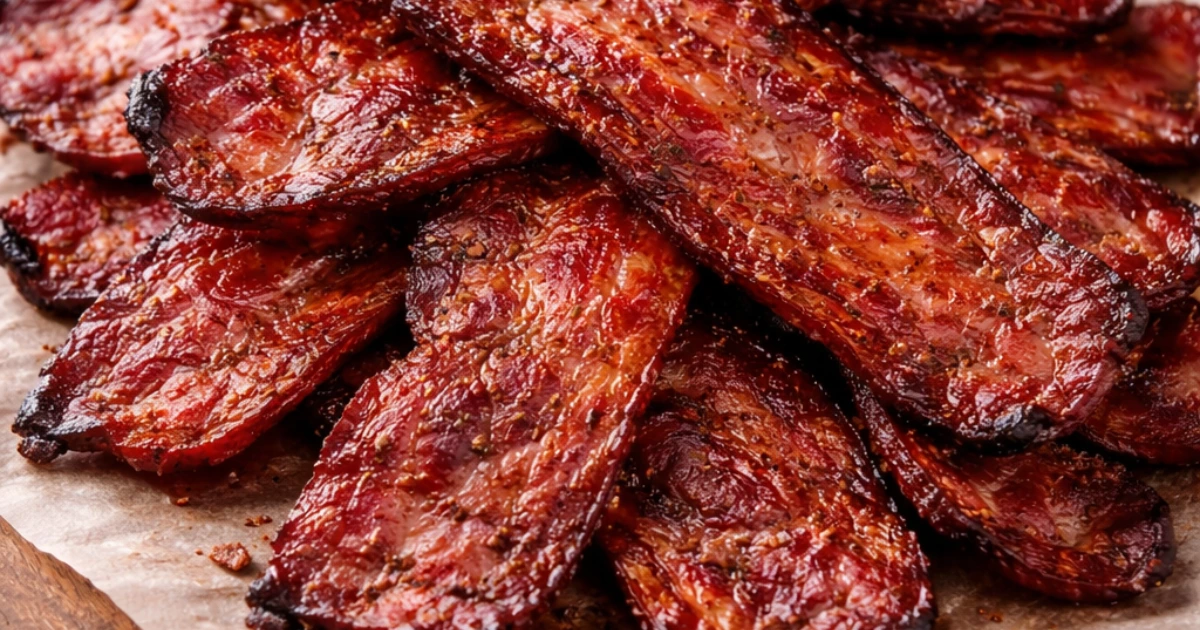

Bacon is one of those foods that inspires near-religious devotion — the smell alone is enough to pull someone out of a deep sleep and into the kitchen. For most people in the Western world, bacon means one thing: cured, smoked strips of pork belly. But for a significant and growing number of people — whether for religious, dietary, cultural, or purely flavour-driven reasons — pork isn’t on the menu. And for years, that meant missing out on one of the great breakfast table pleasures.
Enter beef bacon. Not a compromise. Not a consolation prize. Not a pale imitation of the original. When made well — properly cured, correctly cut, and cooked with the same respect you’d give any quality piece of beef — beef bacon is a deeply satisfying, powerfully flavoured product that stands entirely on its own merits. It’s different from pork bacon, yes. Different in texture, different in fat distribution, different in the particular character of its smokiness. But different doesn’t mean lesser. In many ways, for many palates, it’s better.
This guide covers everything: what beef bacon actually is, where it comes from on the animal, how it compares to pork bacon, where to buy it, how to cook it properly, how to cure your own at home, and a handful of recipes that show it off at its best. Whether you’re new to beef bacon or you’ve been eating it for years and want to get more out of it, this is the resource you’ve been looking for.
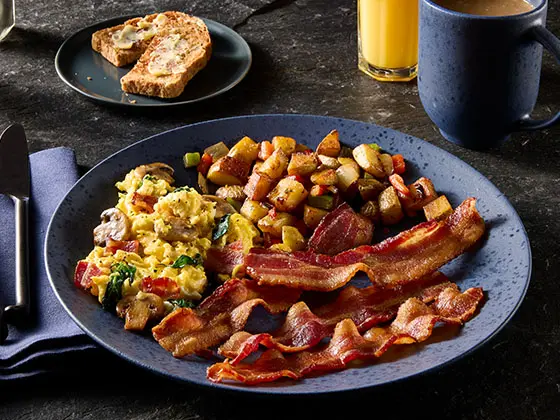
What Is Beef Bacon?
Beef bacon is exactly what it sounds like: bacon made from beef rather than pork. Like its porcine counterpart, it’s produced by curing a fatty cut of beef in a mixture of salt, sugar, and spices — and usually smoking it — before slicing it thinly for cooking. The curing and smoking process gives it the characteristic salty, savoury, slightly sweet flavour profile we associate with bacon, while the beef itself contributes a richer, more intensely meaty depth that pork belly doesn’t quite have.
It’s not a new invention. Cured beef products have existed across many cultures for centuries — from pastrami and corned beef in Jewish-American delis to various forms of dried and cured beef throughout the Middle East, Central Asia, and Africa. Beef bacon as a distinct product closely modelled on pork bacon, however, has grown significantly in visibility and availability over the past two decades, driven in large part by demand from halal and kosher consumers, as well as from people who simply prefer beef or want to reduce their pork consumption.
What Part of the Cow Does Beef Bacon Come From?
This is where beef bacon gets interesting — and where it diverges from pork bacon in ways that affect both flavour and texture. Pork bacon comes almost exclusively from pork belly, a cut that is renowned for its extraordinary fat-to-meat ratio and the way that fat melts and crisps so readily when cooked.
Beef bacon can come from several different cuts, and the source makes a significant difference in the finished product:
Beef belly (navel/plate). The most direct anatomical equivalent to pork belly, and the most common source for commercially produced beef bacon. The beef navel sits in the lower abdominal area, below the ribs and above the flank. It’s a well-marbled, fatty cut with a layered fat-and-meat structure that resembles pork belly more closely than any other beef cut. Beef belly bacon has the most familiar bacon-like appearance and the best fat rendering during cooking. This is what most store-bought beef bacon is made from.
Beef brisket. Brisket-cut beef bacon is leaner and denser than belly bacon, with a more assertive beef flavour and a chewier texture when cooked. It crisps less readily because of its lower fat content, but it has an intensely meaty character that many people prefer. Brisket beef bacon is popular in some Middle Eastern and Israeli food traditions.
Beef chuck. Less common, but used by some producers. Chuck bacon tends to be moderately fatty with a robust flavour. The intramuscular fat of the chuck means it can render reasonably well, though it won’t achieve the same crispiness as belly-cut bacon.
Short plate. Sometimes used interchangeably with navel/belly in commercial production. The short plate is positioned just below the rib section and has good fat content and marbling. Plate-cut beef bacon behaves similarly to belly bacon in terms of cooking.
For home curers and artisan producers, the beef belly (navel) is the strongly recommended cut if you want the closest experience to traditional bacon. If you prefer a leaner, more intensely beefy product, brisket-cut is worth seeking out.
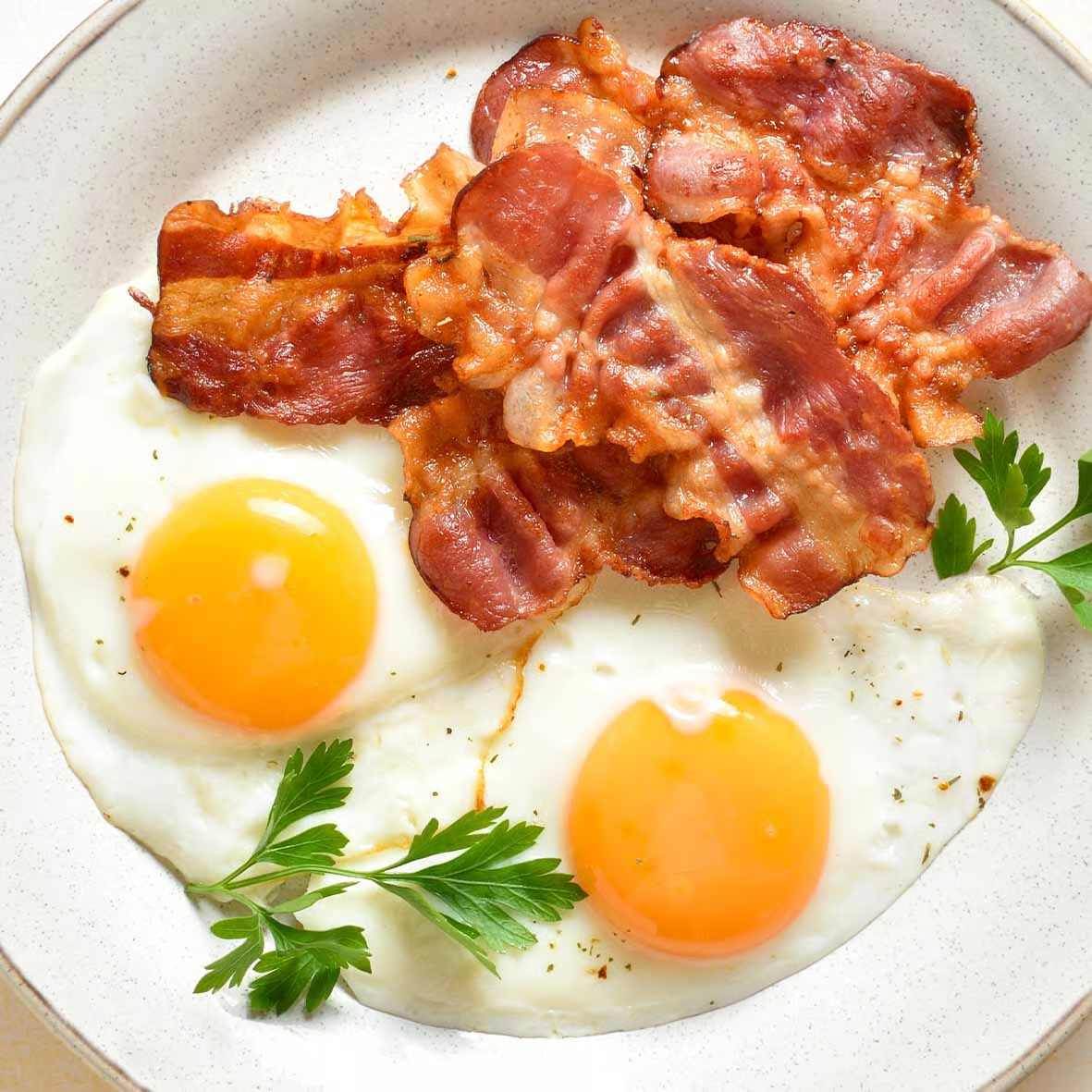
Beef Bacon vs. Pork Bacon: An Honest Comparison
If you’re coming to beef bacon with expectations calibrated entirely by years of pork bacon, it’s worth resetting them — not downward, just sideways. These are related but distinct products, and appreciating beef bacon fully means understanding what it is rather than measuring it only against what it isn’t.
Flavour
Pork bacon has a mild, sweet-savoury base flavour that makes it extraordinarily versatile — it complements eggs, cheese, tomatoes, maple syrup, and a dozen other things without ever overpowering them. Beef bacon is bolder. The underlying beef flavour is more present and assertive, and the cured and smoked notes sit on top of a richer, meatier foundation. It’s more like eating something that tastes unmistakably of beef that has been beautifully cured, rather than a neutral vehicle for smoke and salt. For people who love bold, savoury flavours, this is a feature, not a bug.
Texture
Pork belly fat is uniquely soft and renders at relatively low temperatures, which is why pork bacon can achieve that perfect combination of crispy edges and melting fat so reliably. Beef fat is slightly firmer and has a higher melting point, which means beef bacon takes a little longer to render and crisp and benefits from slightly different cooking technique (more on that below). The meat portion of beef bacon tends to be chewier than pork bacon — closer in texture to a very thin slice of steak than to the snappable crispiness of well-cooked pork bacon. Many people find this chew deeply satisfying rather than off-putting.
Fat Distribution
Well-made belly-cut beef bacon has a layered fat and meat structure similar to pork bacon, though the fat-to-meat ratio is typically leaner. Brisket-cut beef bacon is considerably leaner still, with fat primarily distributed as a thinner cap rather than in distinct streaky layers. If fat rendering and crispiness are your priority, belly-cut is the clear choice.
Nutrition
Beef bacon and pork bacon are broadly similar nutritionally — both are cured meats with meaningful fat and sodium content, and both should be enjoyed as part of a balanced diet rather than as a daily staple. Beef bacon, particularly brisket-cut, tends to be slightly higher in protein and, depending on the specific product and cut, can be moderately lower in total fat than pork bacon. Neither is a health food, but both can be enjoyed mindfully as an occasional treat or a flavour-building ingredient.
Religious and Dietary Suitability
This is one of the primary reasons beef bacon exists as a product and has such devoted fans. Pork is prohibited in both halal (Islamic dietary law) and kosher (Jewish dietary law) food traditions, meaning observant Muslims and Jews have historically had no access to bacon. Beef bacon, when certified halal or kosher by an appropriate supervising authority, fills that gap entirely. It’s also suitable for people who follow pork-free diets for personal, cultural, or health reasons. Always check the certification on the packaging if religious compliance is important to you — not all beef bacon products carry halal or kosher certification.
Where to Buy Beef Bacon
Availability has improved dramatically over the past decade, and beef bacon is no longer the niche specialty item it once was. Here’s where to look:
Halal butchers and grocery stores. If you have a halal butcher or Islamic grocery store in your area, this is almost certainly your best local source. Halal butchers frequently carry beef bacon — often house-cured or sourced from local halal producers — and the quality tends to be excellent. It’s worth asking whether they cure their own or source it from a specific producer, as quality varies.
Kosher delis and Jewish grocery stores. Kosher beef bacon has a long tradition in Jewish-American deli culture and is widely available at kosher delis and specialty stores. Some kosher beef bacon products — particularly brisket-cut — are exceptional and have cult followings.
Specialty and artisan butchers. As nose-to-tail eating and artisan charcuterie have grown in popularity, more craft butchers and specialty meat shops have begun carrying or producing their own beef bacon. Call ahead before making a trip.
Online retailers. A growing number of specialty meat online retailers carry beef bacon with nationwide (and in some cases international) shipping in vacuum-sealed, temperature-controlled packaging. This is particularly useful if you’re in an area without strong local options. Look for producers who specify the cut (belly vs. brisket) and curing method.
Some mainstream supermarkets. Availability in conventional supermarkets varies significantly by region and store. In areas with large Muslim or Jewish communities, major grocery chains often stock at least one brand of halal or kosher beef bacon. Worth checking the specialty or international foods section as well as the regular bacon aisle.
Farmers’ markets. Local farms that raise cattle sometimes produce their own cured beef products, including beef bacon. This is often the highest-quality option and allows you to ask directly about the breed, raising practices, and curing method.
How to Cook Beef Bacon: Four Methods
Beef bacon is versatile and responds well to several cooking methods, but it rewards slightly more attention than pork bacon because of the higher fat melting point and denser muscle texture. The goal in every case is the same: rendered fat, caramelised edges, and a cooked-through interior that retains some chew without being tough.
Pan Frying (Best for Everyday Cooking)
Pan frying gives you the most control over the cooking process and produces excellent results with minimal equipment. Use a heavy skillet — cast iron is ideal — over medium heat. Do not start on high heat; beef bacon’s fat needs time to render gradually, and blasting it with high heat immediately can result in a browned exterior surrounding fat that hasn’t fully rendered.
Lay the strips in a single layer without overlapping. Cook for 3–4 minutes on the first side without moving them, until the fat begins to look translucent and the bottom edges start to colour. Flip and cook for another 2–3 minutes on the second side. For crispier results, press the bacon gently with a spatula or bacon press during the last minute of cooking. Transfer to a paper towel-lined plate and allow to drain for a minute before serving — beef fat is particularly flavourful and you want the excess to drain rather than pool on the plate.
The rendered beef fat left in the pan is extraordinarily useful. Don’t discard it. It’s excellent for frying eggs, sautéeing vegetables, or making roasted potatoes with an incredible depth of flavour.
Oven Baking (Best for Large Batches)
If you’re cooking for a crowd or want perfectly flat, evenly cooked strips without standing over a hot pan, the oven method is ideal. Preheat to 200°C (400°F). Line a rimmed baking sheet with foil and place a wire rack on top. Lay the beef bacon strips in a single layer on the rack — elevating the bacon allows the fat to drip away rather than the bacon sitting in it, which promotes crisping.
Bake for 15–20 minutes, checking at the 12-minute mark. Beef bacon typically needs a few minutes longer than pork bacon in the oven because of the firmer fat. Baking time will vary depending on thickness — thin-cut belly bacon may be done in 12–14 minutes, while thicker-cut or brisket bacon may need the full 20. Remove when the edges are deeply browned and the fat looks rendered and slightly crisp. Allow to cool on the rack for 2–3 minutes — it will continue to crisp slightly as the fat sets.
Grilling (Best for Smoky, Charred Flavour)
Beef bacon on the grill is something special — the high, direct heat amplifies the smokiness of the cure and adds a charred, slightly caramelised edge that pairs spectacularly with the beefy flavour. Use medium-high direct heat and cook the strips for 2–3 minutes per side, watching carefully as the rendered fat can cause flare-ups. Have a section of indirect heat available to move strips to if needed. Grilled beef bacon is outstanding in burgers, as a standalone side to grilled meats, or chopped and added to a charred corn salad.
Air Fryer (Best for Crispy Results with Minimal Fat)
The air fryer produces remarkably crispy beef bacon with very little hands-on effort. Arrange strips in the air fryer basket in a single layer — work in batches if needed. Cook at 190°C (375°F) for 8–10 minutes, flipping once halfway through. The circulating hot air renders the fat efficiently and produces a satisfying crispness, particularly around the edges. Empty the drip tray of rendered fat partway through if cooking multiple batches.
How to Make Homemade Beef Bacon from Scratch
Curing your own beef bacon at home is a genuinely rewarding project — the results are customisable, deeply satisfying, and noticeably better than most store-bought options. It requires planning (the cure takes 5–7 days) but the active work is minimal. Here’s a complete method using beef navel (belly) for the most pork-bacon-like result.
What You’ll Need
- 1.5–2 kg (3.3–4.4 lbs) beef navel (belly), skin removed if present, trimmed to a roughly even thickness
- A large zip-lock bag or non-reactive container with a lid
- A smoker or oven for the finishing step
- A sharp slicing knife or meat slicer
The Dry Cure Blend
- 30g (2 tbsp) kosher salt
- 15g (1 tbsp) brown sugar (or a mix of brown sugar and maple sugar for complexity)
- 5g (1 tsp) black pepper, coarsely cracked
- 3g (½ tsp) smoked paprika
- 2g (¼ tsp) garlic powder
- 2g (¼ tsp) onion powder
- 2.5g (½ tsp) pink curing salt — Prague Powder #1 (sodium nitrite). This is essential for food safety in a cured product and for that characteristic bacon colour. Do not substitute or omit.
Optional Flavour Additions
This is where home curing gets fun. Consider adding 1 tablespoon of cracked coriander seed for a deli-style note, 1 teaspoon of dried thyme for an herbal edge, 2 tablespoons of soy sauce added to the cure for extra umami, or 2 tablespoons of bourbon or whiskey rubbed into the meat before applying the dry cure for a subtly spirited finish.
The Curing Process
Day 1: Combine all dry cure ingredients and mix thoroughly. Place the beef navel in a large zip-lock bag or non-reactive container. Apply the cure evenly to all surfaces of the meat, pressing it in firmly. Seal the bag (pressing out as much air as possible) or cover the container and refrigerate.
Days 2–6: Once a day, flip the meat over in its bag or container and redistribute any liquid that has accumulated (this is the brine drawn out by the salt — it’s normal and good). Return to the refrigerator. The meat will firm up noticeably over the curing period as moisture is drawn out and the cure penetrates deeper.
Day 5–7 (cure complete): The cure is complete when the meat feels firm throughout and the interior colour, checked by cutting a small piece from the end, has changed from raw red to a uniform pinkish-red — similar in colour to cured deli meat. Rinse the cured beef belly thoroughly under cold water to remove the surface cure, then pat completely dry with paper towels.
The Equalization Rest
Place the rinsed and dried cured belly on a wire rack set over a baking sheet and refrigerate uncovered for 24 hours. This step — called equalization or pellicle formation — allows the surface to dry out and develop a slightly tacky surface layer that smoke adheres to far better than wet meat. It also allows the cure to distribute more evenly through the interior. Don’t skip it.
Smoking or Oven-Finishing
Smoker method (recommended): Cold smoke or hot smoke the cured belly at 85–95°C (185–200°F) with your choice of wood chips — hickory and cherry are excellent with beef, as is applewood for something milder and sweeter — until the internal temperature reaches 65–68°C (150–155°F). This typically takes 2–3 hours depending on thickness and smoker temperature. The result is a fully smoked, ready-to-slice beef bacon with gorgeous colour and deep smoky flavour.
Oven method (no smoker needed): If you don’t have a smoker, preheat the oven to 95°C (200°F). Place the cured belly on a wire rack over a foil-lined baking sheet. Roast until the internal temperature reaches 65–68°C (150–155°F), about 2–2.5 hours. The result won’t have the same smoky depth, but it will still be genuinely excellent cured beef bacon. You can add a small amount of liquid smoke to the cure to partially compensate.
Chilling and Slicing
Allow the finished beef bacon to cool completely, then wrap tightly in cling film and refrigerate for at least 4 hours — overnight is better. Cold meat slices dramatically more cleanly than warm. Using a sharp knife or electric slicer, cut to your preferred thickness: around 3–4mm for everyday pan-fried strips, or up to 6mm for thick-cut rashers that stand up to grilling or oven cooking.
Homemade beef bacon keeps refrigerated for up to 2 weeks or frozen for up to 3 months. Slice as needed.
Five Ways to Cook and Eat Beef Bacon
1. The Classic Beef Bacon Breakfast Plate
Pan-fried beef bacon strips alongside fried or scrambled eggs, roasted vine tomatoes, and toasted sourdough. The bold, savoury character of beef bacon holds its own beautifully against runny yolk and the acidity of tomato. Add a smear of whole-grain mustard on the toast for an extra edge. This is the obvious starting point and it’s obvious for good reason.
2. Beef Bacon Cheeseburger
Crispy beef bacon strips stacked on a smash burger patty with sharp cheddar, burger sauce, pickles, and a soft brioche bun. Using beef bacon on a beef burger doubles down on the beef flavour in a way that’s completely over the top and absolutely worth it. The smokiness of the bacon weaves through the charred beef patty in a way that pork bacon, with its milder flavour profile, can’t quite replicate. Cook the bacon in a cast iron skillet until it’s crispy at the edges, then use the rendered fat to toast the cut sides of the bun.
3. Beef Bacon BLT
The BLT is one of the great sandwiches of all time, and beef bacon performs admirably in the starring role. Use thick-cut beef belly bacon for the best texture, toast sturdy white bread or sourdough until golden, and build with ripe summer tomato, crisp iceberg or romaine lettuce, and a generous spread of good mayonnaise on both sides of the bread. Season the tomato slices with salt and pepper before building. The bolder flavour of beef bacon actually complements the sweet acidity of good tomato particularly well.
4. Beef Bacon and Egg Fried Rice
Dice beef bacon into small lardons and fry in a wok until crispy. Remove, leaving the rendered beef fat in the wok. Add day-old cooked rice and stir-fry on high heat until each grain is separate and starting to colour. Push to the side, scramble two eggs in the wok, then combine everything. Return the bacon bits, add soy sauce, sesame oil, and sliced spring onions. Finish with white pepper. The smoky, salty beef bacon lardons are extraordinary in fried rice — they add a depth that regular bacon or plain beef doesn’t quite achieve.
5. Beef Bacon-Wrapped Dates
A simple appetiser that showcases beef bacon’s affinity for sweet, contrasting flavours. Pit Medjool dates, stuff each one with a small piece of aged cheddar or goat cheese (optional but excellent), and wrap tightly with a half-strip of beef bacon. Secure with a toothpick. Roast at 200°C (400°F) for 12–15 minutes until the bacon is crispy and the dates are caramelised. The combination of smoky, salty cured beef with jammy sweet date and molten cheese is arrestingly good and disappears within seconds at any gathering.
Tips for Getting the Best Results from Beef Bacon
Start with a cold pan. Unlike cooking a steak, where you want a screaming hot pan, beef bacon benefits from starting in a cold or warm pan that heats gradually. This gives the fat time to render slowly and completely, rather than the exterior browning before the fat has had a chance to melt.
Don’t rush the cook. Medium heat, not high. Beef fat renders at a higher temperature than pork fat and needs time to do so properly. Patience produces better results than impatience every single time.
Pat it dry before cooking. Any surface moisture on the bacon strips will cause spattering and slow the browning process. A quick pat with a paper towel before the strips hit the pan makes a noticeable difference.
Use the rendered fat. The fat that renders out of beef bacon as it cooks is intensely flavoured and a genuinely premium cooking fat. Frying eggs in it, using it to sauté mushrooms, or roasting potatoes in it elevates every dish it touches. Keep a small jar of it in the fridge for up to two weeks.
Store it properly. Opened beef bacon should be wrapped tightly or transferred to an airtight container and used within 5–7 days of opening. For longer storage, freeze strips separated by parchment paper in a zip-lock bag and pull out individual strips as needed — they cook from frozen in just a few extra minutes.
Beef Bacon FAQs
Does beef bacon taste like pork bacon?
Not exactly — and that’s worth knowing going in. Beef bacon shares the cured, smoky, salty character of pork bacon but with a more assertive, distinctly beefy undertone. Think of it as bacon flavour built on a steak foundation rather than a pork one. People who enjoy bold, meaty flavours often prefer it. People expecting an identical experience to pork bacon may need a moment of adjustment. Either way, most first-timers come back for more.
Is beef bacon healthier than pork bacon?
It depends on the cut and producer. Beef bacon made from brisket tends to be leaner than pork belly bacon, which could mean fewer grams of fat per serving — but this varies widely between products. Both are cured meats with significant sodium content and should be eaten in moderation as part of a balanced diet. Neither is a health food in any meaningful sense, though both can be enjoyed thoughtfully without guilt as an occasional ingredient.
Is beef bacon halal?
Beef bacon can be halal, but only when the beef has been slaughtered according to halal requirements and the product is certified by a recognised halal certifying body. Not all commercially available beef bacon carries halal certification, so it’s important to check the packaging carefully. Most beef bacon sold at halal butchers and Islamic grocery stores will be certified; online retailers should clearly indicate halal status in the product description.
Is beef bacon kosher?
Beef bacon can be kosher when produced under rabbinical supervision in a certified kosher facility. Kosher beef bacon is fairly widely available at kosher delis and specialty stores, particularly in areas with significant Jewish communities. As with halal certification, always verify the specific certification — a hechsher (kosher symbol) on the packaging confirms compliance.
Can you eat beef bacon raw?
No — beef bacon should always be cooked before eating. While the curing process inhibits bacterial growth and changes the texture and colour of the meat, it does not fully cook it. Unlike some cured products like prosciutto or bresaola that are shelf-stable and eaten without cooking, beef bacon is a raw cured product that must be cooked through before consumption.
How do I stop beef bacon from being chewy?
Chewiness in beef bacon usually has two causes: underdeveloped fat rendering or the inherent chew of the beef muscle itself. For better rendering, start in a cold pan over medium heat and give the bacon adequate time — don’t rush it with high heat. For the chewiest parts, which tend to be the denser muscle sections of brisket-cut bacon, slicing thinner helps. If you strongly prefer a crispier texture, belly-cut beef bacon renders more effectively than brisket-cut and will give you better crispiness.
What wood is best for smoking beef bacon?
Hickory is the classic choice and produces a bold, assertive smoke flavour that pairs powerfully with beef. Cherry wood adds a subtly sweet, fruity note that balances the saltiness of the cure beautifully. Applewood gives a milder, slightly sweet smoke that lets the beef flavour stay front and centre. Mesquite is excellent but very strong — use it sparingly or blended with a milder wood. Oak is a reliable all-purpose choice with a clean, medium smoke flavour. Avoid resinous softwoods (pine, cedar) entirely — they produce acrid, bitter smoke that ruins cured meat.
Final Thoughts
Beef bacon occupies a genuinely unique place in the food world — it carries all the cultural weight and breakfast-table nostalgia of bacon while being an entirely distinct product with its own character, traditions, and devoted following. For people who have never been able to eat pork bacon, it’s not a substitute: it’s the real thing, made with beef, and it’s excellent. For people who have eaten pork bacon their whole lives and are curious, it’s a revelation — a reminder that “bacon” is a technique and a philosophy as much as it is a specific ingredient.
Whether you pick up a pack at your local halal butcher this weekend, order from an artisan producer online, or embark on the deeply satisfying project of curing your own at home, beef bacon rewards the effort and attention you give it. Cook it properly, use the rendered fat, build it into your favourite recipes, and don’t be surprised when it earns a permanent place in your kitchen alongside everything else you love.
Have you cooked with beef bacon before? Found a producer you love or a recipe that’s become a household staple? Drop it in the comments below — we’d genuinely love to hear how you eat it.