

Last Updated: March 2025 | Food Safety Alert
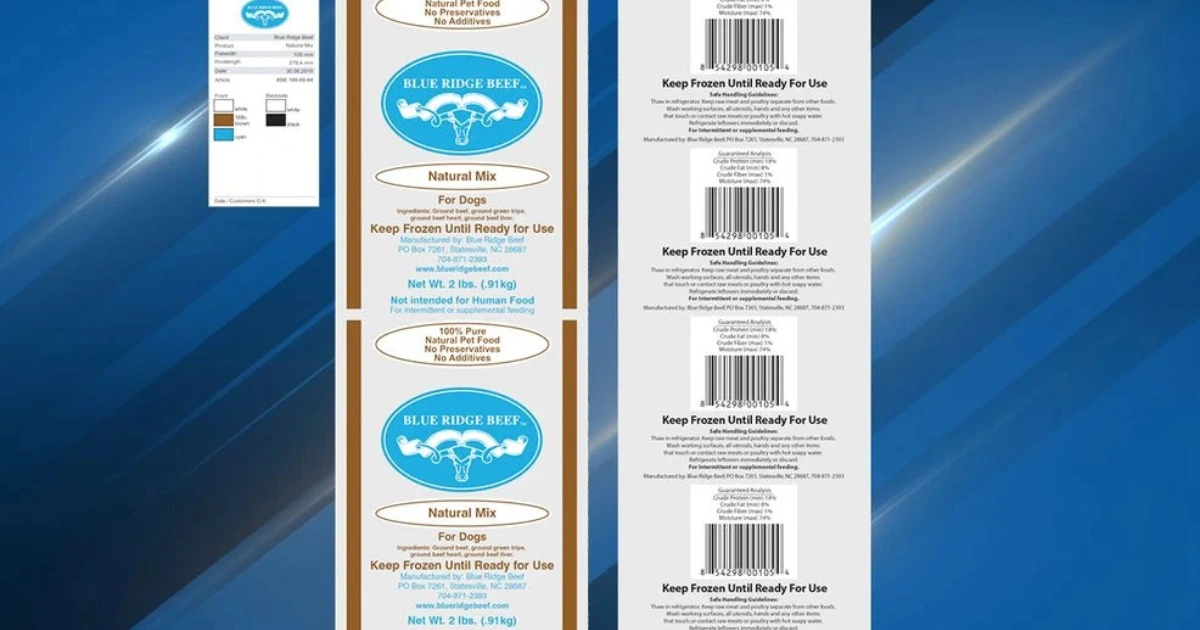
Blue Ridge Beef Recall : If you feed your dog or cat raw pet food from Blue Ridge Beef, stop what you are doing and read this. The North Carolina-based raw pet food company has been at the center of a series of serious recalls stretching from late 2023 through early 2025, involving dangerous bacterial contamination that puts both animals and humans at risk. Here is everything you need to know — broken down clearly, so you can act fast.
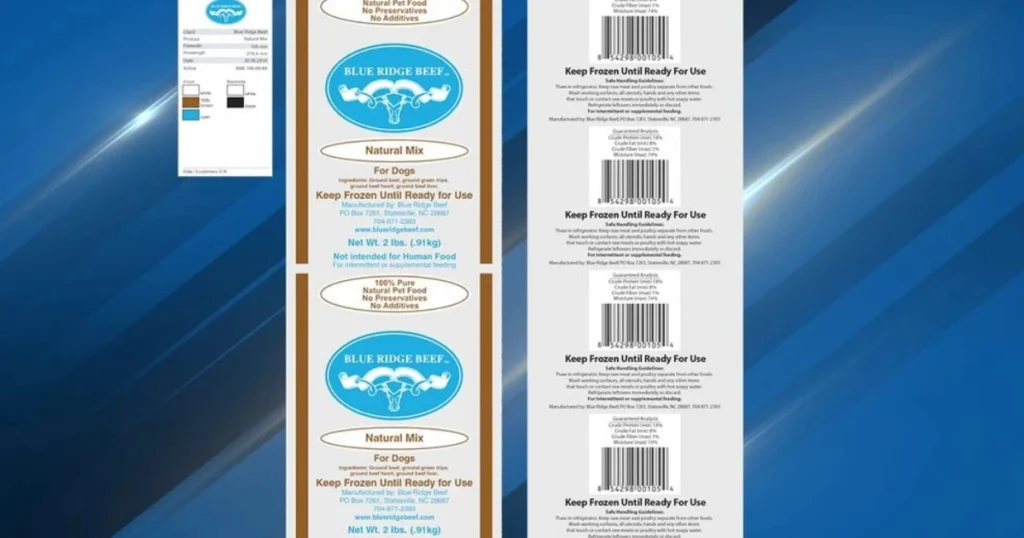
Table of Contents
- What Is Blue Ridge Beef?
- Full Blue Ridge Beef Recall History
- Which Products Are Affected?
- Which States Are Impacted?
- The Real Risks: Salmonella and Listeria Explained
- Symptoms to Watch for in Your Pets
- Symptoms to Watch for in Humans
- What To Do If You Have a Recalled Product
- How to Contact Blue Ridge Beef
- Is Raw Pet Food Safe? What Experts Say
- Frequently Asked Questions
What Is Blue Ridge Beef?
Blue Ridge Beef is a raw pet food manufacturer based in Statesville, North Carolina. The company produces a line of raw meat-based products — including puppy mixes, kitten mixes, and natural blends — designed as an alternative to processed kibble. Their products are packaged in 2-pound clear plastic chubs (log-shaped packages) and are sold through specialty pet retailers across multiple states on the East Coast and beyond.
While raw feeding advocates have long championed brands like Blue Ridge Beef for their minimally processed ingredients, the company’s repeated run-ins with regulators have put a spotlight on the very real food safety challenges that come with raw animal protein products.
Full Blue Ridge Beef Recall History (2023–2025)
Blue Ridge Beef has not had one recall — it has had multiple, spanning more than a year. Here is a complete timeline:
December 2023 / January 2024 — Kitten Grind, Kitten Mix, and Puppy Mix (Salmonella & Listeria)
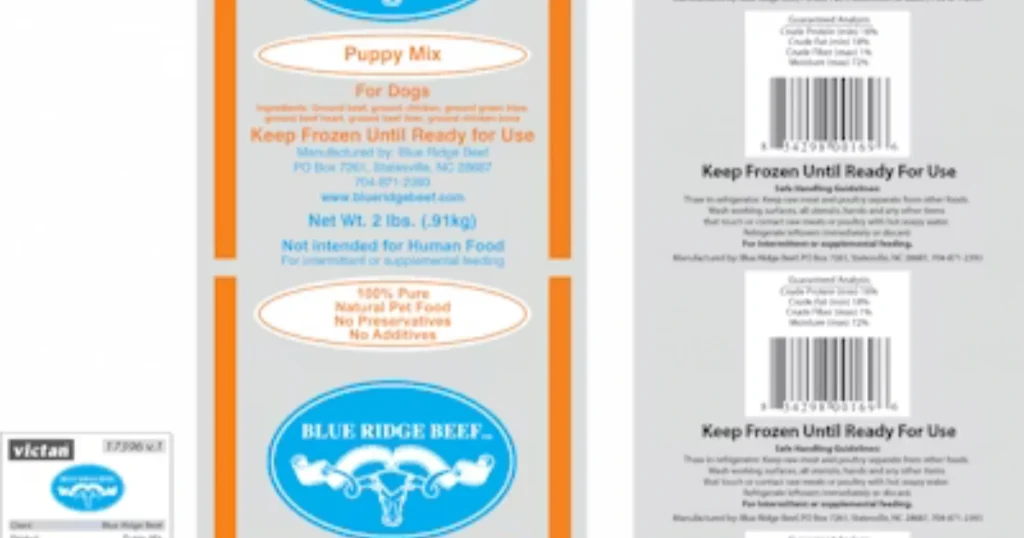
Blue Ridge Beef issued its first major recall in December 2023, which was then expanded in early January 2024 to include additional lot numbers and states. The recall covered all lot numbers and “used by” dates between N24 1114 and N24 1224 across three products: their 2 lb Kitten Grind (UPC 8 54298 00101 6), 2 lb Kitten Mix (UPC 8 54298 00143 6), and 2 lb Puppy Mix (UPC 8 54298 00169 6). Products were distributed between November 14, 2023 and December 20, 2023, and the recall ultimately expanded to cover 16 states.
December 2, 2024 — Puppy Mix (Salmonella)
Nearly a year later, on December 2, 2024, the company announced a voluntary recall of 9,600 lbs. of their 2 lb Puppy Mix, Lot #08/06/N25 and 08/16/N25 (UPC 854298001696), after Salmonella contamination was confirmed. The FDA had notified the company on November 27, 2024, after state testing came back positive. The recall was triggered when a customer reported that a litter of puppies had become ill. Products were distributed between August 6 and August 23, 2024.
January 2025 — Kitten Mix (Salmonella)
The Massachusetts Department of Agriculture Resources collected a sample of Blue Ridge Beef’s Kitten Mix after a customer complaint of animal illness on December 12, 2024. State lab testing confirmed Salmonella contamination, and the FDA notified the company on January 3, 2025. The recall covered 1,350 pounds of 2 lb Kitten Mix logs, Lot N25-0716 (UPC 8542980013436), distributed between July 18 and July 26, 2024, across six states.
February 5, 2025 — Natural Mix (Salmonella)
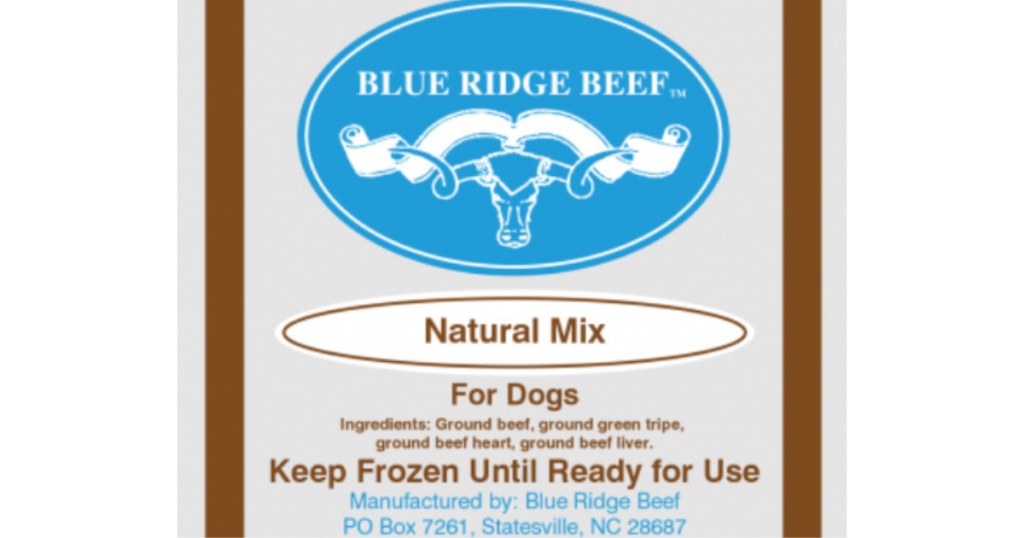
A fourth recall was issued on February 5, 2025 (correcting a January 31 press release), covering 5,700 lbs. of their 2 lb Natural Mix, Lot # N25/12/31 (UPC 854298001054). This marked the third Salmonella recall within two months. The North Carolina Department of Agriculture collected samples on January 8, 2025, and testing confirmed contamination. Products were distributed from January 3–24, 2025, across eight states.
April 10, 2025 — Kitten Mix & Puppy Mix (Salmonella AND Listeria)
The most recent and arguably most serious recall came on April 10, 2025. Blue Ridge Beef announced the voluntary recall of 1,080 lbs. of Kitten Mix Lot # N26 0114 and 1,380 lbs. of Puppy Mix Lot # N25 1230 — this time contaminated with both Salmonella and Listeria. The New York State Department of Agriculture and Markets collected samples on March 20, 2025, following a customer complaint of animal illness. Products were distributed January 3–24, 2025, across nine states.
Which Products Are Affected?
Across all recalls, the following Blue Ridge Beef products have been involved:
| Product | Lot Number(s) | UPC | Recall Date | Contaminant(s) |
|---|---|---|---|---|
| 2 lb Puppy Mix | N24 1114–N24 1224 | 8 54298 00169 6 | Dec 2023 / Jan 2024 | Salmonella, Listeria |
| 2 lb Kitten Mix | N24 1114–N24 1224 | 8 54298 00143 6 | Dec 2023 / Jan 2024 | Salmonella, Listeria |
| 2 lb Kitten Grind | N24 1114–N24 1224 | 8 54298 00101 6 | Dec 2023 / Jan 2024 | Salmonella, Listeria |
| 2 lb Puppy Mix | 08/06/N25, 08/16/N25 | 854298001696 | Dec 2, 2024 | Salmonella |
| 2 lb Kitten Mix | N25-0716 | 8542980013436 | Jan 2025 | Salmonella |
| 2 lb Natural Mix | N25/12/31 | 854298001054 | Feb 5, 2025 | Salmonella |
| 2 lb Kitten Mix | N26 0114 | — | Apr 10, 2025 | Salmonella, Listeria |
| 2 lb Puppy Mix | N25 1230 | — | Apr 10, 2025 | Salmonella, Listeria |
Pro tip: Lot numbers are stamped in the metal clips on the ends of the chub packaging. Always check here before feeding any Blue Ridge Beef product.
Which States Are Impacted?
Blue Ridge Beef’s distribution footprint has grown over the course of its recalls. Across all recall events, the following states have been identified as having received affected products:
Connecticut, Florida, Iowa, Illinois, Maryland, Massachusetts, Michigan, New York, North Carolina, Ohio, Oregon, Pennsylvania, Rhode Island, Tennessee, Virginia, and Wisconsin.
If you are in any of these states and have purchased Blue Ridge Beef products in the past 18 months, you should verify your lot numbers immediately against the recall list above.
The Real Risks: Salmonella and Listeria Explained
These are not minor bacterial concerns. Both Salmonella and Listeria are serious pathogens that the FDA and CDC take very seriously.
Salmonella
Salmonella contamination is particularly insidious because food — or pet food — that contains it typically looks, smells, and tastes completely normal. There are no visible warning signs. The bacteria can spread from animals to humans through contact with contaminated food or surfaces, even without the person ever eating the product. Children, the elderly, pregnant women, and immunocompromised individuals face the highest risk of severe illness.
Listeria monocytogenes
Listeria is arguably even more dangerous. It can survive — and even grow — in cold temperatures, meaning refrigerating or freezing a contaminated product does not eliminate the risk. One of its most frightening characteristics is its long incubation period: symptoms of listeriosis can take anywhere from a few days to up to 70 days to appear after exposure. This makes it extremely difficult to connect an illness back to its source. Pregnant women face a particularly high risk, as Listeria infection can lead to miscarriage, stillbirth, or severe illness in newborns.
Symptoms to Watch for in Your Pets
If your pet has consumed any of the recalled products, monitor them closely for the following signs of Salmonella or Listeria infection:
- Lethargy or unusual tiredness
- Diarrhea, possibly bloody
- Vomiting
- Fever
- Decreased appetite
- Abdominal pain or bloating
It is important to know that some infected but otherwise healthy pets can carry these bacteria without showing obvious symptoms — and still pass the infection to other animals or people in the household.
If your pet is showing any of these symptoms after consuming recalled food, contact your veterinarian immediately.
Symptoms to Watch for in Humans
Even if you never fed the recalled food directly to yourself, handling contaminated pet food can put you at risk. Watch for:
Salmonella Symptoms in Humans
- Nausea and vomiting
- Diarrhea (sometimes bloody)
- Abdominal cramping
- Fever
- Headache
Listeria (Listeriosis) Symptoms in Humans
- Persistent fever
- Muscle aches
- Nausea or diarrhea
- Severe headache
- Stiff neck
- Confusion or loss of balance (in severe cases)
Anyone who handled recalled products and developed these symptoms should seek medical care and inform their doctor of potential Salmonella or Listeria exposure. Because Listeria symptoms can take weeks to appear, vigilance matters even if you disposed of the product some time ago.
What To Do If You Have a Recalled Product
The FDA and Blue Ridge Beef have issued clear guidance. Follow these steps:
- Stop feeding the product immediately. Do not continue to use any Blue Ridge Beef product you suspect may be part of a recalled lot.
- Check the lot number. Look at the metal clip at the end of the chub. Compare your lot number to the recalled list above.
- Return it or dispose of it safely. Return the product to the place of purchase for a refund, or destroy it in a way that children, other pets, and wildlife cannot access it (double-bag and seal in trash).
- Do not donate or sell it. Even if another person or animal seems unaffected, do not pass the recalled food on to others.
- Sanitize everything. Wash and sanitize all pet food bowls, scoops, storage containers, and any surfaces the food may have touched. Wash your hands thoroughly with soap and water after handling.
- Monitor your pet. Keep a close eye on your pet for the symptoms listed above. Call your vet if anything seems off.
- Monitor yourself and your family. If anyone in your household develops illness symptoms in the following weeks, consult a doctor and mention the potential exposure.
How to Contact Blue Ridge Beef
For questions about the recall, refunds, or product information, Blue Ridge Beef can be reached through the following channels:
- Email: blueridgebeefnc@yahoo.com
- Phone: 704-873-2072 (Monday–Friday, 8:00 AM – 5:00 PM EST)
You can also view all official recall notices on the FDA’s website by searching for “Blue Ridge Beef.”
Is Raw Pet Food Safe? What Experts Say
The Blue Ridge Beef recalls have reignited a longstanding debate in the pet nutrition world: is raw feeding safe?
The FDA, the CDC, and the American Veterinary Medical Association (AVMA) have all historically cautioned pet owners about the risks associated with raw meat-based diets. The core concern is exactly what we see playing out in these recalls — raw meat naturally harbors bacteria like Salmonella and Listeria, and even high-quality products with good manufacturing practices can be contaminated.
At the same time, proponents of raw feeding argue that these diets offer significant health benefits and that with proper hygiene practices, the risks are manageable. The debate is nuanced and ongoing.
What these recalls make clear, however, is that raw pet food requires rigorous testing and quality control at every stage — and that when those systems fail, the consequences for pets and families can be severe. If you continue to feed raw, food safety experts recommend:
- Always washing hands after handling raw pet food
- Keeping raw pet food separate from human food in the refrigerator
- Sanitizing surfaces and bowls after every meal
- Staying current on FDA and manufacturer recall alerts
- Consulting your veterinarian about whether a raw diet is appropriate for your specific pet
Frequently Asked Questions About the Blue Ridge Beef Recall
Is Blue Ridge Beef still selling products?
As of the time of this writing, Blue Ridge Beef continues to operate and sell products. Only specific lot numbers have been recalled — not the entire product line. However, given the pattern of repeated contamination events, pet owners should closely monitor FDA alerts and verify lot numbers before every purchase.
What if I already fed the recalled food to my pet and they seem fine?
Some animals and humans can carry Salmonella or Listeria without showing immediate symptoms and can still spread the bacteria. Even if your pet appears healthy, it is wise to notify your veterinarian, practice thorough hygiene, and monitor for delayed symptoms.
Can I get a refund for a recalled Blue Ridge Beef product?
Yes. The company has offered full refunds for recalled products. Return the item to the place of purchase or contact Blue Ridge Beef directly at the contact information listed above.
How do I find out about future Blue Ridge Beef recalls?
Bookmark the FDA’s recall page at fda.gov and sign up for recall alerts. You can also follow your state’s Department of Agriculture for localized alerts.
Are other raw pet food brands affected?
This specific recall involves only Blue Ridge Beef products. However, Salmonella and Listeria contamination is a known risk across the raw pet food category. It is always worth checking the FDA’s current recall list for any brand you purchase.
What is the difference between a voluntary and mandatory recall?
A voluntary recall means the company has chosen to pull the products themselves — often in cooperation with or at the direction of the FDA — without being legally forced to do so. All Blue Ridge Beef recalls to date have been voluntary, initiated after state agricultural agencies or the FDA confirmed positive test results.
Stay Safe and Stay Informed
The repeated nature of the Blue Ridge Beef recall situation is a reminder that food safety vigilance never takes a break — especially when it comes to raw animal products. Whether you are a dedicated raw feeder or simply trying to navigate the pet food aisle, always check lot numbers, sign up for FDA recall alerts, and maintain strict hygiene when handling any raw food product for your pets.
If you found this article helpful, share it with a fellow pet owner. And if you have questions or updates we should add, leave a comment below.
Disclaimer: This article is for informational purposes only and is based on publicly available FDA recall notices and reports. Always consult your veterinarian for health guidance specific to your pet.