

Nutrition · Traditional Foods · Cooking Guide
Beef Liver:
The Forgotten Superfood
Your Body Has Been Craving
More nutrient-dense than kale, more flavorful than steak — and shockingly easy to cook once you know the secret.
10 min Prep8 min CookServes 2High ProteinGluten-Free
Ounce for ounce, beef liver contains more bioavailable vitamins and minerals than almost any other food on earth — yet most people haven’t touched it since childhood.— Let’s change that, starting today
There’s a quiet revolution happening in kitchens right now. Chefs, nutritionists, ancestral health advocates, and home cooks are all rediscovering the same ingredient — one that our grandparents ate without question and that modern food culture somehow convinced us to fear: beef liver.
Whether you’re brand new to organ meats or you’ve had a few unfortunate childhood experiences that put you off liver forever, this guide is going to change the way you think about this extraordinary cut. We’ll cover the nutrition science, the best sourcing advice, and — most importantly — a foolproof recipe that actually tastes incredible.
What Is Beef Liver, Exactly?
Beef liver is the liver of a cow, sold as a flat, dark reddish-brown slab with a distinctive smooth texture and a strong, mineral-rich aroma. It’s one of the five most commonly eaten organ meats globally, alongside kidney, heart, tongue, and tripe — and it’s the most nutrient-concentrated of them all.
Unlike muscle meat (the steaks and roasts most of us are familiar with), organ meats perform active biological functions in the body. The liver specifically acts as a filter and metabolic powerhouse in living animals, which means it accumulates extraordinarily high concentrations of fat-soluble vitamins, B vitamins, iron, zinc, and copper.
It also means the quality of your sourcing matters. More on that shortly.
✦ ✦ ✦
Beef Liver Nutrition: The Numbers Don’t Lie
Let’s get specific. A single 3-ounce (85g) serving of cooked beef liver delivers the following — and these aren’t just good numbers, they’re extraordinary ones:
Nutritional Snapshot — 3 oz (85g) Cooked Beef Liver
23g
Protein
~46% DV
6.5mg
Iron (heme)
~36% DV
70mcg
Vitamin B12
~2,916% DV
6,582 IU
Vitamin A
~730% DV
4mg
Zinc
~36% DV
9mg
Copper
~1,000% DV
That B12 figure alone is staggering. Most adults struggle to get enough B12 from diet alone — beef liver delivers nearly 30 times the daily requirement in a single serving. It’s also one of the best dietary sources of choline, a critical nutrient for brain health, liver function, and fetal development that the majority of Americans are chronically deficient in.
And here’s what the supplement industry doesn’t want you to know: the vitamins and minerals in beef liver come in their most bioavailable forms. The iron is heme iron, which your body absorbs three to five times more efficiently than the non-heme iron in spinach. The vitamin A is preformed retinol — not a precursor like beta-carotene — meaning your body can use it immediately without any conversion steps.
Why Grass-Fed Matters More Here Than Anywhere Else
When you’re buying muscle meat, the difference between grass-fed and conventionally raised beef is meaningful but modest. When you’re buying liver, that difference is amplified significantly — because the liver’s job is to process everything that passes through the animal’s body.
Grass-fed, pasture-raised beef liver will give you:
Sourcing Guide
- Higher omega-3 fatty acid content — grass-fed cattle have a far more favorable omega-3 to omega-6 ratio than grain-fed animals, and this carries over directly into the liver.
- More fat-soluble vitamins — cattle raised on pasture and exposed to sunlight have notably higher levels of vitamin D and vitamin K2 in their fat-soluble tissues.
- Lower toxin load — while the liver doesn’t store most toxins (it neutralizes them), a well-functioning liver from a healthy, naturally raised animal is in better overall condition and contains fewer residual compounds.
- Better flavor — grass-fed liver tends to have a cleaner, less intensely “livery” taste that makes it much more approachable for beginners.
Look for grass-fed beef liver at your local farmers market, a quality butcher shop, or online suppliers who specialize in regenerative or pasture-based farming. It’s often sold frozen, which is perfectly fine — and sometimes preferable, as freezing can actually help tenderize the texture slightly.
The Secret to Beef Liver That Doesn’t Taste “Liverish”
Here’s the single most important piece of cooking knowledge you can have about beef liver: the strong, metallic taste most people remember comes from overcooking. Period.
The iron compounds in liver become harsh and bitter when exposed to high heat for too long. Cook it to a perfect pale pink in the center — slightly rosy, not raw — and the flavor transforms into something deeply savory, rich, and almost buttery. A few extra minutes in the pan and you’re eating shoe leather that tastes like a chemistry experiment.
The second key is soaking. A 30-minute soak in cold whole milk draws out blood, mellows the bitterness, and creates a more neutral base for seasoning. It’s an old technique that actually works.
✦ ✦ ✦
Caramelized Beef Liver with Crispy Shallots & Herb Butter
Classic technique · Restaurant-quality results · Ready in 20 minutes
10 min Prep (+ 30 min soak)
8–10 min Cook
2 Servings
Medium Difficulty
Ingredients
- 450g (1 lb) grass-fed beef liver, sliced ½-inch thick
- 1 cup whole milk (for soaking)
- 3 large shallots, thinly sliced into rings
- 3 tbsp unsalted butter, divided
- 1 tbsp avocado oil or ghee
- 2 cloves garlic, finely minced
- 1 tsp fresh thyme leaves
- 1 tbsp fresh flat-leaf parsley, chopped
- Sea salt and cracked black pepper
- ½ tsp smoked paprika
- Squeeze of fresh lemon juice
Method
- Place liver slices in a bowl, cover completely with cold milk, and soak for 30 minutes. Drain thoroughly and pat completely dry with paper towels.
- Season both sides generously with salt, black pepper, and smoked paprika. Let sit at room temperature while you prepare the shallots.
- In a large cast-iron or stainless skillet over medium heat, melt 1 tbsp butter with the oil. Add shallots and cook, stirring occasionally, until golden and crispy — about 12 minutes. Remove and set aside.
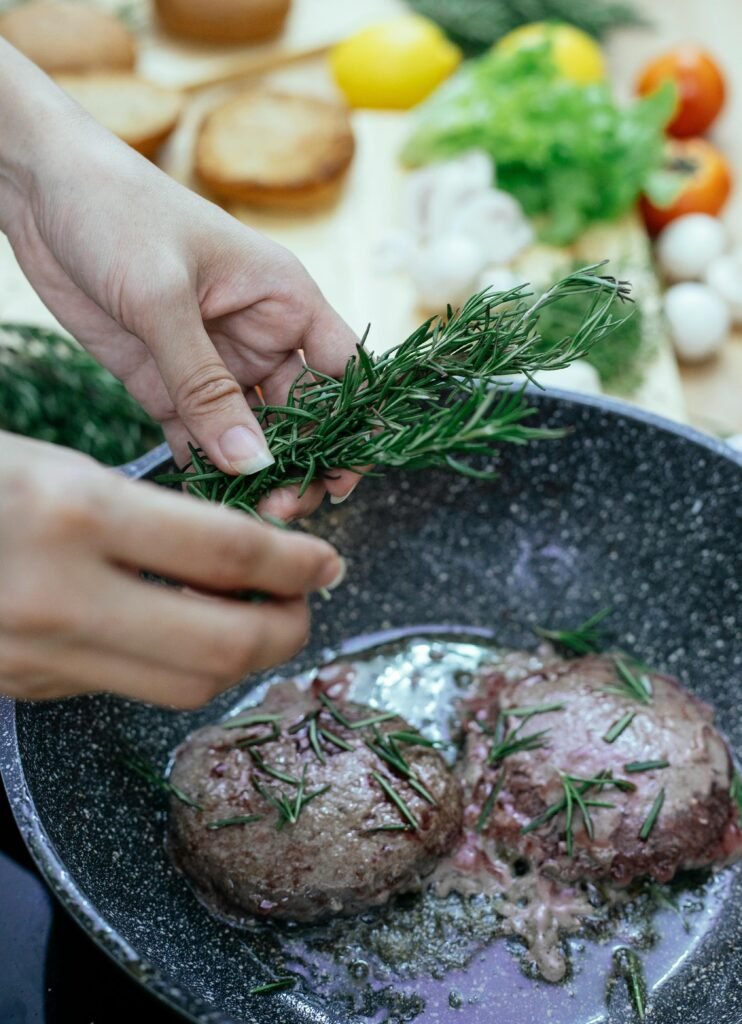
- Increase heat to medium-high. Add remaining butter. When it foams, lay liver slices flat without crowding. Sear undisturbed for 90 seconds until a deep brown crust forms.
- Flip each slice. Add garlic and thyme to the pan. Cook for another 60–90 seconds only. The center should be slightly pink — this is correct and safe.
- Deglaze with a small splash of water or stock, add the lemon juice, and swirl. Top with parsley and crispy shallots. Serve immediately.
How Often Should You Eat Beef Liver?
Beef liver is exceptional — but it’s a food best enjoyed in thoughtful amounts rather than daily. Most nutrition experts who advocate for organ meat consumption recommend one to two servings per week as an ideal frequency.
The reason is the same as its greatest strength: concentration. The vitamin A and copper content in liver are high enough that consuming it daily in large amounts over a long period could lead to excess. Pregnant women in particular should be aware that excessive preformed vitamin A intake carries risks — though the amounts present in one or two weekly servings are considered safe by most clinical guidelines.
Think of it like a nutritional investment: a single serving of beef liver once a week essentially functions as a whole-food multivitamin, filling in the gaps that even a well-rounded diet can miss.
Beef Liver in Your Weekly Meal Plan
If the classic seared preparation isn’t your thing — or you want more variety — beef liver is remarkably versatile once you understand its character. Here are some ways home cooks are incorporating it regularly:
5 Ways to Eat It
- Liver pâté or mousse — blended with cream cheese or butter, herbs, and a splash of brandy, liver becomes a spreadable, elegant appetizer that even skeptics tend to love.
- Mixed into ground beef — replace 10–15% of ground beef in any burger, meatball, or meatloaf recipe with finely chopped or blended raw liver. The flavor is virtually undetectable and the nutrition is dramatically boosted.
- Liver tacos — thin-sliced and seared, served with pickled red onion, avocado, and a smoky chipotle crema on warm corn tortillas.
- The classic liver and onions — the time-honored preparation, done right with slow-caramelized onions, a good cast iron, and the pink-center technique described above.
- Dried liver snacks — thinly sliced, seasoned with salt and herbs, and dehydrated at low temperature for a nutrient-dense, shelf-stable snack similar to jerky.
✦ ✦ ✦
Frequently Asked Questions
Is beef liver safe to eat slightly pink in the middle?
Yes — and it’s actually the recommended way to serve it. Like steak, beef liver is safe when the exterior is fully seared and the interior reaches 160°F (71°C) internally. A slightly pink center achieved through high-heat searing is both safe and significantly more enjoyable in texture and flavor than well-done liver.
Does beef liver detox the body?
This is a common misconception. The liver’s job in the body is to neutralize and process toxins — it doesn’t store them. Eating liver does not cause you to ingest accumulated toxins. What you do get is an organ that was metabolically active and therefore rich in enzymes, vitamins, and cofactors that support your own liver’s detoxification processes.
How do I get rid of the bitter, metallic taste?
The milk soak (30–60 minutes) is the single most effective step. Beyond that, not overcooking is crucial — cook to just past pink, not gray. High-quality grass-fed liver also has a noticeably milder flavor than conventionally raised liver, so sourcing matters too.
Can I freeze beef liver?
Absolutely. Beef liver freezes very well and actually benefits from freezing in some cases, as the ice crystal formation slightly tenderizes the texture. Portion it before freezing for convenience, and thaw overnight in the refrigerator before cooking. Use within 3–4 months for best quality.
Is beef liver good for iron deficiency?
It’s among the best dietary sources available. The heme iron in beef liver is absorbed at a rate of roughly 15–35%, compared to 2–20% for the non-heme iron in plant foods. If you’re working on building iron levels, pairing beef liver with a source of vitamin C further enhances absorption.
Ready to Give Liver Another Chance?
Start with the recipe above — it’s the most approachable version for first-timers and the most satisfying version for seasoned organ meat fans. Once you taste beef liver cooked properly, with good sourcing and the pink-center technique, you may find yourself wondering why you ever stopped eating it.
Try it this week. Your body will notice the difference.Save This Recipe →