
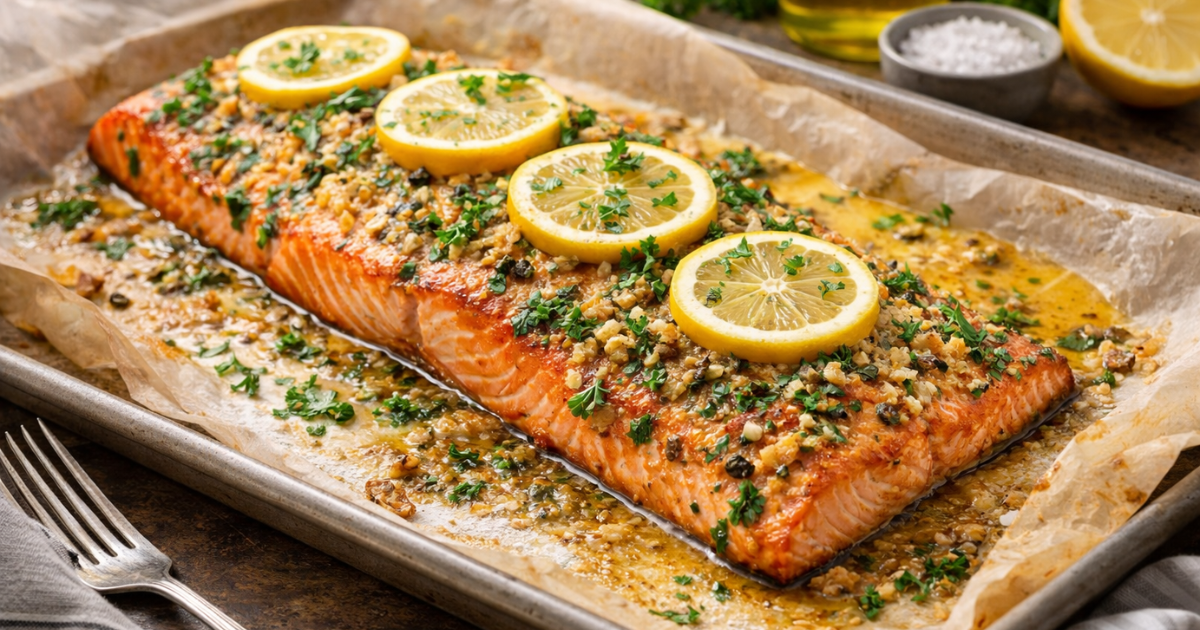

A Baked Salmon Recipe That Never Fails
If there is one recipe every home cook should have in their back pocket, it is a reliable baked salmon recipe. Salmon is one of those rare ingredients that manages to be both effortlessly weeknight-friendly and genuinely impressive — the kind of dish that looks like you spent hours in the kitchen when the oven did nearly all the work.
I’ve made this baked salmon recipe more times than I can count, tweaking the glaze, adjusting the temperature, and testing different thicknesses until I landed on the version I’m sharing with you today. The result is salmon with a beautifully golden top, a tender center that flakes cleanly at the touch of a fork, and a honey-garlic-lemon glaze that hits every flavor note — sweet, savory, bright, and rich all at once.
Whether you are brand new to cooking fish or just looking for a go-to baked salmon recipe that works every single time, this is the one. Let’s get into it.
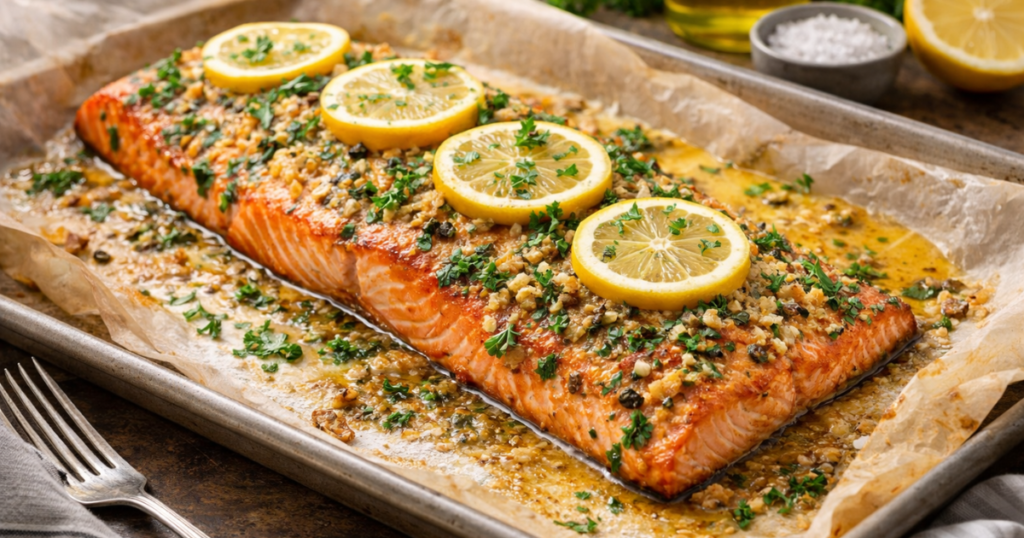
02 · Why You’ll Love This RecipeFast, Healthy, and Absolutely Delicious
This isn’t just any baked salmon recipe — it’s designed to be genuinely foolproof for beginners while still delivering restaurant-quality results that will impress anyone at your table.
⏱️
25 Minutes Total
From cold fillet to dinner plate in under half an hour. Perfect for weeknights when time is short.
🧂
Simple Ingredients
Everything you need is likely already in your pantry and refrigerator. No specialty items required.
🌿
Genuinely Healthy
Rich in omega-3 fatty acids, high-quality protein, and vitamins D and B12. Nutritious doesn’t have to mean bland.
🔰
Beginner-Friendly
Clear, step-by-step instructions with no complicated techniques. If you can use an oven, you can make this.
✨
Crowd-Pleasing
Elegant enough for dinner guests, easy enough for a Tuesday. This baked salmon recipe earns compliments every time.
🔄
Endlessly Adaptable
Change the glaze, swap the herbs, try different salmon varieties. The base technique works with almost any flavor direction.
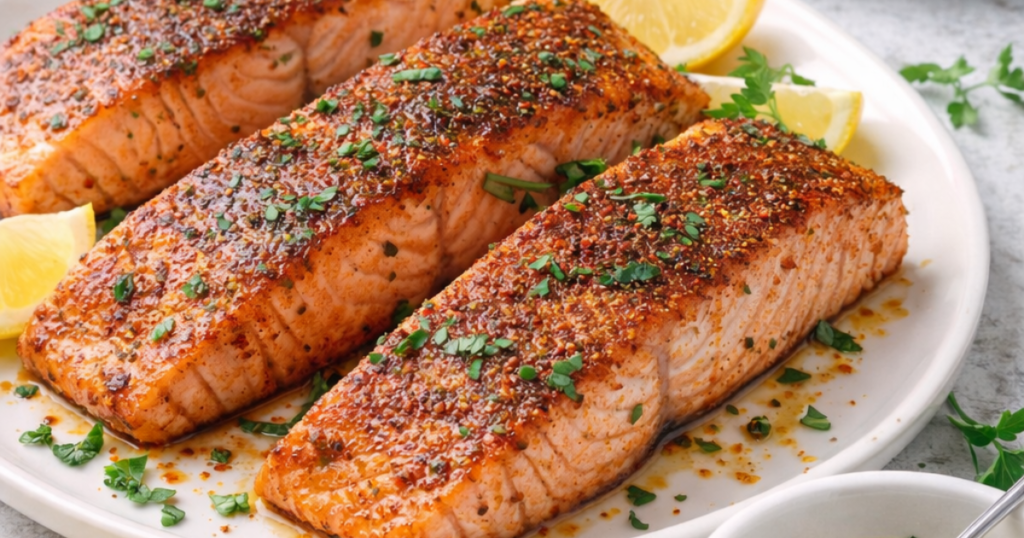
03 · IngredientsWhat You’ll Need
This baked salmon recipe keeps the ingredient list short and focused. Each component plays a clear role in the final flavor — nothing is filler.
🛒 Ingredients — Serves 4
For the Salmon
- 4 filletssalmon fillets (6 oz / 170g each), skin-on or skinless
- ½ tspkosher salt
- ¼ tspblack pepper, freshly ground
- 1 tbspolive oil
For the Honey-Garlic-Lemon Glaze
- 3 tbsphoney (or maple syrup for a slightly different depth)
- 2 tbspsoy sauce or tamari (use tamari for gluten-free)
- 3 clovesgarlic, minced or finely grated
- 1 tbspfresh lemon juice (about ½ lemon)
- 1 tspDijon mustard
To Finish & Garnish
- 1 tbspfresh parsley or dill, chopped
- 4 sliceslemon, for serving
Ingredient note: For the best baked salmon recipe results, look for salmon fillets of even thickness — about 1 to 1¼ inches at the thickest point. Uneven fillets cook unevenly, with the thin tail end overcooking before the thick part is done. If your fillet tapers significantly, fold or tuck the thin end under itself before baking.
04 · Kitchen ToolsEverything You Need (Nothing You Don’t)
No special equipment needed for this baked salmon recipe. Here’s the complete list:
🔲Baking sheet or dish
📄Parchment paper or foil
🥣Small mixing bowl
🖌️Pastry brush (or spoon)
🌡️Instant-read thermometer
🍴Fish spatula
The instant-read thermometer is the single most helpful tool in this entire recipe — it takes all of the guesswork out of doneness. Salmon should reach an internal temperature of 125–130°F (52–54°C) for medium (slightly translucent center) or 145°F (63°C) for fully cooked per USDA guidelines. Most food lovers prefer it pulled at 130°F.
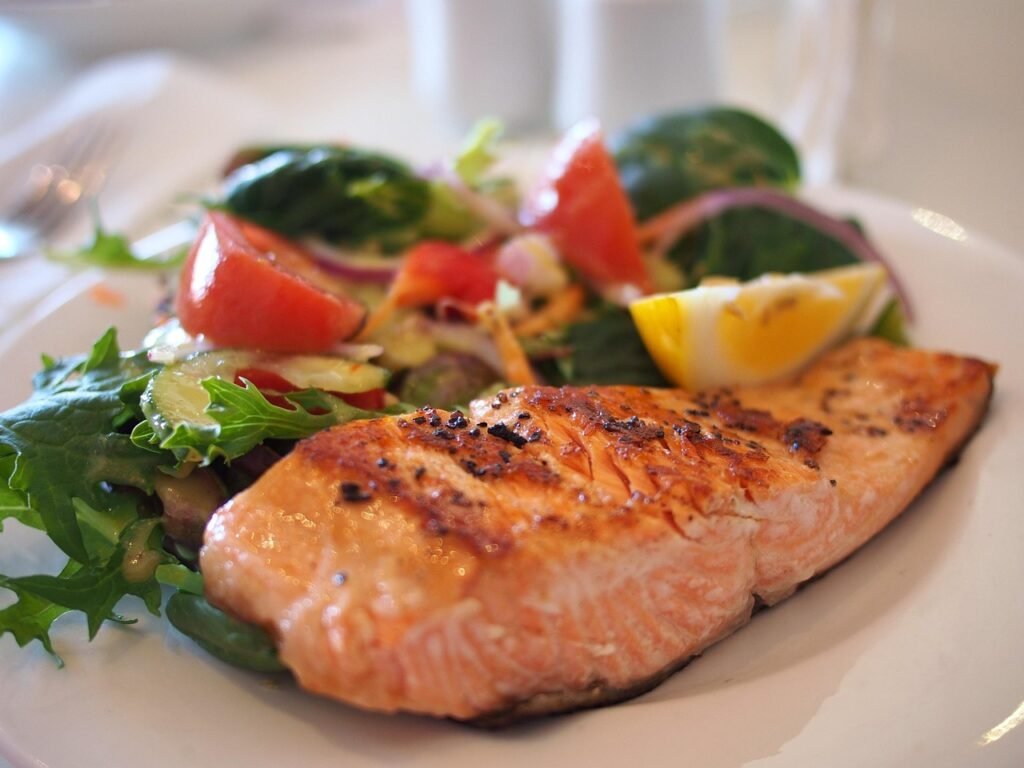
05 · Step-by-Step InstructionsHow to Make This Baked Salmon Recipe
Follow these steps carefully and you will have perfectly cooked salmon every time. The total hands-on time is less than 10 minutes — the oven handles the rest.
1
Preheat Your Oven & Prep the Pan
Preheat your oven to 400°F (205°C). Line a baking sheet or shallow baking dish with parchment paper or foil for easy cleanup. Lightly brush or spray the parchment with a thin coat of olive oil to prevent sticking.
2
Make the Honey-Garlic Glaze
In a small bowl, whisk together the honey, soy sauce, minced garlic, fresh lemon juice, and Dijon mustard until completely combined and smooth. Set aside — the glaze takes about 90 seconds to put together and can be made up to a day in advance.
3
Prepare the Salmon
Pat the salmon fillets dry with paper towels on all sides — this is an important step that is easy to skip but matters. Removing surface moisture helps the glaze adhere better and allows the top to caramelize rather than steam. Place fillets skin-side down on the prepared baking sheet. Drizzle lightly with olive oil and season with salt and pepper.
4
Apply the Glaze
Spoon or brush the honey-garlic glaze generously over the flesh side of each salmon fillet. Use all of it — a thick, even coating is what creates that beautiful lacquered crust during baking. You can reserve a small amount to brush on again halfway through cooking for extra glaze depth.
5
Bake to Perfection
Slide the baking sheet into the center of your preheated oven. Bake for 12–15 minutes, depending on the thickness of your fillets. A 1-inch thick fillet will typically be done in 12–13 minutes. Check for doneness at 12 minutes: the flesh should flake easily when pressed lightly with a fork and should be opaque throughout (or just barely translucent at the very center if you prefer medium).
6
Optional: Broil for a Caramelized Finish
For a slightly charred, deeply caramelized top — which is spectacular — switch the oven to broil for the final 2–3 minutes. Watch it closely; the honey in the glaze can go from perfectly golden to burned in under a minute under the broiler. This step is completely optional but highly recommended.
7
Rest & Serve
Remove the salmon from the oven and let it rest on the pan for 2–3 minutes before serving. This short rest allows the juices to redistribute through the flesh. Scatter fresh parsley or dill over the top, add a slice of lemon to each plate, and serve immediately.
06 · Tips for Perfect SalmonThe Secrets Behind Flawless Results
Getting consistently great results from this baked salmon recipe comes down to a handful of habits that make a real difference:
💡 Pro Tips
- Bring salmon to room temperature for 15–20 minutes before baking. Cold fish placed directly in a hot oven cooks unevenly, with the exterior tightening before the center warms through.
- Pat it very dry. Surface moisture is the enemy of browning. Two or three passes with a paper towel makes a meaningful difference in how the glaze caramelizes.
- Do not overcook it. Overcooked salmon is the most common mistake home cooks make with this fish. It goes from perfectly flaky to dry and chalky in just 2–3 extra minutes. Use a thermometer and trust it.
- Choose quality salmon. This baked salmon recipe works with any variety, but wild-caught sockeye or coho delivers the richest flavor. Farmed Atlantic salmon is milder and more readily available — both are excellent choices.
- Keep the skin on during baking. Even if you don’t eat the skin, it acts as a natural barrier between the flesh and the hot pan, protecting the bottom from overcooking. Slide a spatula between skin and flesh when serving to leave it behind if preferred.
- Line your pan generously. The honey in the glaze can burn and stick to unlined pans, creating a cleanup nightmare. Parchment paper is your friend here.
07 · Variations6 Ways to Change Things Up
Once you have the base baked salmon recipe dialed in, it becomes an incredibly adaptable template. Here are six directions to explore:
🌿 Herb-Crusted Salmon
Skip the glaze entirely and instead combine 3 tablespoons of panko breadcrumbs, 2 tablespoons of chopped fresh herbs (dill, parsley, chives), 1 tablespoon of olive oil, and a pinch of lemon zest. Press firmly onto the flesh side and bake at 400°F. The result is a crispy, aromatic crust that is especially good cold the next day.
🌶️ Spicy Sriracha-Glazed Salmon
Replace the Dijon in the glaze with 1–2 teaspoons of sriracha and add a teaspoon of rice wine vinegar. The heat and acidity make the glaze slightly sharper and more vibrant. Garnish with sesame seeds and sliced scallions instead of parsley.
🫒 Mediterranean-Style Salmon
Top each fillet with a tablespoon of tapenade (olive paste), a few cherry tomatoes halved, and a drizzle of good olive oil before baking. Finish with fresh basil and crumbled feta when it comes out of the oven. Serve over orzo or couscous.
🍁 Maple-Miso Glazed Salmon
Replace the honey with maple syrup and the soy sauce with white miso paste thinned with a splash of mirin. This creates a deeply savory, slightly sweet Japanese-inspired glaze that is one of the most extraordinary things you can put on a piece of fish.
🌱 Pesto-Topped Salmon
Spread 1–2 tablespoons of basil pesto over each fillet and top with a thin slice of tomato before baking. The pesto crust keeps the fish incredibly moist while adding herbal, nutty depth. This variation requires zero sauce preparation if you have jarred pesto on hand.
🍋 Simple Lemon-Butter Salmon
For the most classic baked salmon recipe, skip the glaze entirely. Simply season generously with salt and pepper, top each fillet with a thin pat of butter and two thin lemon slices, and bake. Nothing more. Sometimes the simplest version is the most compelling.
08 · Serving SuggestionsWhat to Serve With Baked Salmon
This baked salmon recipe is wonderfully versatile — it pairs easily with a wide range of sides. Here are the combinations that work best:
- 🥔Roasted garlic mashed potatoes
- 🥦Steamed or roasted broccoli
- 🍚Fluffy white or brown rice
- 🥗Simple green salad with lemon vinaigrette
- 🌾Lemon herb quinoa or couscous
- 🫛Sautéed green beans with almonds
- 🥬Creamed spinach or wilted greens
- 🍝Garlic butter pasta or orzo
For a lighter meal, serve the salmon directly over a bed of arugula with cherry tomatoes and a drizzle of the pan juices as a warm salad dressing — one of the most effortlessly elegant presentations for this baked salmon recipe.
09 · Storage TipsKeeping Leftovers Fresh
Baked salmon stores reasonably well and makes for outstanding leftovers — flaked cold into salads, tucked into sandwiches, or gently reheated the following day.
| Method | Duration | Best Practice |
|---|---|---|
| Refrigerator | 3–4 days | Store in an airtight container. Place a paper towel beneath the salmon to absorb excess moisture. |
| Freezer | Up to 3 months | Wrap tightly in cling film, then foil, or use a vacuum-sealed bag. Thaw overnight in the refrigerator. |
| Reheating | — | Reheat at 275°F (135°C) for 10–12 minutes, covered with foil. Avoid microwaving — it toughens the texture significantly. |
Tip: Cold leftover baked salmon is actually exceptional. Flake it over a Caesar salad, mix into avocado for a salmon toast topping, or stir through cream cheese for an easy homemade salmon spread. Do not underestimate day-two salmon.
10 · Nutrition InformationPer Serving (1 Fillet + Glaze)
📊 Nutritional Breakdown — Per Serving
380
Calories
38g
Protein
18g
Total Fat
3.2g
Omega-3s
14g
Carbs
12g
Sugar
480mg
Sodium
320mg
Potassium
128%
Vit B12 DV
Values are estimates based on standard ingredients. Exact nutrition will vary depending on salmon variety, thickness of glaze applied, and specific brands used. Calculated using USDA food data.
Salmon is one of the most nutrient-dense proteins available — this baked salmon recipe delivers a full day’s supply of vitamin B12, significant vitamin D, and one of the richest dietary sources of anti-inflammatory EPA and DHA omega-3 fatty acids in a single serving.
11 · FAQYour Baked Salmon Questions Answered
What temperature should baked salmon be cooked to?
The USDA recommends cooking salmon to an internal temperature of 145°F (63°C) for food safety. However, most culinary professionals and food lovers prefer salmon pulled from the oven at 125–130°F (52–54°C), which produces a medium-cooked fillet with a slightly translucent, silky center. At this temperature the fish is safe, flavorful, and at its most tender. If you are cooking for vulnerable populations — young children, elderly individuals, pregnant people, or immunocompromised individuals — cook to the full 145°F recommendation.
How long does it take to bake salmon at 400°F?
At 400°F (205°C), most salmon fillets take between 12 and 15 minutes to cook through. The most reliable rule of thumb is approximately 4–6 minutes per ½ inch of thickness. A 1-inch thick fillet will be done in 12–13 minutes; a 1½-inch thick fillet may need closer to 15–16 minutes. Always check with an instant-read thermometer rather than relying solely on time, since ovens vary and fillet thickness differs between cuts.
Can I use frozen salmon for this baked salmon recipe?
Yes — frozen salmon works well, and in many cases flash-frozen wild-caught salmon is actually fresher-tasting than “fresh” salmon that has been sitting in a display case. Thaw the salmon completely in the refrigerator overnight before using. Pat it very dry before seasoning — frozen salmon tends to release more moisture during thawing, and that excess moisture needs to be removed thoroughly for the glaze to adhere and caramelize properly.
Should salmon be baked covered or uncovered?
For this baked salmon recipe, bake uncovered. Covering the salmon with foil traps steam, which can produce a softer, poached-like texture and prevents the glaze from caramelizing. Uncovered baking allows the top surface to dry slightly and the glaze to develop a beautifully glossy, slightly charred finish — especially when finished under the broiler. If you find your salmon is cooking unevenly or browning too quickly, loosely tenting with foil for the first two-thirds of baking time is a reasonable adjustment.
What is the best type of salmon to use for a baked salmon recipe?
All varieties of salmon work in this recipe, but they differ meaningfully in flavor intensity, fat content, and price. King (Chinook) salmon is the richest and most buttery — the gold standard, and the most expensive. Sockeye salmon has a deep red color, firm texture, and intense flavor that holds up beautifully to strong glazes. Coho salmon is milder, more budget-friendly, and widely available. Farmed Atlantic salmon is the most common variety at grocery stores — it is milder than wild varieties but still produces a wonderful baked salmon recipe result. For everyday cooking, Atlantic or coho salmon offer the best balance of flavor, availability, and value.