

Fine Dining · Technique · Seafood Masterclass
Gordon Ramsay
Salmon Techniques
& Recipes
Discover the professional methods, kitchen principles, and original recipes inspired by Gordon Ramsay’s iconic approach to cooking salmon — crispy skin, perfect doneness, and bold flavors every time.
3Recipes
25mor Less
4★Michelin Tech
5Key Skills
There are few things Gordon Ramsay has talked about more passionately — and more publicly — than his philosophy on cooking fish. Salmon, in particular, has appeared in his cooking demonstrations, MasterChef critiques, and restaurant kitchens for decades. His principles are not a secret: season aggressively, use a scorching hot pan, never touch it prematurely, and treat every protein with absolute respect.
This guide breaks down the Gordon Ramsay approach to salmon in full — his key techniques, the reasoning behind them, and three original recipes built on his culinary DNA. Whether you’re attempting his legendary pan-seared crispy skin method, want to explore a beurre blanc-style sauce pairing, or are ready to build a complete restaurant-grade plate, you’ll find everything here.
These are not verbatim reproductions of any published recipe — they are original creations built around the public techniques and principles Ramsay has shared freely with home cooks around the world.
Contents
- Gordon Ramsay’s Salmon Philosophy
- 5 Essential Techniques He Swears By
- Recipe 1: Pan-Seared Salmon with Crispy Skin & Lemon Caper Butter
- Recipe 2: Honey Mustard Glazed Salmon with Wilted Greens
- Recipe 3: Herb-Crusted Salmon with Pea Purée & Crispy Prosciutto
- How to Plate Like a Michelin-Star Chef
- Common Salmon Mistakes (And How Ramsay Would Fix Them)
- FAQ
The FoundationGordon Ramsay’s Salmon Philosophy
Gordon Ramsay’s approach to salmon — and fish in general — is rooted in a profound respect for the ingredient. In his view, overcooked fish is one of the most unforgivable errors a cook can make, not because it’s technically difficult to avoid, but because it requires nothing more than attention.
His philosophy rests on three pillars: heat control, seasoning at every stage, and restraint. Great salmon, in the Ramsay tradition, doesn’t need to be hidden behind heavy sauces or complex preparations. The goal is always to amplify what’s already there — the natural richness of the fat, the clean flavor of the flesh, the textural contrast between a crackling skin and a just-set interior.
Fish cookery is about precision and respect. You cannot rush it. You cannot ignore it. The moment you walk away from the pan is the moment dinner becomes a disaster.— Ramsay’s guiding principle on fish
This philosophy translates directly into the kitchen in very practical ways. His salmon is always cooked skin-side down first — up to 70–80% of the total cooking time — so the skin renders and crisps completely before a brief finish on the flesh side. He uses a pan that’s genuinely, verifiably hot before the fish touches it. And he never presses the fillet flat: the skin will contact the pan naturally as the muscle relaxes.
Understanding these principles — not just following steps — is what separates a good home cook from one who can consistently produce restaurant-quality fish.
✦ ✦ ✦
Professional Fundamentals5 Essential Techniques He Swears By
Before any recipe, master these five techniques. They apply universally — to any cut of salmon, any sauce, any occasion.
01
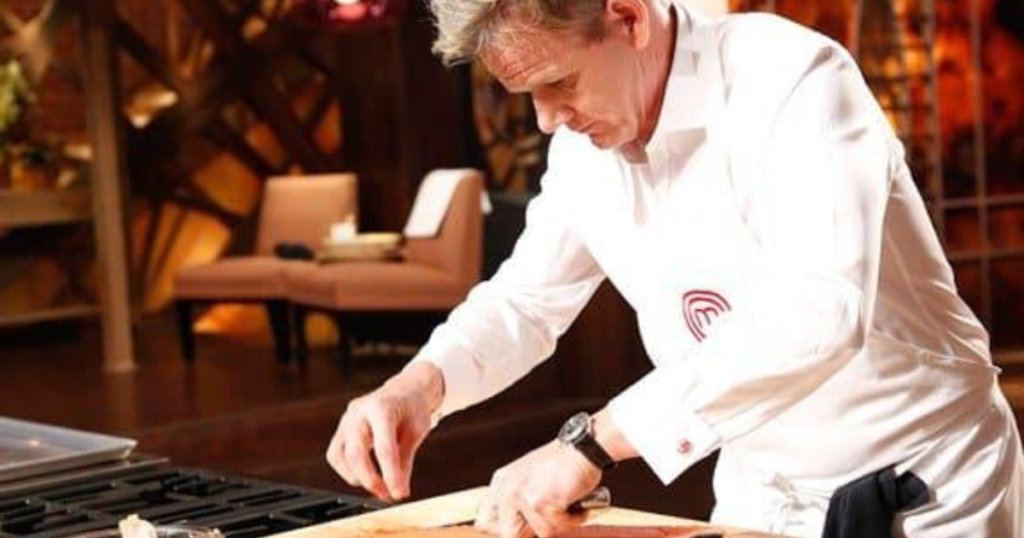
Score the Skin
Use a sharp knife to score the skin in 2–3 diagonal cuts, about halfway through the thickness. This prevents the fillet from buckling and curling in the pan, ensuring even skin contact and consistent crispiness across the whole surface.
02
Season Skin and Flesh Separately
The skin gets oil and salt. The flesh gets your full seasoning attention — salt, white pepper, and whatever aromatics suit the recipe. Treating each surface distinctly means every part of the fish is properly seasoned, not just one side.
03
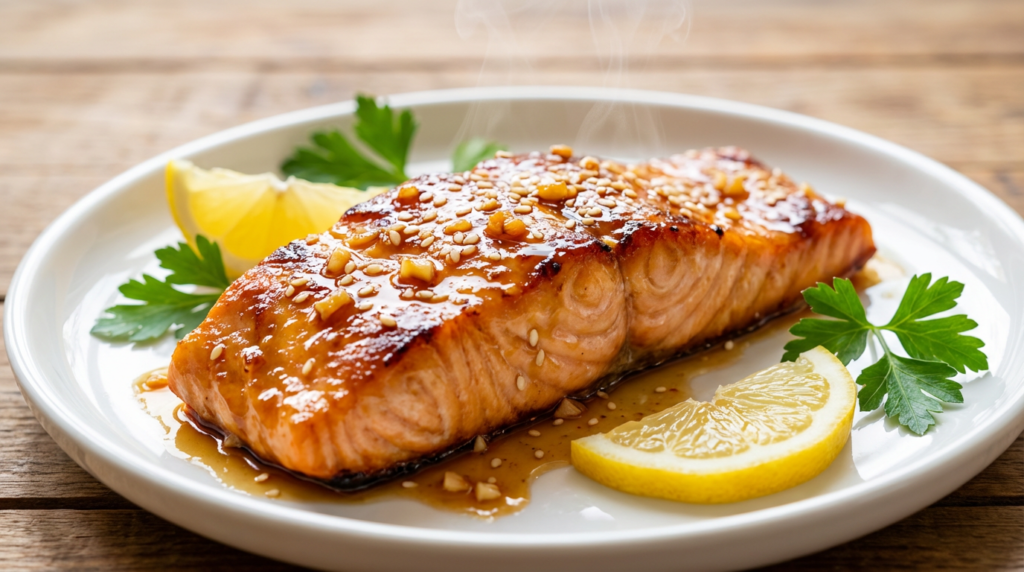
Pre-Heat the Pan Properly
Heat your (preferably stainless steel or cast iron) pan over medium-high for 2–3 minutes before adding oil. Add the oil and let it shimmer, almost smoke. This is the only environment where salmon skin gets genuinely crispy — anything less just sticks.
04
The 70/30 Rule
Cook salmon 70% skin-side down, then flip for the final 30%. For a 1-inch fillet, that’s roughly 5–6 minutes skin-side, 1–2 minutes flesh-side. This ratio ensures the skin is fully rendered and the flesh finishes gently, preserving moisture.
05
Baste with Aromatic Butter
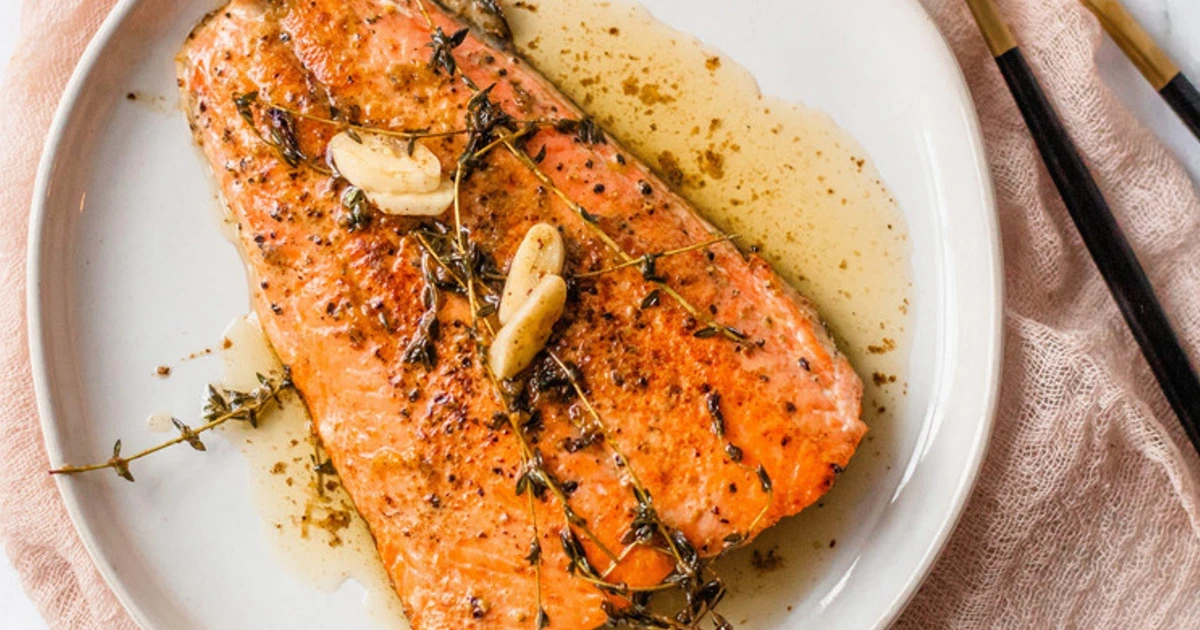
In the final minute, add a knob of cold butter, a sprig of thyme, and a crushed garlic clove to the pan. Tilt the pan and use a spoon to continuously baste the salmon flesh with the foaming aromatic butter. This is the step that elevates a home-cooked fillet to restaurant quality.
06
Rest Before Plating
Transfer cooked salmon to a warm plate and rest for 90 seconds. This allows the carry-over heat to finish cooking the very center without the exterior overcooking. It also lets the juices redistribute — your first bite will be noticeably better for it.
Recipe OnePan-Seared Salmon with Crispy Skin & Lemon Caper Butter Signature
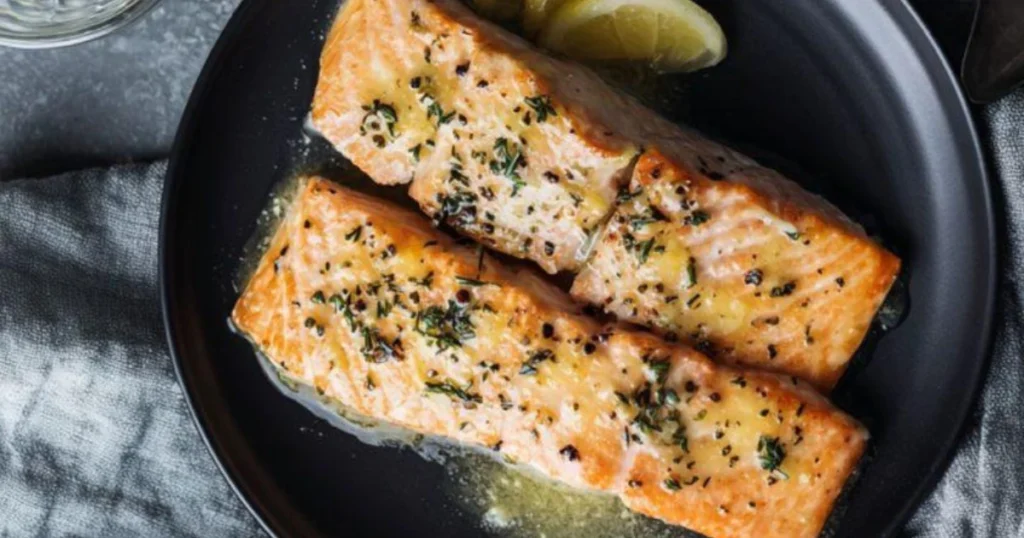
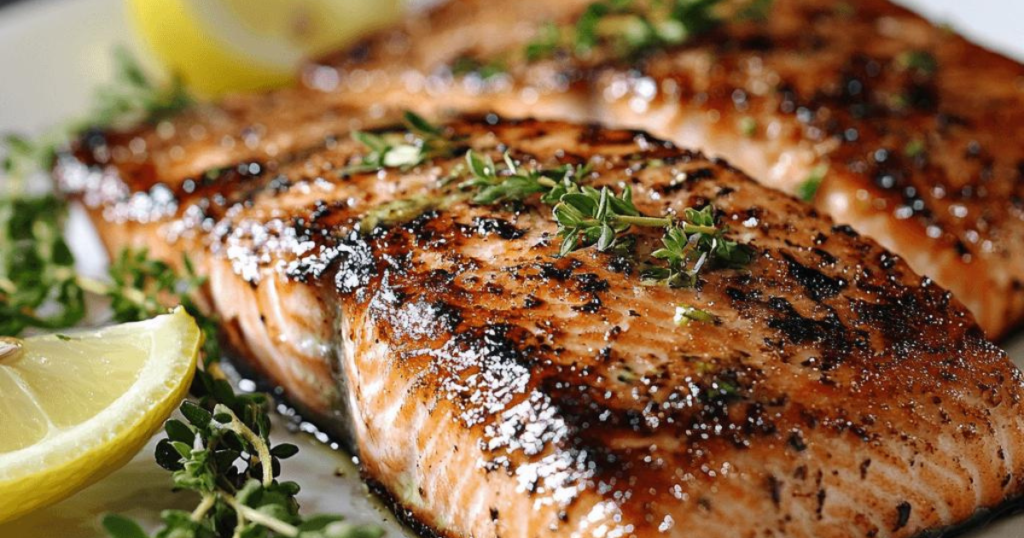
This is the flagship. The foundational salmon recipe that every technique in this guide builds toward. It’s the closest expression of the Ramsay method as practiced in his restaurants: a fillet with skin so crackling-crisp it shatters, flesh that’s perfectly pink and just set at the center, and a punchy lemon caper butter sauce that cuts through the richness with precision.
Recipe 01 — Signature
Pan-Seared Salmon, Crispy Skin
Lemon Caper Beurre Noisette
The closest thing to Gordon Ramsay’s signature salmon technique, built for the home kitchen
10mPrep
14mCook
2Servings
385Cal
Ingredients
- 2 skin-on salmon fillets (6–7 oz each, center-cut)
- 2 tbsp neutral oil (grapeseed or avocado)
- 3 tbsp unsalted cold butter, cubed
- 2 cloves garlic, lightly crushed (skin on)
- 2 sprigs fresh thyme
- 1 sprig fresh rosemary
- Juice of ½ lemon
- Zest of 1 lemon
- 2 tbsp capers, drained and roughly chopped
- 1 tbsp fresh flat-leaf parsley, finely chopped
- Flaky sea salt & white pepper
Method
- Remove salmon from the refrigerator 15 minutes before cooking to bring to room temperature. Pat skin and flesh completely dry with kitchen paper. Score the skin with 2–3 diagonal cuts. Season flesh with salt and white pepper; brush skin lightly with oil and season with a pinch of flaky salt.
- Heat a stainless steel or cast-iron skillet over medium-high for 3 full minutes. Add oil and heat until it just begins to shimmer and thin threads of smoke appear at the edges.
- Lay salmon fillets skin-side down, away from you to avoid splatter. Press gently with your fingertips for the first 10 seconds to ensure full skin contact. Do not move them.
- Cook skin-side down for 5–6 minutes. The salmon will visibly cook up the sides — you’re looking for the flesh to turn opaque up to about 70% of the height. The skin should be audibly crackling.
- Flip fillets. Immediately add cold butter cubes, garlic, thyme, and rosemary to the pan. As the butter foams and turns golden-nutty, tilt the pan and baste the flesh continuously for 60–90 seconds.
- Remove salmon to a warm plate. In the same pan (off heat), add lemon juice, zest, and capers. Swirl quickly — the residual heat will emulsify the butter into a sauce. Add parsley, taste, adjust seasoning.
- Rest salmon 90 seconds. Spoon the lemon caper butter over each fillet and serve immediately with your chosen accompaniment.
Chef’s Note: The quality of butter matters enormously here. A good European-style butter with higher fat content (82%+) will produce a silkier, more complex beurre noisette than standard supermarket butter. It’s worth the small extra cost for a recipe this simple.
Recipe TwoHoney Mustard Glazed Salmon with Wilted Greens & Toasted Almonds
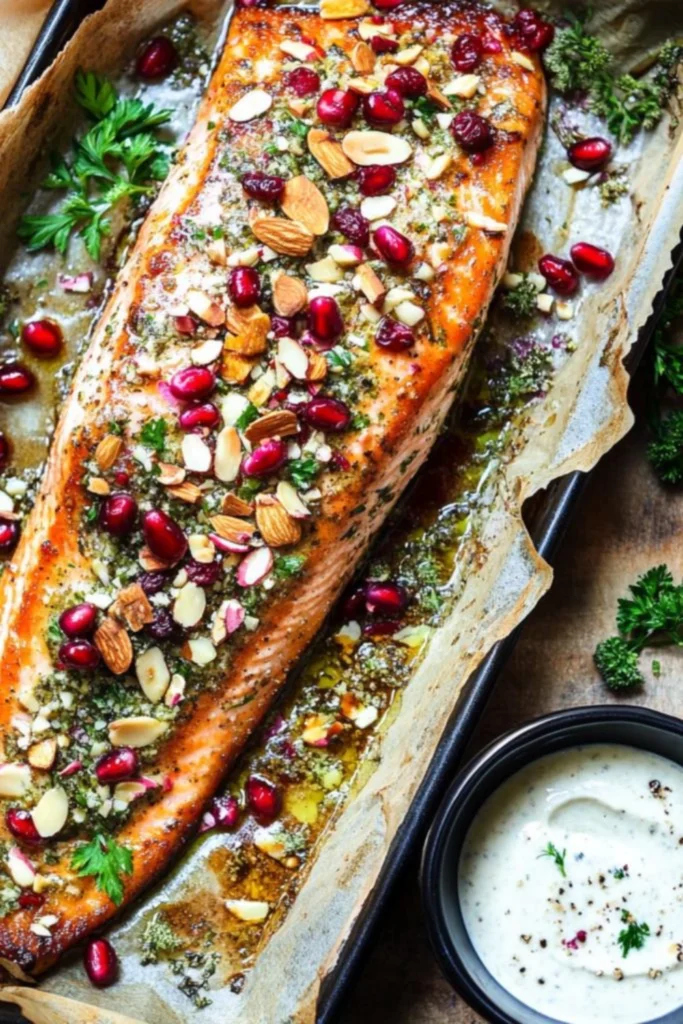
This recipe brings a bit more accessibility and weeknight practicality while still honoring the Ramsay principles of bold seasoning and disciplined technique. The honey-mustard glaze creates a lacquer-like caramelized crust under the broiler, the wilted greens add bitterness to balance the sweetness, and toasted almonds bring textural contrast and a subtle nuttiness that ties everything together.
Recipe 02 — Weeknight
Honey Mustard Glazed Salmon
Wilted Greens & Toasted Almonds
Bold, lacquered, and ready in 25 minutes — a weeknight recipe with fine-dining instincts
10mPrep
15mCook
4Servings
340Cal
Ingredients
- 4 skin-on salmon fillets (5–6 oz each)
- 3 tbsp Dijon mustard
- 2 tbsp raw honey
- 1 tbsp whole-grain mustard
- 1 tbsp olive oil + extra for greens
- 1 tsp apple cider vinegar
- Pinch of cayenne pepper
- 300g baby spinach or cavolo nero
- 2 cloves garlic, thinly sliced
- 40g flaked almonds, toasted
- Zest of 1 lemon
- Flaky sea salt & black pepper
Method
- Preheat your oven broiler (grill) to high. Line a baking tray with foil and place a wire rack on top. Whisk together Dijon, honey, whole-grain mustard, olive oil, vinegar, and cayenne into a smooth glaze.
- Pat salmon dry. Season flesh and skin well with salt and pepper. Place skin-side down on the wire rack. Spoon the glaze generously over the flesh — don’t be timid here.
- Broil for 8–10 minutes, 6 inches from the element. Watch carefully: you want the glaze to caramelize and bubble into a deep amber lacquer, not blacken. Rotate the tray at the halfway point for even color.
- While salmon broils, toast flaked almonds in a dry pan over medium heat, 3–4 minutes until golden. Set aside. In the same pan, heat a generous splash of olive oil over medium-high. Add sliced garlic and cook 45 seconds until fragrant but not brown.
- Add greens to the pan in two batches, tossing with tongs. Season well, add lemon zest, and cook until just wilted — 2–3 minutes total. Greens should retain vibrant color and slight texture.
- Remove salmon from broiler and rest 1 minute. Plate greens first, salmon on top, scattered almonds over everything. A squeeze of fresh lemon over the whole plate before service.
Chef’s Note: The wire rack is non-negotiable for broiling salmon. Direct contact with the foil creates steam underneath the fillet, which prevents the skin from crisping. The rack elevates the fish so heat circulates from all sides.
Recipe ThreeHerb-Crusted Salmon with Pea Purée & Crispy Prosciutto Restaurant Style
This is the plate you’d find on a fine dining menu. It’s the most technically involved of the three, but every component is achievable at home with standard equipment. The vibrant pea purée is silky and sweet, the herb crust adds herbal freshness and textural contrast, and the crispy prosciutto delivers the kind of savory, shatteringly crisp element that elevates every bite around it.
Recipe 03 — Restaurant Style
Herb-Crusted Salmon
Pea Purée & Crispy Prosciutto
A composed plate worthy of any Michelin-starred dining room — built entirely at home
20mPrep
18mCook
4Servings
420Cal
Ingredients
- For the Salmon
- 4 salmon fillets, skin removed (6 oz each)
- 60g panko breadcrumbs
- 3 tbsp fresh parsley, finely chopped
- 2 tbsp fresh tarragon, finely chopped
- 1 tbsp fresh chives, minced
- Zest of 1 lemon
- 3 tbsp olive oil, divided
- 2 tbsp Dijon mustard
- For the Pea Purée
- 400g frozen peas
- 2 tbsp unsalted butter
- 60ml double cream (heavy cream)
- 1 shallot, finely diced
- Salt, white pepper, and a squeeze of lemon
- To Finish
- 8 slices prosciutto di Parma
- Micro herbs or pea shoots to garnish
Method
- Crispy Prosciutto: Lay prosciutto slices flat on a baking sheet lined with parchment. Cover with a second sheet of parchment and weigh down with another baking sheet. Bake at 375°F (190°C) for 12–14 minutes until deeply crispy and flat. Cool on a rack — they will continue to crisp as they cool.
- Pea Purée: Sweat the shallot in butter over medium heat until translucent, 3 minutes. Add peas and cream, bring to a bare simmer, and cook 3 minutes. Transfer to a blender and blitz until silky smooth. Pass through a fine sieve for a restaurant-smooth finish. Season aggressively with salt, white pepper, and lemon. Keep warm.
- Herb Crust: Mix panko, parsley, tarragon, chives, lemon zest, and 2 tbsp olive oil until the crumbs hold together slightly. Season well. The mixture should be vivid green and fragrant.
- Salmon: Season fillets on both sides. Brush flesh tops with Dijon mustard. Pack the herb crust firmly onto the mustard-coated surface, pressing so it adheres.
- Heat 1 tbsp oil in an oven-safe skillet over medium-high. Sear salmon crust-side up for 2 minutes. Transfer pan to oven preheated to 400°F (200°C) and cook 8–10 minutes until the crust is golden and the flesh just flakes with gentle pressure at the thickest point.
- Plate: Spoon a generous swoosh of pea purée using a warm spoon. Place salmon at the center, resting slightly off the purée. Lean a piece of crispy prosciutto against the salmon. Garnish with pea shoots and serve immediately.
Chef’s Note: The Dijon mustard acts as the “glue” for the herb crust — don’t skip it. It also adds a gentle heat and acidity that works beautifully with the sweetness of the pea purée. Taste everything before plating: good cooking is built on constant tasting and adjusting, not just following a recipe.
PresentationHow to Plate Like a Michelin-Star Chef
Ramsay’s plating philosophy is as disciplined as his cooking technique. A beautiful plate isn’t decoration — it’s communication. It tells the diner what to eat first, what the flavors will be, and how much care went into the food.
Ramsay-Style Plating Rules
- 1Use a warm plate, always. Cold plates steal heat from food within seconds. Warm your plates in a low oven (175°F/80°C) for 10 minutes before service.
- 2Build height and off-center. Place your protein slightly off-center. Stack components rather than spreading them flat. The eye follows diagonal lines — use that.
- 3The sauce goes under or beside, not on top. Ladling sauce over perfectly crisped salmon skin destroys everything you worked for. Sauce goes on the plate first, salmon rests on or beside it.
- 4Odd numbers. Three scallops, five peas, seven caper berries. Even numbers look mechanical. Odd numbers look natural and deliberate.
- 5Wipe the rim. Use a clean damp cloth to wipe any fingerprints or splashes from the edge of the plate before service. A dirty rim communicates sloppiness regardless of what’s in the center.
- 6Garnish must be edible and relevant. Micro herbs should complement the dish’s flavors. A random sprig of rosemary on a teriyaki salmon is just visual noise — skip it.
TroubleshootingCommon Salmon Mistakes (And How Ramsay Would Fix Them)
Before you cook: Read through the entire recipe once. Ramsay is famous for insisting his brigade know the full dish before starting. A cook who reads as they go is always behind.
| The Mistake | What’s Actually Happening | The Fix |
|---|---|---|
| Salmon sticking to the pan | Pan or oil wasn’t hot enough when fish was added; proteins bonded to the surface | Preheat pan 3 full minutes. Fish releases naturally when properly seared — if it resists, it’s not ready to flip |
| Skin not crispy | Moisture on skin; pan not hot enough; or fish was moved before sear completed | Pat skin aggressively dry. Score to prevent buckling. Don’t move it. Ever. |
| Dry, chalky flesh | Overcooked — internal temp exceeded 145°F; fillet cooked too long flesh-side down | Use the 70/30 rule. Invest in an instant-read thermometer. Target 125°F for medium |
| Fishy taste | Fish not fresh; or not rinsed and thoroughly dried before cooking | Buy from a trusted source. Rinse under cold water and dry completely. Use within 1–2 days of purchase |
| Uneven cooking | Fillet varies dramatically in thickness from head to tail end | Use center-cut fillets. Or fold the thin tail end under itself to create even thickness |
| Bland flavor | Underseasoned at every stage — fish, pan, sauce | Season in layers: before cooking, during basting, and after resting. Taste constantly |
Questions & AnswersFrequently Asked Questions
What type of salmon does Gordon Ramsay use?
Ramsay consistently favors wild-caught salmon — particularly wild Atlantic or Pacific varieties — for their firmer texture, deeper color, and more complex flavor compared to farmed salmon. For home cooks, wild Sockeye or King (Chinook) salmon are excellent choices. That said, high-quality farmed salmon from a reputable source will still produce outstanding results with proper technique.
Does Gordon Ramsay cook salmon skin-side down first?
Always. In every public demonstration and teaching context, Ramsay’s salmon goes skin-side down into a hot pan first, and stays there for the majority of the cooking time — roughly 70–75% of total cook time. The skin acts as an insulating layer, protecting the delicate flesh from direct heat while the fat renders out and the skin crisps to a glass-like texture.
What temperature should salmon be cooked to?
For medium doneness — which Ramsay typically prefers — the internal temperature should reach 125°F (52°C). The flesh will be opaque on the outside but retain a slightly translucent, deep orange center that is just set. For well-done salmon, cook to 145°F (63°C), though this produces a noticeably drier result. A reliable instant-read thermometer is the most accurate tool for consistent results.
What sauce does Gordon Ramsay use with salmon?
His most referenced pairing is a variation of beurre blanc or beurre noisette — a French butter sauce that can be built with lemon, capers, herbs, white wine, or shallots depending on the dish. He’s also publicly discussed hollandaise, a light dill cream sauce, and herb oils for more casual preparations. The common thread is acidity (usually citrus or vinegar) to cut through the salmon’s natural richness.
Can I use this technique in an air fryer?
You can cook excellent salmon in an air fryer — 400°F for 8–10 minutes produces a nicely cooked fillet. However, the technique of aromatic butter basting is not possible in this format, and the skin crisping mechanism is different. For the true Ramsay pan method, a cast-iron or stainless steel skillet is the correct tool. Air fryer salmon is convenient, but it’s a different dish.
How do I stop salmon from smelling while cooking?
Ensure good kitchen ventilation — turn on your extractor fan at full power before you start. Adding a lemon half to the pan while cooking helps neutralize some of the volatile aromatic compounds. The most significant factor, though, is freshness: properly fresh salmon has a clean, oceanic smell, not a pungent fishy odor. If your salmon smells strongly before it even hits the pan, the issue is ingredient quality, not technique.
Now Get Into the Kitchen
Three recipes, five techniques, and a philosophy that transforms how you think about cooking fish. The Ramsay approach isn’t about complexity — it’s about care, attention, and a refusal to accept anything less than your best. Start with Recipe 1. Master the skin. The rest follows.