
Learn how to make classic chicken divan at home with this detailed recipe guide. Discover traditional techniques, ingredient upgrades, and modern twists on this sophisticated 1920s casserole that impresses every time.
Chicken divan is a sophisticated yet surprisingly simple casserole that has quietly graced American dinner tables since the 1920s, yet somehow remains underappreciated in modern kitchens. This elegant one-dish meal combines tender chicken, vibrant broccoli, and a luxurious cream sauce topped with a golden, crispy cheese crust—creating a dish that’s equally at home at casual weeknight dinners or elegant entertaining occasions.
Named after the New York restaurant where it was first created, chicken divan represents the best of mid-century American cooking: refined flavors, convenient preparation, and universal appeal. Unlike trendy recipes that fade with each season, this timeless classic has remained consistently popular for nearly a century because it genuinely delivers on flavor, texture, and satisfaction.
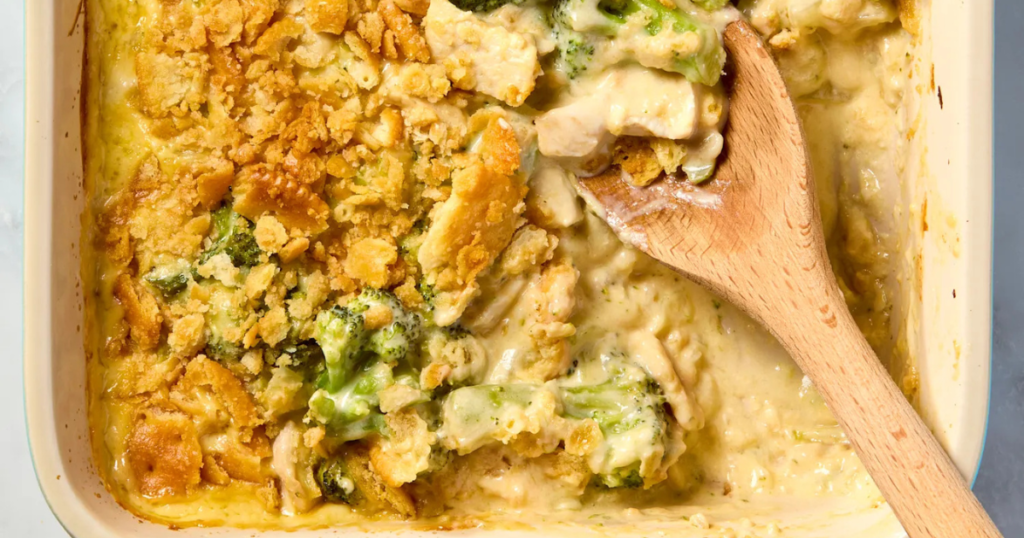
What makes chicken divan particularly special is its architectural appeal. Unlike soupy casseroles, divan features distinct layers—each component visible and individually excellent, yet harmoniously combined. The broccoli maintains a slight firmness, the chicken stays moist and tender, and the sauce coats everything in creamy richness while béchamel or cream of chicken soup creates an elegant binding.
Whether you’re rediscovering a family favorite or encountering chicken divan for the first time, this comprehensive guide will teach you everything needed to create restaurant-quality results in your home kitchen, including ingredient selection, technique refinements, and creative variations for modern palates.
The History and Cultural Significance of Chicken Divan
Chicken divan emerged in the 1920s at New York’s prestigious Divan Parisien restaurant, where Chef Brigadoon created this dish as an elegant luncheon offering for affluent diners. The original recipe featured roasted chicken, fresh broccoli, and hollandaise sauce—a combination that immediately captured the culinary imagination of the era.
The dish’s popularity skyrocketed in the 1950s when American cooking shifted toward convenience-focused casseroles, and recipes began substituting condensed cream of chicken soup for hollandaise, making preparation accessible to home cooks without classical culinary training. This democratization of the recipe broadened its appeal significantly, transforming it from an exclusive restaurant dish into an achievable home preparation.
Throughout the latter half of the twentieth century, chicken divan became a staple of church potlucks, country club luncheons, and dinner party menus. It represented the pinnacle of sophisticated home cooking—impressive enough to serve guests, yet simple enough to prepare while attending to other entertaining duties.
Today, chicken divan is experiencing a quiet renaissance as home cooks rediscover its appeal and modern food writers explore its elegant potential. Contemporary versions honor the classic while incorporating modern ingredients like fresh thyme, better-quality cheeses, and premium broths that elevate the dish beyond its condensed-soup ancestors.
Understanding Chicken Divan Components
Before assembling your casserole, let’s examine each component and understand how they work together to create the finished dish’s signature appeal.
The Protein Foundation: Chicken Selection
The chicken component makes or breaks chicken divan. Using improperly cooked or low-quality chicken results in dry, disappointing texture that undermines the entire dish.
Best Chicken Options:
- Poached chicken breasts: Gentle poaching keeps the meat extraordinarily moist while infusing it with subtle flavor. This is the traditional method and remains superior to roasting or grilling for this application.
- Rotisserie chicken: Convenience meets quality when using grocery store rotisserie chickens. The meat is already flavorful and tender; simply shred and use. This is an excellent shortcut without sacrificing quality.
- Leftover roasted chicken: An ideal use for yesterday’s roast chicken. The developed flavor from roasting adds complexity to the final dish.
What to Avoid:
- Canned chicken (too dry and metallic-tasting)
- Chicken breasts cooked until stringy (indicates overcooking)
- Underseasoned chicken (season before cooking, not just in the sauce)
The Vegetable Star: Broccoli Selection and Preparation
Broccoli provides textural contrast, nutritional balance, and visual appeal to chicken divan. The key to success involves selecting fresh broccoli and cooking it to precisely the right doneness—tender enough to be fork-tender yet firm enough to maintain its structure and vibrant color in the oven.
Broccoli Preparation Method:
- Select 1.5 to 2 pounds of fresh broccoli crowns (avoid pre-cut florets when possible, as they lose moisture quickly)
- Cut florets into bite-sized pieces—approximately 2 to 3 inches long, uniform in size for even cooking
- Cut thicker stalks into thin strips, discarding woody bottoms; these tender interior pieces provide textural variety
- Blanch in generously salted boiling water for 4-5 minutes until just beginning to soften but still bright green and crisp
- Immediately transfer to ice water bath to halt cooking and preserve vibrant color
- Drain thoroughly and pat dry with paper towels—excess moisture is the enemy of crispy cheese topping
This two-stage cooking method (brief blanching followed by finishing in the oven) ensures broccoli reaches perfect doneness without becoming mushy or sulphurous-smelling.
The Sauce: Creating Creamy Richness
The sauce represents chicken divan’s soul—it must be rich enough to coat the chicken and vegetables while maintaining enough body to support a cheese topping. Several sauce options exist, from traditional to contemporary.
Béchamel-Based Sauce (Traditional Method): A béchamel sauce made from butter, flour, and milk creates the most elegant, refined version. This white sauce has been the foundation of French cooking for centuries and remains unmatched for creating silky smoothness.
Cream of Chicken Soup-Based Sauce (Convenient Method): Two cans of cream of chicken soup combined with sour cream, Dijon mustard, and fresh herbs creates excellent flavor with minimal effort. This was the standard approach during the casserole boom and remains valid today.
Contemporary Cream Sauce (Modern Upgrade): Using high-quality chicken broth combined with heavy cream and a roux creates a sauce that tastes fresher and lighter than soup-based versions while delivering equivalent richness.
Complete Chicken Divan Recipe
Ingredients
For the Chicken:
- Chicken breasts (3 lbs) or equivalent pre-cooked chicken
- Chicken broth (4 cups) for poaching, if cooking fresh
- Bay leaf (1)
- Fresh thyme sprigs (3-4)
- Sea salt and black pepper to taste
For the Vegetables:
- Fresh broccoli crowns (1.5 to 2 lbs)
- Water for blanching
- Sea salt for blanching water
For the Sauce (Béchamel Method):
- Butter (3 tablespoons)
- All-purpose flour (3 tablespoons)
- Whole milk (2 cups), warmed
- Chicken broth (1 cup), warmed
- Dijon mustard (1 tablespoon)
- Fresh thyme (1 teaspoon, minced)
- Fresh tarragon (½ teaspoon, minced) – optional but recommended
- Nutmeg (⅛ teaspoon, freshly grated)
- Sea salt and white pepper to taste
For the Sauce (Cream Soup Shortcut Method):
- Cream of chicken soup (2 cans, 10.5 oz each)
- Sour cream (½ cup)
- Dijon mustard (2 teaspoons)
- Fresh thyme (½ teaspoon, minced)
- Sherry or dry white wine (2 tablespoons) – optional
- Sea salt and black pepper to taste
For the Topping:
- Gruyère cheese, finely shredded (1 cup)
- Parmigiano-Reggiano cheese, finely grated (½ cup)
- Panko breadcrumbs (¼ cup)
- Fresh thyme leaves (1 tablespoon)
- Butter, melted (2 tablespoons)
Equipment Needed:
- 9×13 inch casserole dish
- Large pot for poaching and blanching
- Medium saucepan for sauce preparation
- Whisk
- Sharp knife for cutting vegetables
- Measuring cups and spoons
Step-by-Step Preparation Instructions
Step 1: Prepare the Chicken (25 minutes if poaching fresh)
If Using Fresh Chicken: In a large pot, combine chicken broth, bay leaf, and thyme sprigs. Bring to a simmer over medium-high heat. Add chicken breasts, ensuring they’re covered by about an inch of liquid. Reduce heat to maintain a gentle simmer—aggressive boiling toughens the meat.
Cook for 15-18 minutes until a meat thermometer inserted into the thickest part reads 165°F (74°C). The internal temperature is more reliable than cooking time, as breast thickness varies significantly.
Remove chicken to a cutting board and let cool until comfortable to handle. Once cooled, cut into bite-sized pieces (approximately 1.5-inch cubes). Set aside.
If Using Pre-Cooked Chicken: If using rotisserie or leftover roasted chicken, simply shred or cut into bite-sized pieces. You should have approximately 4 to 4.5 cups of prepared chicken.
Step 2: Blanch the Broccoli (8 minutes)
Bring a large pot of salted water to a rolling boil. The water should taste pleasantly salty, like seawater—proper seasoning at this stage seasons the broccoli throughout.
Working in batches if necessary to avoid crowding, add broccoli florets and stalk pieces. Cook for 4-5 minutes, stirring occasionally, until the florets turn bright emerald green and a fork easily pierces the thickest part of the stem, but the broccoli still maintains slight firmness.
Using a slotted spoon, transfer the broccoli immediately to a bowl filled with ice water. Let cool for 2-3 minutes, then drain thoroughly and pat dry with paper towels. Excess moisture creates steam in the oven, preventing the cheese topping from crisping properly.
Step 3: Prepare the Sauce (15 minutes for béchamel; 5 minutes for shortcut)
For Béchamel-Based Sauce: Melt butter in a medium saucepan over medium heat. Once melted and foaming, add flour and whisk constantly for 2-3 minutes, creating a light golden paste (roux). This cooking time removes the raw flour taste while keeping the roux light in color.
Slowly pour in the warmed milk while whisking vigorously to prevent lumps. Add the warmed chicken broth similarly, whisking continuously. The sauce will thicken as it heats.
Once smooth and thickened (should coat the back of a spoon), remove from heat and stir in Dijon mustard, fresh thyme, tarragon (if using), and nutmeg. Season with salt and white pepper to taste. The sauce should taste flavorful but not oversalted—the cheese topping adds additional salt.
For Cream Soup Shortcut: In a medium saucepan, combine cream of chicken soup with sour cream, whisking until smooth. Stir in Dijon mustard, thyme, and optional sherry. Heat gently over medium heat, stirring occasionally, until steaming. Season with salt and pepper to taste.
Step 4: Assemble the Casserole (5 minutes)
Preheat oven to 350°F (175°C).
Pour approximately one-third of the sauce into the bottom of a 9×13 inch casserole dish, creating an even layer. This initial sauce layer prevents sticking and ensures the bottom cooks evenly.
Arrange blanched broccoli florets in a single layer over the sauce, spacing them somewhat evenly. Distribute prepared chicken pieces over the broccoli, filling gaps and creating an even layer.
Pour remaining sauce over the chicken and broccoli, ensuring all components are covered and moisture reaches all areas. Use the back of a spoon to gently spread sauce and fill gaps—this step ensures even cooking and prevents dry spots.
Step 5: Prepare and Apply the Topping (3 minutes)
In a small bowl, combine shredded Gruyère, grated Parmigiano-Reggiano, panko breadcrumbs, and fresh thyme leaves. Toss with the melted butter until the breadcrumb mixture resembles coarse sand and all components are evenly moistened.
Distribute the topping evenly over the casserole, covering all visible sauce. Press gently so the topping adheres to the sauce below, which helps it stay in place and cook more evenly.
Step 6: Bake Until Golden (25-35 minutes)
Place the casserole in the preheated oven. Bake for 25-35 minutes until the cheese topping turns golden brown and the sauce bubbles at the edges. Oven temperatures vary, so begin checking at 25 minutes. The top should be deep golden, not pale or pale yellow.
If the topping browns too quickly before the center heats through, tent loosely with aluminum foil and reduce oven temperature by 25°F (14°C), continuing to bake until the center is hot and bubbling.
Step 7: Rest and Serve (5 minutes)
Remove the casserole from the oven and let rest for 5 minutes before serving. This brief resting period allows the sauce to set slightly, making individual servings cleaner and more appealing when plated. The chicken divan will still be hot and steaming when served.
Serve directly from the casserole dish, or spoon individual portions onto warmed plates. Each serving should include chicken, broccoli, creamy sauce, and crispy cheese topping.
Ingredient Selection and Quality Considerations
Cheese Selection for Superior Results
The cheese topping distinguishes a good chicken divan from an exceptional one. Avoid pre-shredded cheese, which contains anti-caking agents that prevent even melting and browning.
Gruyère Cheese: This Swiss-style cheese melts beautifully and develops a slightly nutty, complex flavor when baked. It’s worth seeking out in specialty sections rather than substituting with generic “Swiss” cheese. Gruyère creates a more refined result.
Parmigiano-Reggiano: Authentic Parmigiano-Reggiano provides sharp, umami-rich notes that complement the creamy sauce. The combination of Gruyère’s meltability with Parmigiano’s flavor depth creates superior results compared to using either cheese alone.
Broccoli Considerations
Fresh broccoli is essential—frozen broccoli contains excess water and becomes mushy in extended oven cooking. If fresh broccoli is unavailable, defrost frozen broccoli thoroughly and pat extremely dry before blanching, as this reduces excess moisture.
Look for tightly clustered, deeply colored florets without yellowing or wilting. Avoid bunches with soft spots, which indicate age and deterioration.
Cream Selection for Sauce
If preparing béchamel sauce, whole milk creates better texture than lower-fat varieties. Whole milk’s fat content contributes to smoothness and flavor while reducing the likelihood of lumpy sauce.
For shortcut versions using cream of chicken soup, quality matters significantly. Premium brands taste noticeably better than budget options—the investment is worthwhile for a dish where soup is a primary component.
Variations and Modern Interpretations
Herb-Infused Version
Add an additional tablespoon of fresh tarragon and 1 teaspoon of fresh chervil to the sauce for a more sophisticated, French-inspired version. Fresh herbs elevate chicken divan from simple comfort food to elegant entertaining dish.
Mushroom Enhancement
Sauté 8 ounces of sliced cremini or shiitake mushrooms in butter until golden (approximately 6-7 minutes), then add to the casserole with the broccoli. Mushrooms add earthiness and umami depth that complements both the chicken and cheese.
Wine-Enhanced Sauce
Add 2 tablespoons of dry white wine or dry sherry to the sauce after whisking in the liquids. The alcohol cooks off while contributing subtle complexity. This is particularly effective with the béchamel version.
Lower-Calorie Interpretation
Substitute half-and-half for whole milk and use reduced-fat cream of chicken soup. Use light sour cream (if making the shortcut version) and reduce the cheese topping by one-third while adding an additional tablespoon of fresh herbs for compensating flavor.
Gluten-Free Adaptation
Use cornstarch as a thickening agent instead of flour—combine 2 tablespoons of cornstarch with 3 tablespoons of cold broth, then whisk into the sauce after it reaches a simmer. This creates equivalent thickness and texture without gluten.
Artichoke and Spinach Variation
Replace broccoli with 1 pound of fresh spinach (cooked, squeezed dry, and chopped) and one 14-ounce can of artichoke hearts (drained and halved). This creates a lighter, more elegant presentation while maintaining the casserole’s essential structure.
Make-Ahead and Storage Guide
Prepare in Advance
Chicken divan can be assembled up to 24 hours before baking. Prepare all components separately, then assemble the casserole as described. Cover tightly with plastic wrap and refrigerate until ready to bake.
Important: Add 10-15 minutes to the baking time if the casserole goes directly from refrigerator to oven without reaching room temperature. A cold casserole requires extended time for the center to heat through completely.
Alternatively, allow the assembled casserole to sit at room temperature for 30 minutes before baking, reducing the total baking time back to the standard 25-35 minutes.
Freezing Instructions
Chicken divan freezes excellently for up to three months. Prepare and bake as directed, then cool completely. Transfer to a freezer-safe container or wrap tightly with plastic wrap and heavy-duty aluminum foil.
To reheat from frozen, thaw overnight in the refrigerator (important for food safety), then reheat in a 325°F (163°C) oven for 30-40 minutes, covered, until heated through. Alternatively, reheat without thawing at 300°F (149°C) for 50-60 minutes, covered.
Refrigerator Storage
Leftover cooked chicken divan keeps for 3-4 days in an airtight container. Reheat gently in a 325°F (163°C) oven for 15-20 minutes, covered, or in the microwave at 50% power, stirring occasionally, until heated through.
The sauce may separate slightly upon reheating—simply stir gently while warming to recombine.
Serving Suggestions and Complementary Dishes
Wine Pairings
White Wine: Choose a light, crisp white like Sauvignon Blanc or Pinot Grigio. The acidity cuts through the sauce’s richness while complementing the broccoli’s vegetal notes.
Light Red Wine: A low-tannin Pinot Noir works surprisingly well, particularly if the casserole includes mushrooms or wine in the sauce.
Accompaniment Suggestions
Salads: Serve with a simple green salad dressed in bright vinaigrette to balance the casserole’s richness. Mixed greens, bitter greens like arugula or endive, or crisp romaine all work well.
Starches: Though chicken divan is rich enough to stand alone as a main course, crusty bread, buttered egg noodles, or steamed rice can extend servings and absorb additional sauce.
Vegetables: Simple roasted or steamed vegetables like asparagus, green beans, or root vegetables provide textural contrast and additional nutrition.
Plating Suggestions
Individual Presentation: Spoon portions into shallow bowls, ensuring each serving includes broccoli, chicken, sauce, and cheese topping. Garnish with fresh thyme and a crack of black pepper.
Formal Service: For entertaining, slightly elevate presentation by arranging broccoli florets on the plate first, topping with chicken, then drizzling sauce around. This creates visual separation and appeals to modern plating aesthetics.
Casual Service: Serve family-style directly from the casserole dish, allowing guests to serve themselves.
Nutritional Information
Per serving (approximately 1.5 cups, based on 6 servings):
- Calories: 420
- Protein: 42g
- Fat: 18g
- Saturated Fat: 10g
- Carbohydrates: 12g
- Fiber: 3g
- Sodium: 680mg
- Calcium: 320mg
Note: Nutritional information varies based on specific ingredients used and portion sizes. Shortcut versions using condensed soup typically have higher sodium content.
Frequently Asked Questions About Chicken Divan
Q: Can I make chicken divan without using canned soup? A: Absolutely. The béchamel or contemporary cream sauce methods create superior results compared to canned soup. If avoiding processed ingredients is important to you, prepare sauce from scratch using butter, flour, and broth—it’s actually simpler than many people assume and requires minimal additional time.
Q: What’s the difference between chicken divan and chicken tetrazzini? A: While both are elegant, creamy chicken casseroles, they differ significantly. Chicken tetrazzini traditionally uses pasta as its base, features mushrooms prominently, and often includes sherry in the sauce. Chicken divan features broccoli, uses no pasta, and typically omits sherry (though wine can be added). Divan has a more refined, vegetable-forward profile while tetrazzini is richer and more indulgent.
Q: Can I use frozen broccoli? A: While not ideal, frozen broccoli can work if absolutely necessary. Thaw completely, pat extremely dry with paper towels to remove excess moisture, and reduce the blanching time to 2 minutes maximum (frozen broccoli is partially cooked already). The texture won’t be as crisp as fresh broccoli, but the dish will still taste good.
Q: What if my cheese topping isn’t crisping? A: Ensure the casserole is adequately covered with sauce—dry spots won’t brown evenly. Additionally, check that your oven temperature is accurate using an oven thermometer; an oven running cool produces pale tops. If the topping still refuses to crisp, broil for 1-2 minutes at the end of baking, watching carefully to prevent burning.
Q: Can I double this recipe for a crowd? A: Yes, easily. Prepare twice the sauce and ingredients, then assemble in two 9×13 casseroles or one larger pan (13×18 works well). Increase baking time by 10-15 minutes, as larger volumes require additional time to heat through completely.
Q: Is chicken divan better baked ahead and reheated, or baked fresh? A: Both approaches work well. Fresh baking results in the crispest cheese topping and most vibrant broccoli color. Baking ahead and reheating slightly softens the topping but deepens sauce flavor as ingredients continue melding overnight. For important entertaining, I recommend baking fresh. For casual meals, either approach succeeds.
Q: What chicken part works best for this recipe? A: Boneless, skinless chicken breasts are traditional and remain superior due to their mild flavor and tender texture when poached. Chicken thighs work but produce a richer, more robust dish that some find overpowering. A mixture of both creates balanced flavor.
Q: Can I prepare the sauce in advance? A: Yes. Both béchamel and cream-soup-based sauces hold well for 24 hours in the refrigerator, covered. If the sauce thickens excessively upon cooling, thin it slightly with additional warmed broth when reassembling the casserole before baking.
Chef’s Professional Tips for Perfect Chicken Divan
Temperature Control: Oven temperature significantly impacts results. Use an oven thermometer to verify your oven runs accurately. Even a 25°F (14°C) variance affects cooking time and browning.
Timing Advantage: Prepare all components separately (cooked chicken, blanched broccoli, and sauce) up to 6 hours in advance, then assemble 30 minutes before serving. This approach maximizes freshness while minimizing last-minute stress.
Sauce Consistency: The sauce should be noticeably thinner than you expect at this stage—it will thicken further as the casserole bakes and the vegetables release moisture. If you prefer a thicker sauce, add it as the final adjustment after the casserole finishes baking rather than during assembly.
Even Browning: If your oven browns the top unevenly, rotate the casserole halfway through baking for more consistent color development.
Leftover Transformation: Leftover chicken divan transforms beautifully into crepes, croquettes (combine with bechamel, bread, and fry), or soup (thin with additional broth and cream). This prevents waste while creating entirely different presentations.
Conclusion
Chicken divan deserves recognition as one of America’s most elegant yet accessible casseroles. This dish exemplifies the principle that exceptional food doesn’t require exotic ingredients or complicated techniques—merely quality components and proper execution.
Whether you’re preparing this classic for the first time or rediscovering a family favorite, this guide provides everything needed to create restaurant-quality chicken divan in your home kitchen. The beauty of this recipe lies in its flexibility; it accepts variations and modifications while maintaining its essential character.
From the tender, flavorful chicken to the vibrant broccoli to the luxurious sauce and crispy cheese topping, each component plays an essential role in creating a dish greater than the sum of its parts. Master the basic recipe, then feel confident exploring variations that align with your preferences and available ingredients.
Chicken divan represents refined comfort cooking—sophisticated enough to impress guests, yet simple enough for casual weeknight meals. Make this elegant casserole a regular presence in your kitchen, and you’ll understand why it has remained popular for nearly a century.