
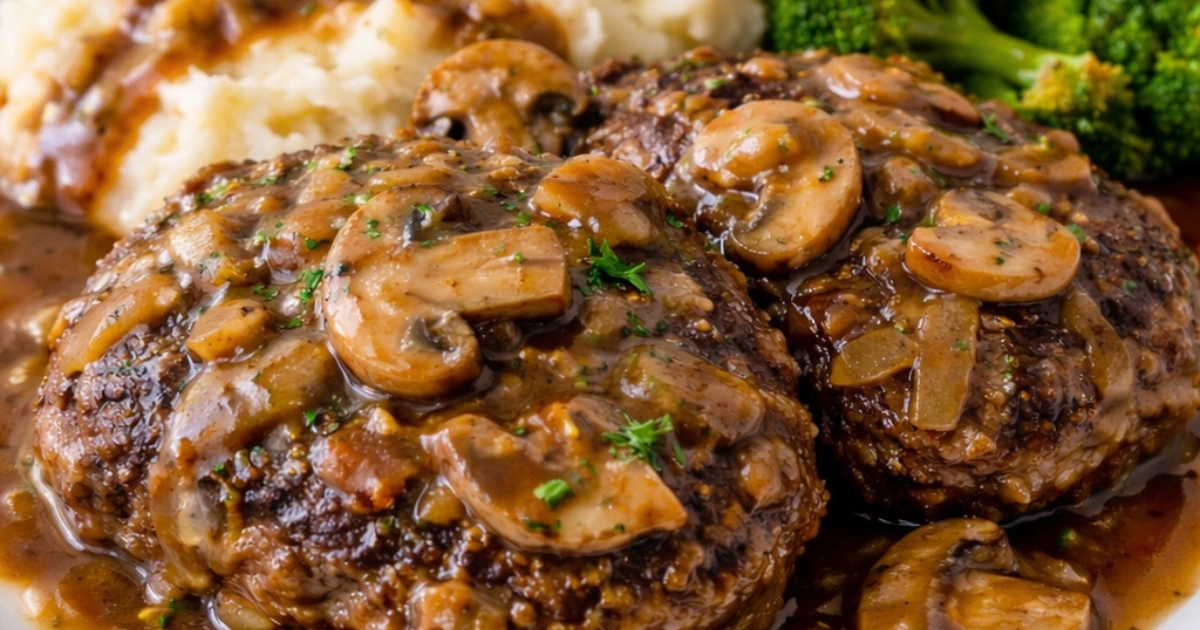
What Is Hamburger Steak?
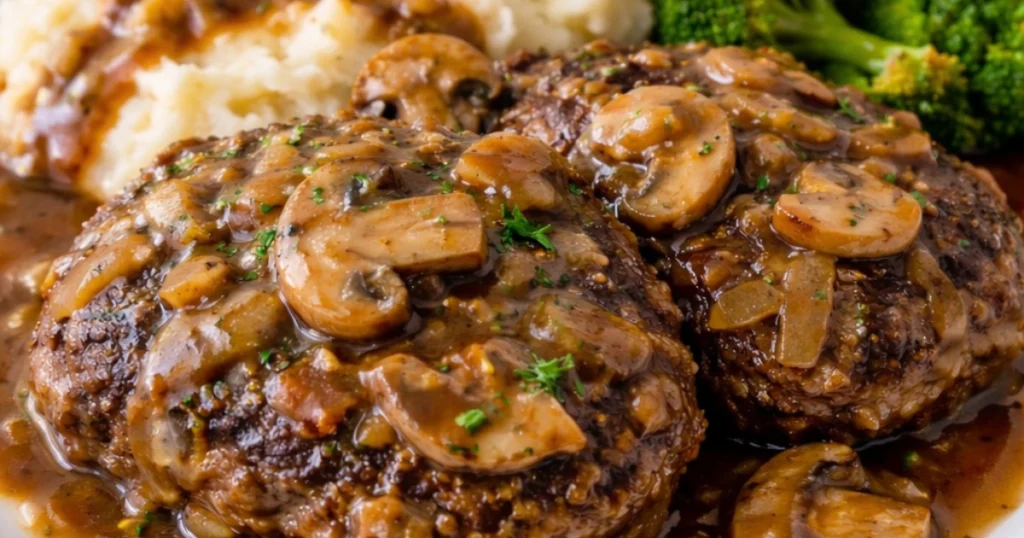
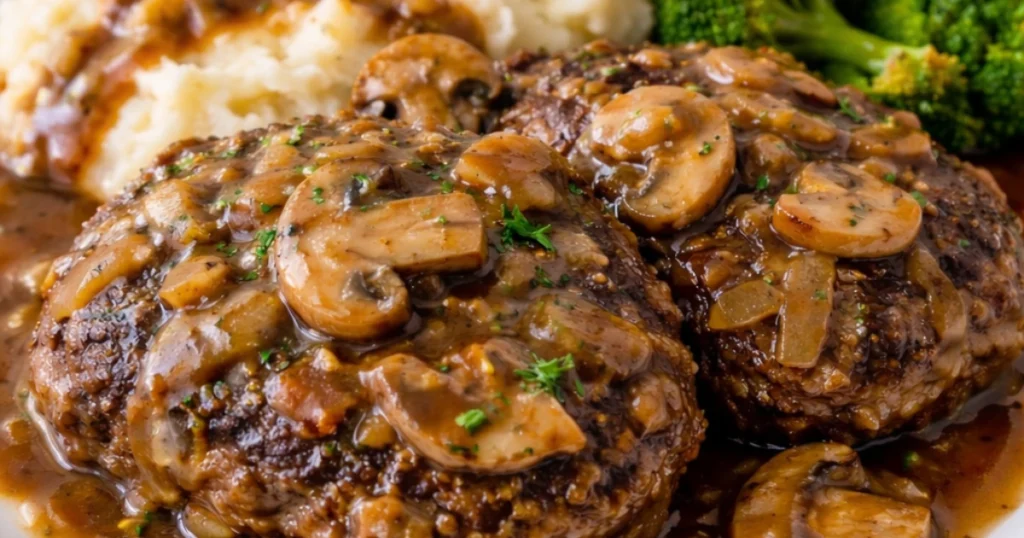
Best Hamburger Steak Recipe with Onion Gravyis a seasoned ground beef patty — thicker and more substantial than a burger patty, typically about ¾ to 1 inch thick and 5 to 6 ounces — that’s cooked entirely on the stovetop or in the oven, served without a bun, and almost always accompanied by a pan-made gravy. It’s a plated dinner, not a sandwich. The patty is the star, and the gravy is its essential companion.
What distinguishes a hamburger steak from a regular burger patty is both size and intention. A hamburger steak is seasoned more assertively — typically with Worcestershire sauce, garlic, onion powder, and sometimes a binder like an egg or breadcrumbs. It’s cooked to be eaten with a fork and knife, not picked up with your hands. And crucially, it’s finished in the gravy rather than just topped with it — the patty simmers in the sauce, absorbing its flavors from all sides while the sauce reduces and concentrates around it.
The result is a dish that occupies a unique place on the American table: more dressed-up than a simple grilled burger, more approachable than a roast or a braised short rib, and more satisfying than almost anything else you can make with a pound of ground beef and 35 minutes.
A Surprisingly Rich History
The story of hamburger steak is, in many ways, the story of beef in America — how it moved from a European immigrant tradition into the mainstream of American home cooking, and then into the diner booths and church suppers and weeknight kitchens where it became genuinely beloved.
The concept of ground or minced beef shaped into a patty and pan-fried has European roots stretching back centuries. German sailors and immigrants brought with them a tradition of minced beef dishes — most notably what came to be called “Hamburg steak” in American cookbooks of the mid-1800s, named after the German port city from which many immigrants embarked. These early dishes were often made from salted, pickled, or lower-quality beef that was improved through mincing and pan-frying — a practical solution to tough or aged cuts that made them more palatable.
By the second half of the 19th century, “Hamburg steak” appeared on restaurant menus across the United States, priced affordably and ordered frequently by working-class diners who could get a filling beef meal for considerably less than the cost of a whole cut. Early recipes from this era often called for raw onion mixed directly into the beef, a splash of something acidic, and pan-frying in butter — the fundamental bones of what we still make today.
Through the early 20th century, as refrigeration improved and ground beef became widely available at consistent quality, hamburger steak evolved into a staple of American home cooking. It appeared in virtually every home economics textbook, church community cookbook, and family recipe box from the 1920s through the 1960s. The dish adapted regionally — gaining richer brown gravies in the South and Midwest, mushroom variations in the Northeast, and even some Creole-spiced interpretations in Louisiana.
The diner era of mid-century America cemented hamburger steak as an institution. It appeared on laminated menus alongside pot roast and chicken-fried steak as the kind of reliable, filling, affordable plate that working Americans could count on. It never needed reinvention because it never fell apart. Today, it occupies that rare culinary space where nostalgia and genuine deliciousness fully overlap.
Hamburger Steak vs. Salisbury Steak: What’s the Difference?
This question comes up every time hamburger steak appears on a menu or in a recipe post, and it deserves a clear answer — because the two dishes are genuinely related and the line between them is legitimately blurry.
Hamburger steak is ground beef seasoned with aromatics and spices, shaped into a thick patty, and cooked in a pan — often finished in an onion or brown gravy. The patty itself is straightforward: mostly beef, lightly seasoned, with texture that’s close to a burger patty. It’s a simple, pure expression of ground beef with a sauce built to complement it.
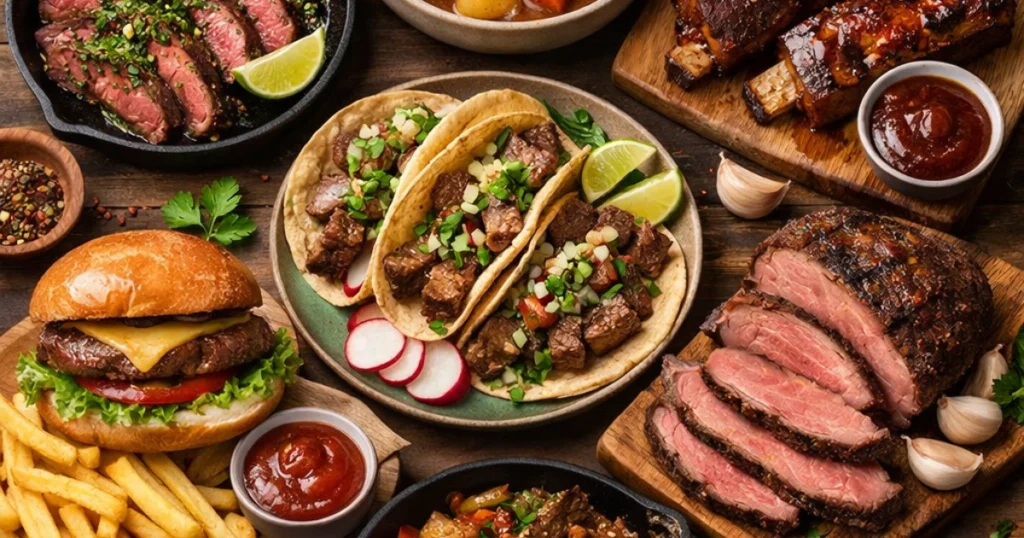
Salisbury steak — named after 19th-century American physician Dr. James Henry Salisbury, who prescribed a diet of minced beef for various ailments — is more heavily processed. Traditional Salisbury steak recipes include fillers like breadcrumbs, milk, egg, ketchup, and sometimes mustard mixed directly into the beef. The result is a patty with a softer, more uniform, almost meatloaf-like texture. It’s typically served with a mushroom-forward brown gravy.
The practical difference: hamburger steak has a more rugged, meaty, open-textured bite. Salisbury steak is softer and more bound, with the fillers giving it a texture that some find comforting and others find slightly processed. Both are legitimate dishes with devoted followings. This recipe leans firmly toward the hamburger steak tradition — minimal binders, maximum beef flavor, a rougher texture that develops a better sear crust.
The gravy is where regional and family tradition really diverges. Hamburger steak has traditionally been paired with a simple caramelized onion brown gravy. Salisbury steak skews toward a mushroom-and-beef-broth gravy. This recipe includes both variations so you can choose — or make both and decide for yourself which side of the debate you land on.
Choosing the Best Ground Beef for Hamburger Steak
Ground beef is a deceptively simple ingredient with meaningful variation, and what you choose here matters more than almost any other decision in this recipe.
Fat Content: The Most Important Variable
The fat-to-lean ratio of your ground beef determines everything about how the patty behaves — how it sears, how it holds together, how juicy it remains after cooking, and how much flavor it carries. For hamburger steak, 80/20 ground beef (80% lean, 20% fat) is the gold standard. This ratio provides enough fat to keep the interior moist during the high-heat sear, contributes significantly to flavor (fat carries the volatile aromatic compounds that your nose and palate register as “beefy”), and renders into the pan drippings that form the flavor base of your gravy.
Leaner grinds — 90/10 or 93/7 — are technically usable but produce a patty that’s noticeably drier and less flavorful. The drippings from a lean grind also don’t give you enough fat for a proper gravy base. If all you have is a lean grind, add a tablespoon of butter to the pan before searing and be careful not to overcook. If someone in your household needs a lower-fat option, consider 85/15 as a reasonable compromise.
Grind Type: Fresh vs. Pre-Packaged
Freshly ground beef from a butcher — ground that day from a known cut like chuck, brisket, or short rib — produces a noticeably superior result. The texture is more open and irregular, which means more surface area for browning and a more interesting bite. Freshly ground beef also hasn’t been densely packed in vacuum packaging, which means the proteins haven’t been compressed — your patty will be lighter and more tender.
That said, supermarket ground beef in the standard tube or tray is perfectly good for this recipe, particularly at 80/20. The difference between fresh-ground and packaged is meaningful but not critical — choose fresh when you can, use packaged when you can’t, and the dish will be excellent either way.
The Cut Behind the Grind
If you’re buying from a butcher who can tell you what cut the beef is ground from, ask for ground chuck. Chuck contains the ideal fat ratio for hamburger steak and carries a bold, distinctly beefy flavor that leaner grinds from sirloin or round simply don’t have. Ground sirloin is leaner and cleaner-tasting — excellent for something like a tartare but not the best choice for a dish where juiciness and richness are the goals.
The Secrets to Juicy, Flavorful Hamburger Steaks
Five techniques separate a truly great hamburger steak from a dry, dense, forgettable one. Master these and the recipe becomes almost foolproof.
1. Handle the Meat as Little as Possible
Every time you squeeze, press, or overwork ground beef, you’re compacting the protein strands and squeezing out moisture. Mix the seasonings in by hand using just your fingertips, working quickly and stopping the moment everything is incorporated. The mixture should still look slightly rough and uneven — that’s exactly right. Overworked ground beef produces a dense, rubbery patty that’s almost impossible to rescue.
2. Make a Dimple in the Center
Before the patty goes into the pan, press your thumb or two fingers into the center of each one to create a shallow indent — about ½ inch deep. As beef cooks, the proteins contract and the center of a flat patty tends to puff upward into a dome. The dimple compensates for this contraction, allowing the patty to cook more evenly and remain flat enough for maximum contact with the pan surface — which directly translates to a better crust.
3. Sear First, Sauce Second — Never Simultaneously
The sear and the braise are separate phases, and that separation is essential. If you add the onions and liquid before the crust has formed, the steam from the liquid prevents browning entirely and you end up with a grey, steamed patty sitting in a thin liquid that never concentrates into proper gravy. Sear the patty in a hot, dry pan first until a dark, caramelized crust forms on both sides. Then — and only then — build the gravy in that same pan and return the patty to finish.
4. Don’t Press the Patty While It Cooks
Pressing a burger patty or hamburger steak with a spatula while it sears is one of the most common and most damaging things a home cook can do. You are literally squeezing the juices out of the meat and into the pan, where they evaporate. Every press = drier patty. Set it in the pan, leave it alone, and let the Maillard reaction do its work undisturbed.
5. Finish Low and Slow in the Gravy
Once the sear is done and the gravy is built, return the patties to the pan and reduce the heat to low. Cover and let them finish cooking gently in the simmering gravy for 8–10 minutes. This low-and-slow finish accomplishes three things simultaneously: it brings the interior of the patty to the correct temperature without overcooking the exterior, it allows the patty to absorb flavor from the gravy, and it gives the gravy time to reduce and concentrate around the beef. This is what makes the dish taste like it simmered for hours rather than 35 minutes.
Full Hamburger Steak Recipe with Onion Gravy
Yield: 4 servings | Prep Time: 15 minutes | Cook Time: 30 minutes | Total Time: 45 minutes
Ingredients
For the Hamburger Steaks
- 1½ pounds 80/20 ground beef (ground chuck preferred)
- 1 teaspoon Worcestershire sauce
- ½ teaspoon garlic powder
- ½ teaspoon onion powder
- ½ teaspoon smoked paprika
- 1 teaspoon kosher salt
- ½ teaspoon freshly cracked black pepper
- 1 teaspoon Dijon mustard (optional, adds subtle depth)
- 1 tablespoon avocado oil or vegetable oil (for searing)
For the Onion Brown Gravy
- 1 tablespoon unsalted butter
- 2 medium yellow onions, thinly sliced into half-moons
- 2 garlic cloves, minced
- 1 teaspoon fresh thyme leaves (or ½ tsp dried)
- 3 tablespoons all-purpose flour
- 2 cups beef broth (low-sodium preferred — easier to control seasoning)
- 1 tablespoon Worcestershire sauce
- 1 teaspoon soy sauce (the secret umami booster — trust the process)
- ½ teaspoon black pepper
- Salt to taste
- 1 tablespoon unsalted butter (stirred in at the end for richness)
Instructions
Step 1: Mix and Shape the Patties
Place the ground beef in a large bowl. Add Worcestershire sauce, garlic powder, onion powder, smoked paprika, salt, pepper, and Dijon mustard if using. Using your fingertips — not your full hands — mix the seasonings into the beef with a light, folding motion. Stop the moment everything is incorporated; the mixture should still look slightly loose and rough. Overworking it at this stage is the most common mistake.
Divide the mixture into 4 equal portions (about 6 oz each). Gently shape each portion into an oval patty roughly ¾ to 1 inch thick — the oval shape fits a pan more efficiently than round and looks elegant on a plate. Press a ½-inch indent into the center of each patty with your thumb. Refrigerate the shaped patties for 10 minutes while you prep the onions; the brief chill helps them hold their shape during searing.
Step 2: Sear the Hamburger Steaks
Heat the oil in a large, heavy-bottomed skillet — cast iron or stainless steel both work excellently — over medium-high heat until the oil shimmers and just begins to smoke. Add the patties, being careful not to crowd the pan (work in batches if needed for a smaller skillet). Sear without touching or pressing for 3–4 minutes on the first side, until a deeply browned, almost dark crust has formed and the patty releases naturally from the pan surface. Flip and sear the second side for another 2–3 minutes — the patties won’t be fully cooked through yet, which is intentional. They’ll finish in the gravy.
Transfer the seared patties to a clean plate and set aside. Do not wipe the skillet — all those browned bits and drippings left in the pan are the foundation of your gravy.
Step 3: Build the Onion Gravy
Reduce the heat to medium. Add the tablespoon of butter to the same skillet. Once melted, add the sliced onions and a pinch of salt. Cook, stirring occasionally, for 10–12 minutes until the onions have softened completely and turned a deep golden amber color. Don’t rush this step — properly caramelized onions are not soft-and-pale after 3 minutes. They need time over moderate heat to convert their natural sugars, and those caramelized sugars are where the gravy gets its depth and slight sweetness that balances the savory beef broth.
Add the minced garlic and thyme to the softened onions and cook, stirring, for 1 minute until fragrant. Sprinkle the flour evenly over the onion mixture and stir to coat everything thoroughly. Cook this flour-and-onion roux for 2 full minutes, stirring constantly, to eliminate the raw flour taste and develop a faint nuttiness.
Begin adding the beef broth gradually — start with about ½ cup, stirring vigorously to dissolve the flour into the liquid and scraping up every bit of browned meat fond from the bottom of the pan. Continue adding broth in ½-cup increments, stirring after each addition, until all the broth is incorporated and the gravy is smooth. Add the Worcestershire sauce and soy sauce. Bring the gravy to a gentle simmer and cook for 3–4 minutes until it begins to thicken noticeably — it should coat the back of a spoon and hold a line when you run your finger through it.
Step 4: Return Patties to the Gravy and Finish
Nestle the seared hamburger steaks back into the skillet, spooning gravy generously over the top of each patty. Reduce the heat to low, cover the pan, and simmer for 8–10 minutes. The patties will finish cooking gently through this low-heat simmer, reaching an internal temperature of 160°F (the USDA safe minimum for ground beef), while absorbing flavor from the gravy all around them. The gravy will also continue reducing during this time, becoming glossier and more concentrated.
Taste the gravy and adjust seasoning — salt, pepper, and an extra splash of Worcestershire if desired. Stir in the final tablespoon of cold butter off the heat, swirling the pan to incorporate it. This butter mount gives the gravy a glossy, velvety finish and rounds out any sharp edges in the flavor.
Step 5: Plate and Serve
Serve each hamburger steak over mashed potatoes, buttered egg noodles, or steamed white rice, with a generous ladle of the onion gravy poured over and around. Garnish with fresh chopped parsley or fresh thyme sprigs if desired. Serve immediately — this dish peaks in the first five minutes on the plate.
Two Gravy Variations
Variation 1: Classic Caramelized Onion Brown Gravy (as above)
The recipe above is the traditional, timeless version — yellow onions slowly caramelized until sweet and deeply golden, built into a rich brown beef-broth gravy with Worcestershire and a whisper of soy sauce for umami depth. This is the hamburger steak gravy that most Americans grew up with, and for good reason. It’s balanced, boldly savory, and works beautifully with the beef without upstaging it.
Variation 2: Mushroom and Onion Gravy
This version bridges the gap between hamburger steak and Salisbury steak territory, and it’s magnificent. After the onions have caramelized in Step 3, add 8 ounces of sliced cremini or baby bella mushrooms to the pan and cook over medium-high heat for 5–6 minutes until the mushrooms have released their moisture, that moisture has evaporated, and the mushrooms have taken on some golden color of their own. Then proceed with the garlic, thyme, flour, and broth exactly as directed above.
The mushrooms contribute an additional layer of umami that deepens the gravy considerably — earthy, savory, and rich in a way that complements the beef beautifully. Add ¼ cup of dry red wine or dry sherry along with the first addition of broth for an even more complex result. The alcohol cooks off completely in the simmering time, leaving only its flavor behind.
Variation 3: French Onion Hamburger Steak
An elevated twist for a special weeknight dinner: use the caramelized onion base from the main recipe but deglaze the pan with ¼ cup of dry white wine or dry vermouth before adding the beef broth. Serve the finished hamburger steaks topped with a spoonful of the onion gravy and a slice of Gruyère or Swiss cheese — run it briefly under the broiler until the cheese bubbles and browns at the edges. The result is essentially a French onion soup in steak form, and it’s spectacular.
Pro Tips, Make-Ahead Notes, and Variations
Make-Ahead Strategy
Hamburger steak is one of those rare dishes that actually improves with time — the flavors in the gravy continue to meld and deepen as it sits. You can make the entire dish up to two days in advance, store it covered in the refrigerator in its skillet or a lidded container, and reheat gently over low heat with a splash of beef broth to thin the gravy back to serving consistency. The patties won’t dry out because they’re stored submerged in the gravy — that liquid environment keeps them remarkably moist during reheating. This makes it an ideal Sunday prep-ahead dinner for busy weeknights.
Freezer Instructions
Allow the finished dish to cool completely before freezing. Transfer patties and gravy together to a freezer-safe container or zip-lock bag, removing as much air as possible. Freeze for up to 3 months. To reheat from frozen, thaw overnight in the refrigerator, then warm gently over low heat in a covered skillet with a splash of broth. The gravy may need brief re-whisking if it separates during freezing — this is normal and easily fixed.
Adding Vegetables Directly to the Gravy
This is a one-pan dinner waiting to happen. While the patties rest after searing and before you build the gravy, add sliced bell peppers, diced carrots, or halved button mushrooms to the pan drippings and cook for 3–4 minutes before starting the onion caramelization. These vegetables will cook through completely during the gravy-building and patty-finishing phases, turning the dish into a complete meal with no additional pots required.
Spice and Seasoning Variations
The base seasoning in this recipe is intentionally versatile. For a Cajun-spiced version, add ½ teaspoon each of cayenne, dried oregano, and dried thyme to the beef mixture and serve over dirty rice. For a steakhouse-inspired preparation, mix a teaspoon of steak seasoning (or a blend of coarse salt, coarse pepper, garlic powder, and coriander) into the beef and finish the gravy with a tablespoon of horseradish cream stirred in at the end. For a lighter, brighter profile, add the zest of half a lemon to the finished gravy and garnish with fresh flat-leaf parsley.
For a Completely Gluten-Free Version
Replace the all-purpose flour in the gravy with an equal amount of cornstarch whisked into the cold broth before adding (this prevents lumping). Cornstarch-thickened gravy is glossier and slightly more transparent than flour-thickened gravy, but the flavor is identical and many people actually prefer the texture. Ensure your Worcestershire sauce and soy sauce are certified gluten-free (tamari works as a direct substitute for soy sauce in this application).
Internal Temperature Guide
Because hamburger steak is made from ground beef — where any surface bacteria from the grinding process is distributed throughout the patty rather than confined to the exterior — the USDA recommends cooking ground beef to an internal temperature of 160°F. Unlike a whole-muscle steak, which can be safely eaten at medium-rare when the exterior has been seared, ground beef must reach 160°F throughout. At this temperature, properly handled 80/20 ground beef is still juicy and tender when finished in a gravy — it’s not dry, particularly given the additional moisture provided by the simmering sauce.
What to Serve with Hamburger Steak
The gravy is the deciding factor in side dish selection — you need something underneath it to catch all that extraordinary sauce. Here are the best options:
Mashed Potatoes. The undisputed classic pairing. Rich, buttery mashed potatoes — made with enough butter and warm cream that they’re genuinely luxurious — provide the ideal base for hamburger steak and gravy. The potato absorbs the gravy like a sponge, and every forkful that combines all three components is a perfect bite. Don’t make them too thin; a substantial mashed potato holds up to the weight of the gravy without becoming soup.
Buttered Egg Noodles. Wide egg noodles tossed with butter and a pinch of parsley are the second-best base for this dish — slightly less rich than mashed potatoes, which makes the overall plate feel a touch lighter while still providing excellent gravy-catching surface area. A staple of the Midwest hamburger steak tradition.
Steamed White or Brown Rice. Clean, simple, and excellent for soaking up gravy. Rice is particularly good under the mushroom gravy variation, where the combination has a distinctly comforting, almost Japanese curry-adjacent quality that’s deeply satisfying.
Southern Green Beans. Long-cooked with a strip of bacon and a diced onion until silky and deeply savory, these are the ideal vegetable side — flavorful enough to hold their own on the plate without competing with the gravy, and soft enough in texture to feel cohesive with the overall meal.
Roasted or Glazed Carrots. Sweet, tender carrots — roasted with olive oil and thyme, or glazed on the stovetop with a little butter and brown sugar — provide color, sweetness, and a gentle textural contrast to the plate without adding complexity that competes with the gravy.
Buttered Dinner Rolls or Cornbread. Because at some point, every last drop of that gravy needs to be dealt with — and bread is the most satisfying way to handle it. Warm, buttered cornbread is the Southern answer; a soft pull-apart dinner roll is the classic diner solution. Both are correct.
Frequently Asked Questions
What’s the difference between hamburger steak and a regular burger?
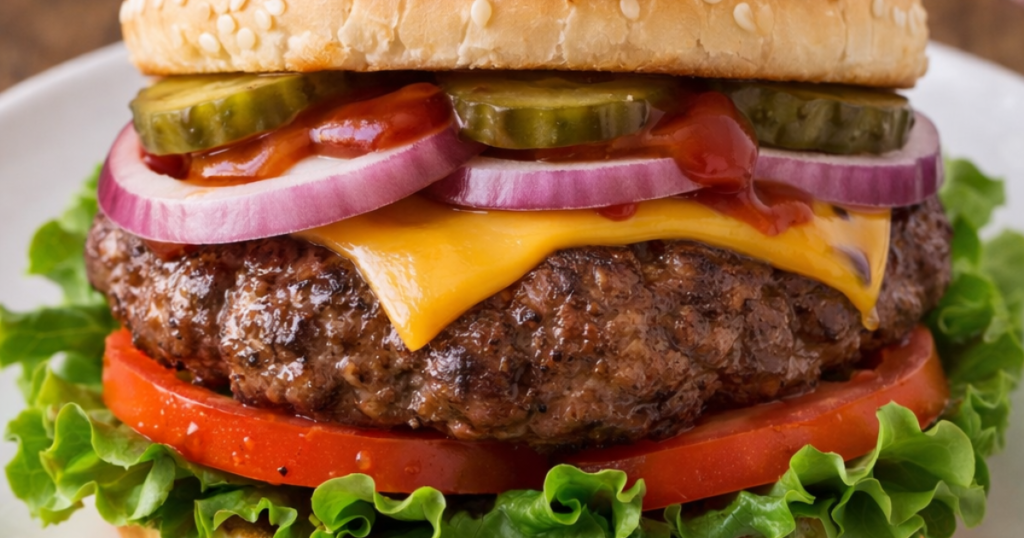
The key differences are serving style, seasoning, and cooking method. A hamburger is served in a bun with condiments — it’s a sandwich. A hamburger steak is a plated dinner, eaten with a fork and knife, served over a starch like mashed potatoes or noodles and smothered in gravy. Hamburger steaks are also typically larger and thicker than a burger patty, more assertively seasoned, and finished by simmering in a pan sauce rather than simply cooked through on a grill or griddle. They’re related dishes with a common ancestor but meaningfully different identities.
Can I use a leaner ground beef blend?
You can, but results will be noticeably drier and less flavorful. 80/20 ground beef is strongly recommended for this dish because the fat content is essential to both juiciness and the quality of the drippings used to build the gravy. If you need to use a leaner blend for dietary reasons, add a tablespoon of Worcestershire sauce and a tablespoon of olive oil to the beef mixture to compensate for some of the lost fat, and be especially careful not to cook the patties past 160°F (use a thermometer).
Can I bake hamburger steak in the oven instead?
Yes — this is a useful approach when cooking for a crowd. Sear the patties on the stovetop as directed (the stovetop sear is important for the crust and drippings), then transfer them to a baking dish. Build the gravy in the same pan as directed, pour it over the patties in the baking dish, cover tightly with foil, and bake at 325°F for 25–30 minutes. This oven method is also excellent for larger batches — you can fit more patties in a baking dish than in most skillets, and the oven provides consistent, gentle heat for even cooking.
How do I keep hamburger steaks from falling apart?
Three strategies work together to prevent this. First, use 80/20 ground beef — the fat acts as a natural binder within the patty. Second, avoid overworking the meat when mixing and shaping. Overworked ground beef develops a smooth, homogeneous protein network that’s actually more prone to falling apart under heat stress than a loosely mixed patty. Third, refrigerate the shaped patties for 10 minutes before searing — the brief chill firms them up and helps them maintain their shape when they hit the hot pan.
If you’re still having trouble with patties falling apart, add one egg yolk to the beef mixture — the yolk’s lecithin acts as an emulsifier and helps bind the proteins together during cooking. This moves the dish slightly in the Salisbury steak direction (more bound and uniform) but keeps it much closer to hamburger steak than a heavily fillered recipe would.
Can I make this recipe with turkey or chicken instead of beef?
Yes, and it’s a legitimate and delicious variation — particularly with ground turkey. Because poultry is much leaner than 80/20 ground beef, you’ll want to add one egg yolk, a tablespoon of olive oil, and a tablespoon of Worcestershire sauce to the ground turkey mixture to add moisture, binding, and flavor. Ground turkey patties must be cooked to an internal temperature of 165°F. The gravy recipe is identical — if anything, the assertive, savory onion gravy becomes even more important in a turkey version because the poultry itself carries less natural flavor than beef.
Why does my gravy turn out thin or lumpy?
Thin gravy almost always comes from one of two causes: insufficient flour in the roux (make sure you’re using the full 3 tablespoons), or not allowing the gravy enough simmering time to reduce and thicken. Let it bubble gently for the full 3–4 minutes before adding the patties back. If the gravy is still too thin after the patties have finished cooking, remove the patties to a warm plate, bring the gravy to a rolling simmer over medium heat, and let it reduce for another 2–3 minutes uncovered. Lumpy gravy is almost always caused by adding the broth too quickly to the flour-coated onions. Add it in small increments — no more than ½ cup at a time — and whisk vigorously after each addition before adding more.
Final Thoughts
There’s a reason the hamburger steak has appeared on American dinner tables in some form for more than a century and a half. It’s not because the ingredients are expensive or the technique is complicated — it’s the opposite. It endures because it works: affordable, accessible ingredients transformed through simple technique into something genuinely extraordinary. A sear that builds flavor. Onions that surrender their sharpness to become something sweet and deep. A gravy that carries the memory of every element that went into it.
Make it on a weeknight when you’re tired and the refrigerator looks uninspiring. Make it on a Sunday when you want something that fills the house with the smell of good cooking. Make it for people who haven’t had it before and watch the moment they take the first bite — that small pause, that slight widening of the eyes — that is a dish doing exactly what it was designed to do.
That’s the hamburger steak. Old-fashioned on purpose, and proud of every bite.
Tried this recipe? Leave a star rating and a comment below — we genuinely love hearing how it turned out in your kitchen! Share a photo on Instagram and tag us. And if you’re in the mood for more Southern-inspired comfort food, check out our chicken fried steak recipe and our classic Southern mashed potatoes — the perfect partners for this dish.