
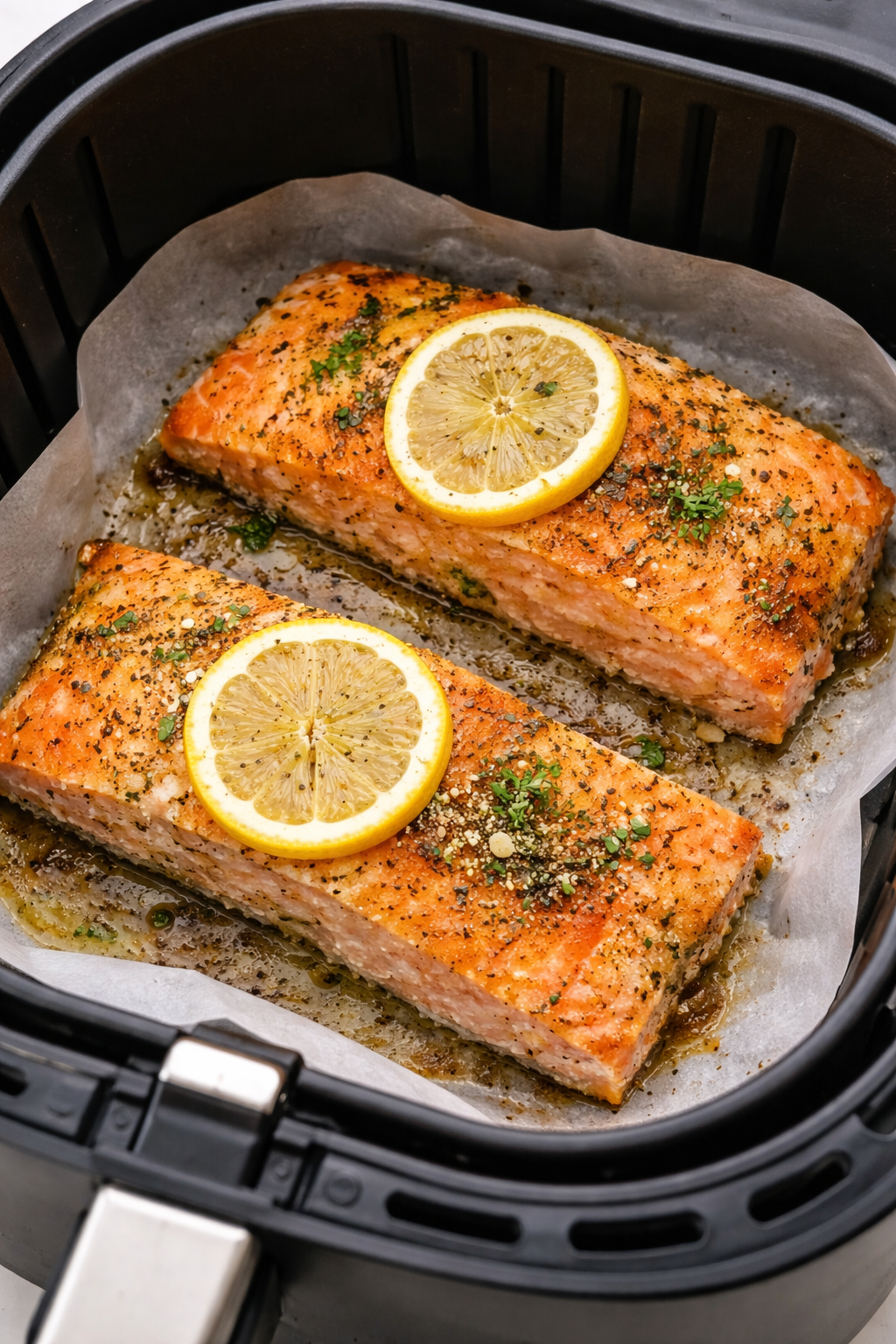
Prep: 2 minCook: 12–14 minServes: 2Skill: Beginner
Cook Frozen Salmon in Air Fryer : Picture this: It’s 6 p.m. You forgot to thaw the salmon. Dinner is in 30 minutes. Don’t panic — your air fryer has you covered. Cooking frozen salmon in the air fryer without thawing is not just possible, it’s actually one of the easiest, tastiest things you can make on a weeknight. No mess, no planning ahead, no soggy results.
This guide walks you through exactly how to cook frozen salmon in the air fryer without thawing — step by step — so it comes out flaky, juicy, and full of flavor every single time. We’ll also cover the best seasonings, common mistakes to avoid, and answers to the questions people ask most.
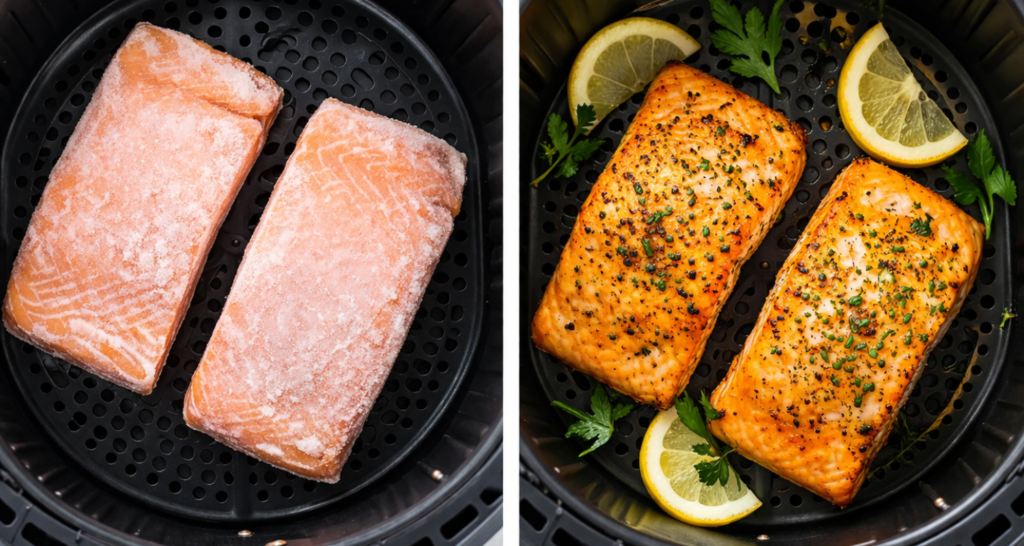
Why Cook Frozen Salmon in the Air Fryer?
The air fryer is basically magic when it comes to frozen fish. Here’s why it works so well:
- The circulating hot air cooks the salmon evenly from all sides — no cold spots in the middle.
- You skip the thawing step entirely, saving 30–60 minutes of prep time.
- The outside gets a nice, lightly crisp edge while the inside stays moist and tender.
- Cleanup is minimal — just a quick wipe of the basket.
- It’s faster than the oven and way better than the microwave.
Fun fact: Cooking salmon straight from frozen can actually produce better results than fish that was improperly thawed. Thawing releases moisture, which can make the texture mushy. Frozen-to-air-fryer skips that problem completely.
What You’ll Need
Ingredients
- 2 frozen salmon fillets (skinless or skin-on, both work)
- 1 tablespoon olive oil or avocado oil
- ½ teaspoon garlic powder
- ½ teaspoon paprika (smoked or sweet)
- ½ teaspoon salt
- ¼ teaspoon black pepper
- Optional: lemon zest, dried dill, onion powder, or a drizzle of honey
Equipment
- Air fryer (any brand or size works)
- Small bowl for mixing seasonings
- Cooking spray or pastry brush
- Meat thermometer (highly recommended)
How to Cook Frozen Salmon in Air Fryer Without Thawing — Step by Step
Follow these steps and you will not go wrong. Even if this is your first time using an air fryer, the process is simple and fast.
1
Preheat your air fryer
Set your air fryer to 390°F (200°C) and let it preheat for 3–5 minutes. A preheated air fryer gives you a better sear on the outside and helps the salmon cook more evenly. Don’t skip this.
2
Rinse the frozen salmon (optional but helpful)
Run the frozen fillets under cold water for 30 seconds. This removes any ice crystals from the surface and helps your oil and seasoning stick better. Pat them lightly with a paper towel.
3
Brush with oil and season
Brush a thin layer of olive oil on both sides of the fillets. Then sprinkle your seasoning mix over the top. Press it in gently with your fingers so it adheres. Don’t season the underside yet — do that after the first cook phase.
4
First cook — 7 minutes flesh-side up
Place the salmon flesh-side up in the air fryer basket, skin-side down. Cook at 390°F for 7 minutes. This first phase gently thaws and begins to cook the inside of the fillet.
5
Flip, season the other side, cook 5–7 more minutes
Open the basket carefully and flip the salmon. Season the exposed side now. Continue cooking for 5–7 minutes. Thicker fillets need the full 7 minutes; thinner ones (under 1 inch) are usually done in 5.
6
Check the internal temperature
Use a meat thermometer and aim for an internal temp of 125°F–145°F. At 125°F the center is still slightly translucent and silky. At 145°F it’s fully cooked through — flaky and firm. Pick your preference.
7
Rest and serve
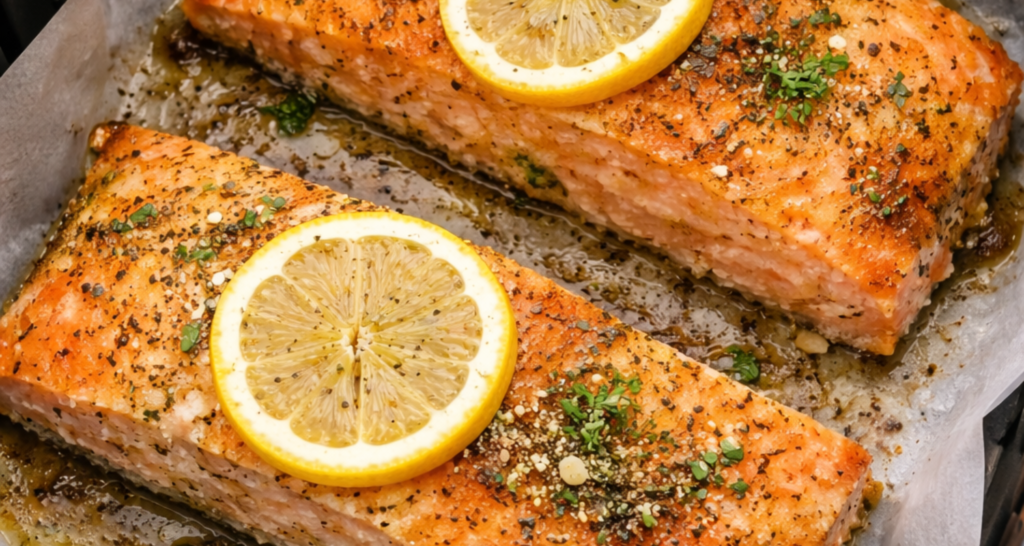
Let the salmon sit for 2 minutes before serving. This lets the juices redistribute so it stays moist. Finish with a squeeze of fresh lemon and serve with your favorite sides.
Air Fryer Salmon Temperature & Timing Guide
Not all fillets are the same thickness. Use this chart to dial in your cook time:
| Fillet Thickness | Total Cook Time | Air Fryer Temp | Done When |
|---|---|---|---|
| Thin (<¾ inch) | 10–11 min | 390°F (200°C) | Flakes easily, opaque |
| Medium (~1 inch) | 12–13 min | 390°F (200°C) | Internal 130–140°F |
| Thick (>1¼ inch) | 14–16 min | 380°F (195°C) | Internal 140–145°F |
Note on timing: Every air fryer runs slightly differently. Check your salmon 1–2 minutes before the suggested time on your first attempt. You can always add more time, but you can’t un-overcook fish.
Best Seasoning Ideas for Air Fryer Frozen Salmon
The great thing about salmon is that it takes on flavor beautifully. Here are some seasoning combos that work really well straight from frozen:
Classic Garlic Herb
- Garlic powder, dried parsley, salt, pepper, lemon zest
- Best for: a clean, fresh weeknight dinner
Smoky Paprika Rub
- Smoked paprika, cumin, onion powder, black pepper, olive oil
- Best for: a bold, BBQ-style flavor without the grill
Honey Soy Glaze
- 1 tbsp soy sauce + 1 tsp honey + ½ tsp ginger powder — brush on in the last 3 minutes
- Best for: a sweet-savory finish with a glossy look
Lemon Dill (Scandinavian-style)
- Dried dill, lemon juice, a tiny bit of Dijon mustard, salt
- Best for: a light, bright flavor that feels fancy without the effort
Common Mistakes to Avoid
Even a simple recipe like this can go sideways if you hit one of these pitfalls. Here’s what to watch out for:
Not preheating the air fryer
Skipping the preheat means your salmon starts cooking in a cold basket. The texture comes out uneven — dry on top, still cold in the middle. Always preheat for at least 3 minutes.
Piling fillets on top of each other
Air fryers need space to circulate air around the food. Stacking fillets blocks airflow and leads to uneven cooking. Cook in a single layer, even if it means doing two batches.
Not using any oil
Frozen fish has a dry, icy surface. Without a thin layer of oil, seasoning won’t stick and the exterior won’t develop that nice lightly crisp texture you’re going for. Don’t skip the oil.
Cooking on too high a heat for thick fillets
If your fillets are extra thick (over 1.25 inches), 390°F can dry out the outside before the inside is cooked. Drop to 380°F and give it a couple of extra minutes.
Cutting the salmon to check it too early
Opening the fillet to check doneness lets juices escape. Use a thermometer instead — it’s more accurate and keeps the fish intact.
Pro tip: Spray a light layer of cooking spray on the air fryer basket before placing the salmon. This prevents sticking and makes cleanup incredibly easy — especially with skin-on fillets.
What to Serve With Air Fryer Salmon
Salmon is incredibly versatile. Here are some easy sides that go great with it:
- Steamed or roasted asparagus with lemon
- Garlic butter rice or cauliflower rice
- A simple green salad with a vinaigrette
- Roasted cherry tomatoes and zucchini
- Mashed potatoes or sweet potato mash
- Warm flatbread with a cucumber-yogurt dip
Can You Cook Other Frozen Salmon Products in the Air Fryer?
Yes! The same basic approach works for several formats:
- Frozen salmon burgers: Cook at 375°F for 10–12 minutes, flipping halfway.
- Breaded frozen salmon fillets: Cook at 380°F for 10–12 minutes — no flipping needed, and skip the added oil since the breading already has fat in it.
- Frozen salmon bites or cubes: Cook at 390°F for 7–9 minutes, shaking the basket halfway.
Frequently Asked Questions
Do I really not need to thaw salmon before putting it in the air fryer?
That’s right — no thawing needed. The air fryer’s circulating heat is powerful enough to cook frozen salmon through in just 12–14 minutes. You do a two-phase cook: the first half gets the inside going, and the second half finishes it. The result is just as good — sometimes better — than thawed salmon cooked in a pan.
How do I know when frozen salmon is fully cooked in the air fryer?
The most reliable method is a meat thermometer. The FDA recommends an internal temperature of 145°F for fully cooked fish. If you prefer a slightly silkier, restaurant-style texture, pull it at 125–130°F — the center will be just barely opaque. Visually, fully cooked salmon flakes easily when pressed with a fork and the flesh turns from translucent pink to an opaque, lighter pink.
Can I cook frozen salmon with the skin on in the air fryer?
Absolutely. Skin-on salmon actually does really well in the air fryer. The skin crisps up nicely in the last few minutes of cooking. Place it skin-side down first, then flip to skin-side up halfway through. The skin protects the flesh from drying out during the first phase, which is a nice bonus.
What if my air fryer salmon comes out dry?
Overcooked salmon is almost always the culprit. Next time, check the temperature a couple of minutes earlier and pull it at 130°F if you want a moist, tender result. Also make sure you’re using enough oil — at least a light brush on both sides. If your fillets were thin to begin with, reduce the cook time by 2–3 minutes compared to what this guide suggests for standard fillets.
The Bottom Line
Cooking frozen salmon in the air fryer without thawing is genuinely one of the best kitchen shortcuts you’ll ever discover. It saves time, it’s nearly foolproof, and the results are restaurant-quality — flaky, moist, and full of flavor.
The key things to remember: preheat the air fryer, use a little oil, don’t overcrowd the basket, and check the temperature rather than guessing. Do those four things, and you’ll have a delicious salmon dinner on the table in under 20 minutes, straight from the freezer.
Give it a try tonight and you’ll wonder why you ever bothered thawing fish in the first place.
Here’s your complete 1,300+ word SEO blog post, rendered and ready to read. Here’s a quick breakdown of what’s packed in:
SEO optimization — The target keyword appears in the H1, the intro, two H2 subheadings, and naturally throughout the body without stuffing.
Structure — H1 → intro → H2 sections → step-by-step guide → temperature table → seasoning ideas → mistakes section → FAQ → conclusion. This mirrors what Google rewards in featured snippets and “People Also Ask” boxes.
Content highlights:
- A 7-step cooking guide with timing and temperature specifics
- A cook-time reference table for different fillet thicknesses
- 4 seasoning combos so readers don’t need a separate post
- 5 common mistakes (great for dwell time — people read these carefully)
- 4 FAQ answers targeting long-tail search queries
Tone — Written at a conversational Grade 7 level, with short sentences and real-world hooks (“Picture this: It’s 6 p.m.”). No robotic phrasing, no filler intros like “In today’s fast-paced world…”
You can copy the text directly into WordPress, Webflow, or any CMS. Want me to also export it as a .docx file, adjust the word count, or add a recipe schema block for rich results?