
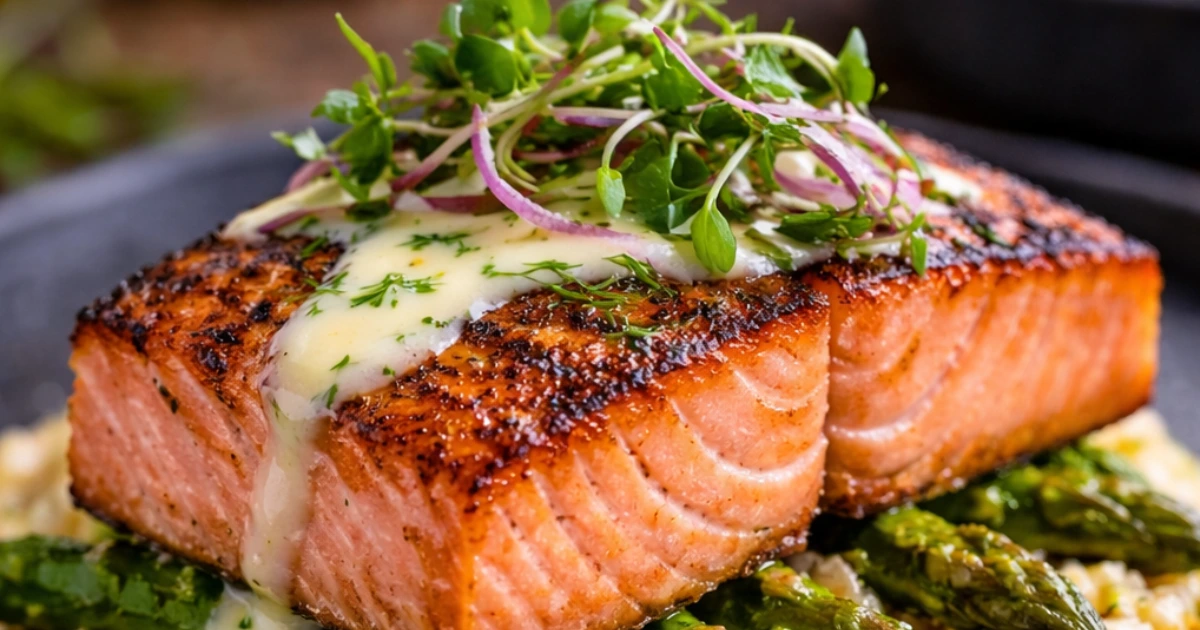
There are fish, and then there is king salmon. In the world of Pacific salmon — a family that includes sockeye, coho, pink, and chum — the king sits apart. It is the largest. It is the richest. It carries the highest concentration of omega-3 fatty acids of any wild salmon species. Its flesh ranges from a deep, burnished orange to an extraordinarily rare ivory-white, and its flavor — when you cook it correctly — is something that experienced cooks and professional chefs return to again and again as a benchmark for what great fish can taste like.
King salmon — known scientifically as Oncorhynchus tshawytscha and commonly as Chinook salmon — commands a premium price at fishmongers and restaurants for legitimate reasons. It is not merely the largest Pacific salmon; it is qualitatively different from its relatives in ways that matter enormously at the table. The fat that runs in thick white ribbons through a king salmon fillet is not the faint, lean marbling you see in a sockeye — it’s a deep, buttery lipid content that gives the fish its extraordinary richness, its characteristic melt-in-the-mouth texture, and its uncanny ability to remain moist and succulent through cooking methods that would dry out lesser fish entirely.
This guide is the complete resource. Whether you’ve never cooked king salmon before or you cook it regularly and want to deepen your understanding of what you’re working with, you’ll find everything here: the biology and ecology of the fish, how to buy the best available, how to store and prepare it, the cooking methods that bring out its finest qualities, two full recipes, nutritional information, and a thorough FAQ that answers every question we’ve encountered from readers about this exceptional fish.
Jump to a Section:
- What Is King Salmon?
- What Makes King Salmon Special
- King Salmon vs. Other Salmon Species
- Where King Salmon Comes From
- King Salmon Season: When to Buy
- How to Buy King Salmon: A Complete Guide
- How to Store King Salmon
- How to Prepare King Salmon Before Cooking
- Best Cooking Methods for King Salmon
- Recipe 1: Pan-Seared King Salmon with Brown Butter and Capers
- Recipe 2: Cedar Plank King Salmon with Honey-Soy Glaze
- King Salmon Nutrition: Why It’s One of the Healthiest Foods on Earth
- White King Salmon: The Rarest of All
- Frequently Asked Questions
What Is King Salmon?
King salmon (Oncorhynchus tshawytscha) is the largest of the five Pacific salmon species native to North American waters, and the largest salmon species in the world. Adult king salmon average between 10 and 50 pounds in the wild, with trophy specimens exceeding 100 pounds — the all-tackle world record stands at 97 pounds 4 ounces, caught in the Kenai River in Alaska. In most commercial and retail contexts, king salmon fillets come from fish between 15 and 40 pounds, yielding large, thick, gorgeous slabs of fish with the kind of presence on a cutting board that immediately signals something extraordinary.
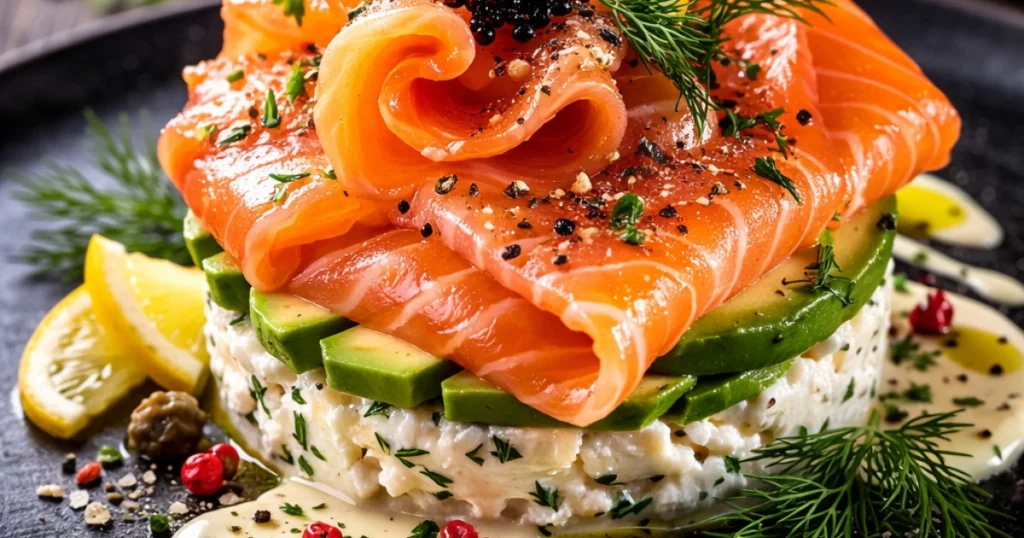
The name “king” is not marketing language — it reflects a genuine status both in the ecosystem and in Indigenous cultures along the Pacific coast of North America, where Chinook salmon has held central importance in food traditions, ceremonial life, and cultural identity for thousands of years. For many Pacific Northwest and Alaska Native communities, the king salmon is not merely a food source but a foundational relationship — one that has shaped everything from seasonal rhythms to spiritual practice across millennia.
Today, king salmon is harvested commercially from wild fisheries in Alaska, the Pacific Northwest, and parts of British Columbia, as well as raised in aquaculture operations in New Zealand (the famous Ora King salmon) and other locations. Both wild-caught and farmed king salmon have their advocates, and we’ll address the differences in detail in the buying section below.
What Makes King Salmon Special
Fat is the answer, and fat is almost always the answer when a food is this good. But the fat in king salmon is worth understanding in some detail, because it’s not simply “more fat than other salmon” — it’s fat of a specific character that produces specific results in the kitchen.
Extraordinary Omega-3 Fat Content
King salmon contains more omega-3 fatty acids per serving than any other wild salmon species. A 6-ounce serving of wild king salmon delivers approximately 3.8 to 4.5 grams of omega-3s — primarily EPA (eicosapentaenoic acid) and DHA (docosahexaenoic acid) — compared to roughly 2.2–3.0 grams in sockeye and 1.0–1.5 grams in Atlantic farmed salmon. These are not identical types of fat: EPA and DHA are the long-chain polyunsaturated fats associated with cardiovascular health, brain function, inflammation reduction, and a growing body of research on depression, cognitive decline, and joint health. King salmon is, by a meaningful margin, the most nutritionally dense source of these specific fatty acids in the common diet.
The Flavor Consequence of Fat
From a purely culinary standpoint, the fat content of king salmon produces a fish with a silkier, more voluptuous mouthfeel than its leaner relatives. When you cook a sockeye salmon fillet and a king salmon fillet side by side using identical methods, the difference is immediately apparent: the sockeye is vibrant and flavorful but relatively firm, clean, and dry by comparison. The king salmon has a buttery quality that makes it seem almost self-basting — the fat in the flesh liquefies during cooking and distributes through the meat, keeping it moist and rich in a way that leans more toward butter-poached than simply “well-cooked fish.”
Size and Thickness
Because king salmon is a large fish, its fillets are naturally thick — often 1.5 to 2 inches at the thickest part of the shoulder section. This thickness changes the cooking dynamic profoundly compared to thinner pink or chum salmon fillets. A thick king salmon fillet can develop a proper sear crust on the exterior while the interior remains translucent, cool, and barely cooked — a state of perfection that thin fillets pass through too quickly to achieve. This physical characteristic gives the home cook significantly more control and flexibility.
Flavor Complexity
Wild king salmon has a flavor profile that goes considerably beyond what most people expect from fish. It is rich without being overwhelmingly “fishy” — the fat softens and rounds the oceanic character of the flesh in a way that even salmon skeptics tend to find approachable. There is a mineral quality, particularly in fish from cold, clean Alaskan rivers, a faint sweetness, and a lingering richness on the finish that makes a well-prepared king salmon one of the most satisfying fish dishes possible.
King Salmon vs. Other Salmon Species
Understanding how king salmon compares to the other Pacific salmon species — and to farmed Atlantic salmon — helps you make better purchasing decisions and set appropriate expectations for each fish.
| Species | Flesh Color | Fat Content | Flavor Profile | Best Uses | Price Range |
|---|---|---|---|---|---|
| King / Chinook ⭐ | Deep orange to ivory-white | Very High (richest of all salmon) | Buttery, rich, complex, clean finish | Pan-sear, cedar plank, poaching, sushi/sashimi, raw preparations | $$$$ |
| Sockeye / Red | Vivid, deep red-orange | Moderate-High | Bold, intense, distinctly “salmon” flavor; less buttery than king | Grilling, broiling, smoking, canning | $$$ |
| Coho / Silver | Bright orange-red | Moderate | Mild, clean, versatile; more delicate than sockeye | Grilling, baking, sautéing, smoking | $$$ |
| Pink / Humpback | Light pink | Low | Mild, light; less pronounced salmon flavor | Canning, smoking, budget preparations | $ |
| Chum / Keta | Pale orange-pink | Low-Moderate | Mild; often used for roe (ikura) | Smoking, ikura, budget preparations | $$ |
| Atlantic (Farmed) | Orange (color-enhanced in most commercial operations) | High (but from different diet than wild) | Mild, rich, relatively neutral | All-purpose; widely available | $$ |
King vs. Sockeye: The Most Common Comparison
These are the two premium wild salmon species that most home cooks encounter, and they’re genuinely different fish. Sockeye is leaner, firmer, more vibrantly colored, and carries a bolder, more assertive salmon flavor that stands up beautifully to aggressive seasoning, high heat, and strong accompaniments. King salmon is richer, softer, more forgiving under heat, and more complex in a quieter way — the flavor is deep and layered rather than loud.
For raw preparations — sashimi, crudo, poke, ceviche — king salmon is almost universally preferred because its fat content gives it a silkier texture and a more complex flavor that benefit from being tasted without the transformation of heat. For grilling and smoking, sockeye holds together better and its bold flavor survives the aggressive treatment. For pan-searing to a gentle medium — where you want that translucent, barely-cooked interior surrounded by a crispy skin — king salmon is in a class of its own.
Where King Salmon Comes From
Wild king salmon are native to the Pacific Ocean and its tributary river systems, ranging from Northern California up through Oregon, Washington, British Columbia, and Alaska — with Alaska accounting for the vast majority of the commercial wild harvest. They are also found in rivers along the Asian Pacific coast from Japan northward.
Alaska
Alaska is the crown jewel of king salmon territory, and Alaskan king salmon carries a worldwide reputation for quality that is earned and maintained through strict fisheries management. The Kenai River on the Kenai Peninsula is perhaps the most famous king salmon fishery in the world — a sport fishing destination that draws anglers from across the globe during peak season. Commercial wild Alaskan king salmon is the benchmark against which all other king salmon is measured.
Pacific Northwest
Oregon, Washington, and British Columbia produce exceptional king salmon from their river systems — the Columbia River and its tributaries historically produced some of the largest king salmon runs in the world, though those populations have faced significant challenges from dam construction and habitat loss. Spring Chinook from the Columbia system — known as “springer” salmon — are legendary among anglers and chefs for their exceptional fat content, accumulated during their ocean feeding phase before they enter the river.
New Zealand — Ora King Salmon
In a category of its own among farmed king salmon is the Ora King salmon from New Zealand’s Marlborough Sounds, produced by New Zealand King Salmon and distributed globally. Ora King is widely regarded as the finest farmed salmon in the world — raised in the cold, clear waters of the Marlborough Sounds without the use of antibiotics, with a fat content and flavor profile that genuinely rivals wild king salmon from premium Alaskan fisheries. It is the salmon of choice at many top-tier sushi restaurants globally. It is also priced accordingly.
King Salmon Season: When to Buy
Unlike Atlantic farmed salmon, which is available year-round at consistent quality, wild king salmon has distinct seasons tied to the salmon’s spawning runs — and buying in season makes a significant difference in the quality and price of what you receive.
Spring Chinook (April – June)
The spring run is widely considered the premium wild king salmon season. Spring Chinook enter their river systems months before spawning, which means they carry all the fat they’ve accumulated during their ocean feeding phase — none of it has been metabolized yet for the journey upriver. Spring kings are the fattest, richest, and most highly prized of all. “Springer” salmon from the Columbia River command premium prices at spring farmers markets and specialty seafood counters in the Pacific Northwest.
Summer Run (June – August)
The summer run brings the bulk of the commercial king salmon harvest in Alaska. This is when supply is highest and prices are most accessible. The fish are excellent — perhaps slightly less fat than spring kings but still remarkable by the standards of any other salmon species. This is the season to stock your freezer.
Fall Run (August – October)
Some river systems, including parts of the Sacramento River system in California, have fall runs of Chinook. By this point in the season, the fish are closer to their spawning date and have begun metabolizing their fat reserves for the journey upriver. Fall-run king salmon is generally leaner than spring or early summer fish — still excellent, but the fat content that makes king salmon exceptional is reduced.
Out of Season
Outside of the main salmon season, wild king salmon is available primarily in frozen form — individually quick-frozen (IQF) at sea or at processing facilities shortly after catch. High-quality IQF wild king salmon is an excellent option and significantly preferable to “fresh” farmed salmon of lower quality. Do not assume “fresh” always means better when it comes to wild salmon — a fish frozen immediately at sea can be far superior to a fresh fish that’s been poorly handled for five days.
How to Buy King Salmon: A Complete Guide
Buying king salmon well is at least as important as cooking it well. The best technique in the world cannot compensate for fish that was poorly handled between the water and your kitchen.
Wild vs. Farmed: The Honest Assessment
Wild king salmon — particularly from Alaskan fisheries managed under the Marine Stewardship Council (MSC) certification — is the gold standard. Wild king salmon has a more complex, mineral-rich flavor developed through a natural diet of krill, herring, and other ocean organisms; a firmer texture from the constant swimming; and the full complement of omega-3s that come from a natural food chain. It also has the environmental credential of coming from sustainable, well-managed fisheries.
Farmed king salmon — specifically Ora King from New Zealand — is genuinely excellent and competes with wild king salmon on flavor and fat content. Standard farmed king salmon from other operations varies significantly in quality. Farmed king salmon is available year-round at consistent size and quality, which has practical advantages for restaurants and home cooks who cook salmon regularly. The environmental picture of farmed salmon is complex and facility-dependent — Ora King operates with best-practice standards; lower-tier operations less so.
Fresh vs. Frozen
For wild king salmon, “previously frozen” is not a pejorative — it’s often the truth about “fresh” wild salmon sold at counters far from Alaskan or Pacific Northwest waters. Ask your fishmonger directly whether the fish has been previously frozen. High-quality IQF (individually quick-frozen) wild king salmon thawed correctly is nearly indistinguishable from fish that was never frozen. If you live far from the source, buy IQF and thaw properly in the refrigerator overnight — it’s a better choice than five-day-old “fresh” fish of uncertain origin.
What to Look for at the Counter
Color: Wild king salmon flesh should be a vivid, saturated orange — the richer and more deeply colored, the better. White king (ivory-white flesh) is a genetic variant we’ll discuss separately. Avoid flesh that looks pale, washed-out, or uneven in color, which may indicate age or poor handling.
Fat lines: Look for clearly visible white fat lines running between the muscle groups — this is your visual confirmation of the fat content that makes king salmon king salmon. The more pronounced and evenly distributed these lines, the richer the eating experience will be.
Smell: Fresh salmon should smell clean, cool, and oceanic — like the sea, not like “fish.” Any ammonia note, sour smell, or overpowering fishiness is a sign of age or poor handling. Walk away.
Texture: The flesh should be firm and spring back slightly when pressed. Soft, mushy, or separating flesh indicates the fish is past its prime.
Skin: If buying skin-on (recommended for pan-searing), the skin should be bright, iridescent, and firmly attached to the flesh. Skin that separates easily or looks dull indicates age.
Where to Buy
For the best wild king salmon, your options in order of preference are: a reputable local fishmonger with verified sourcing; a farmers market during king salmon season in salmon country (Pacific Northwest, Alaska); a Community Supported Fishery (CSF) share from a verified Alaskan operation; or a high-quality online fish purveyor that ships IQF wild king salmon overnight on dry ice. Generic supermarket counters are variable — ask specific questions about sourcing and don’t accept vague answers.
How to Store King Salmon
King salmon, like all fresh fish, has a short window of peak quality after purchase. Proper storage extends that window without compromising the fish’s exceptional qualities.
Fresh King Salmon
Store fresh king salmon in the coldest part of your refrigerator — ideally at 32°F to 34°F, which most home refrigerators don’t quite reach at their standard 38°F setting. The professional technique: place the salmon on a bed of crushed ice in a bowl or on a rimmed baking sheet, cover loosely, and set in the coldest zone of the fridge. Change the ice daily. Stored this way, fresh king salmon maintains excellent quality for 2 days after purchase, acceptable quality for 3 days. Cook by day 3 or freeze.
Freezing King Salmon
King salmon freezes beautifully when done correctly. Pat completely dry. Wrap individual portions tightly in plastic wrap, pressing out all air, then seal in a freezer-safe zip-lock bag with the remaining air squeezed out. Label with the date. Frozen king salmon maintains excellent quality for 3 months; acceptable quality for up to 6 months. Thaw overnight in the refrigerator — never on the counter or under running water, which degrades the texture. Cook within 24 hours of thawing.
How to Prepare King Salmon Before Cooking
Pin-Boning
Wild king salmon fillets frequently contain pin bones — small, flexible bones that run in a line through the thickest part of the fillet. Run your fingertip from head to tail along the center of the fillet, against the direction of the flesh flakes, to feel for the tips of the pin bones. Pull each one out individually with clean needle-nose pliers or dedicated fish tweezers, pulling in the direction the bone points (toward the head end) rather than straight up, which risks tearing the flesh. Most fillets have 10–15 pin bones in the thickest section.
Scaling
If your king salmon comes with scales still attached to the skin (common with whole fish or some butcher-cut fillets), scale it by holding the fish firmly by the tail and running the back of a knife or a fish scaler from tail toward head against the direction of the scales. Do this in a sink or bag — the scales fly impressively far. Most retail fillets are already scaled.
Scoring the Skin
For pan-searing, score the skin side of the salmon at 1-inch intervals with a sharp knife — cutting through the skin but only about ⅛ inch into the flesh. This serves two purposes: it prevents the skin from curling away from the pan as the collagen contracts under heat, and it allows the seasoning to penetrate the skin slightly. Do not skip this step if a crispy skin is your goal — an unscored salmon skin in a hot pan curls away from the surface within 30 seconds and never recovers full contact.
Drying the Surface
As with all proteins you intend to sear, patting the salmon dry with paper towels immediately before cooking is essential. Surface moisture turns to steam in the pan, which inhibits browning and produces a steamed texture rather than a seared one. If your salmon was rinsed or is coming from the refrigerator where condensation has formed, dry it thoroughly on both sides before seasoning.
Seasoning
Season king salmon with kosher salt on both sides 15–20 minutes before cooking. This brief dry-brine draws a little moisture to the surface, which then dissolves the salt and gets reabsorbed, seasoning the flesh more evenly than last-second salting. Season with black pepper and any other dry seasonings just before the fish goes into the pan — pepper and many spices can turn bitter if left on the moist surface for extended periods.
Best Cooking Methods for King Salmon
King salmon’s high fat content makes it exceptionally forgiving by fish standards — it’s much harder to dry out than a leaner species. But that doesn’t mean all cooking methods serve it equally well. These are the approaches that bring out its best qualities.
Pan-Searing (The Method for Crispy Skin)
Pan-searing king salmon skin-side down in a hot stainless steel or cast iron pan produces the finest skin on any salmon — shatteringly crisp, almost chip-like in texture, with a deeply golden color and a flavor that rivals the flesh itself. The key is patience: start skin-side down in a hot pan with oil, press gently to ensure full contact, and resist the urge to flip until the flesh has turned opaque about two-thirds of the way up the side of the fillet. Then flip, cook 60 seconds more, and pull while the very center of the fillet is still translucent and barely warm. The carryover heat during plating will finish the job.
Cedar Plank Grilling
Cedar plank grilling is the method most associated with Pacific Northwest salmon traditions, and it works particularly beautifully with king salmon. The plank moderates the heat so the salmon cooks gently from below while the grill lid provides convective heat from above. The cedar smoke infuses the fish with a resinous, slightly sweet woodsmoke character that complements the salmon’s richness rather than competing with it. The result is a fish that has all the outdoor character of grilling without the risk of the delicate flesh breaking apart on the grate.
Poaching and Butter-Poaching
King salmon is extraordinary when gently poached — in court bouillon (a classic aromatic poaching liquid of white wine, water, aromatics, and acid), in a simple dashi, or in the most decadent preparation, in clarified butter maintained at around 140°F. Butter-poached king salmon produces a result that is so silky, so rich, so completely unlike anything achievable by dry-heat methods that it reads more like a luxury fat than a piece of fish. It is a restaurant technique accessible at home with an instant-read thermometer and a little attention.
Slow Roasting
Roasting king salmon in a low oven (275°F to 300°F) for 25–30 minutes produces a fillet that is uniformly cooked to a perfect medium throughout — no overcooked edges, no undercooked center. The low heat renders the fat gently, making the flesh extraordinarily silky. It will not have a crust or a browned exterior, but the interior texture is among the finest you can achieve with this fish. Finish with a drizzle of good olive oil and flaky salt.
Smoking
King salmon is the premium choice for home smoking — the fat content keeps the fish from drying out during the extended low-temperature smoke exposure that would render a leaner fish unpleasantly dry. Both cold-smoking (below 90°F, producing a silky, lox-like texture) and hot-smoking (160–180°F, producing a flaky, fully cooked result) work beautifully with king salmon. Alder and apple wood are traditional and excellent partners for the fish’s natural flavor.
Raw: Sashimi, Crudo, and Poke
Sushi-grade or sashimi-grade wild king salmon — or properly handled and flash-frozen king salmon — is extraordinary when eaten raw. Its fat content produces a melt-in-the-mouth texture that is simply not replicable by leaner species in a raw preparation. If you’re serving raw king salmon, source it from a reputable vendor who specifically sells sashimi-grade fish, or ensure your wild salmon has been commercially blast-frozen (which kills parasites per FDA guidelines). Never serve fresh, never-frozen wild fish raw without commercial blast-freezing.
Recipe 1: Pan-Seared King Salmon with Brown Butter, Capers, and Lemon
Yield: 2 servings | Prep Time: 15 minutes | Cook Time: 10 minutes | Total Time: 25 minutes
This is the recipe that shows king salmon at its most elemental — a perfectly seared fillet with a crackling skin and barely-cooked, silky interior, finished with a quick brown butter sauce that needs nothing more than capers and a squeeze of lemon to be one of the finest things you can put on a plate. The technique is the recipe.
Ingredients
- 2 king salmon fillets, skin-on, 6–8 oz each, pin-boned, skin scored at 1-inch intervals
- 1 teaspoon kosher salt
- ½ teaspoon freshly cracked black pepper
- 1 tablespoon neutral, high smoke-point oil (avocado oil or refined grapeseed)
- 3 tablespoons unsalted butter, cold, cut into pieces
- 1.5 tablespoons capers, drained and lightly patted dry (frying them briefly in the butter makes them crispy — recommended)
- 1 tablespoon fresh lemon juice
- 1 tablespoon fresh flat-leaf parsley, finely chopped
- Flaky sea salt (Maldon or fleur de sel), for finishing
- Lemon wedges, for serving
Instructions
Step 1: Prep the Salmon
Pat the fillets completely dry on all sides with paper towels. Season the flesh side with kosher salt 15 minutes before cooking. Season the skin side immediately before it goes into the pan. Allow the fillets to sit at room temperature for 10 minutes — cold fish from the refrigerator placed directly into a hot pan creates an uneven cook with a cold center by the time the exterior is done.
Step 2: Heat the Pan
Heat a stainless steel or cast iron skillet (not non-stick — you need the thermal mass for skin crisping) over medium-high heat for 2 minutes. Add the oil and swirl to coat. The oil should shimmer and just begin to smoke at the edges. This temperature — hot but not burning — is exactly where you want to be for skin-on salmon.
Step 3: Sear Skin-Side Down
Place the salmon fillets skin-side down in the hot pan. Immediately press each fillet gently but firmly with a flexible spatula for 10–15 seconds to establish full contact between the skin and the pan surface — this prevents curling. Cook without moving for 5–6 minutes. The salmon will gradually turn opaque from the bottom up. When the opacity has climbed about two-thirds of the way up the side of the thickest part of the fillet — leaving the top third still translucent and visually raw — you are ready to flip.
Step 4: Flip and Finish
Flip the fillets gently. The skin should be deeply golden-brown and crisp — it should release cleanly from the pan. If it sticks, give it 30 more seconds; it will release when the crust has set. Cook the flesh side for 60–90 seconds only. The very center of the fillet should remain slightly translucent when you peek. Remove from the pan immediately and transfer to warm plates, skin-side up to preserve the crisp.
Step 5: Make the Brown Butter Sauce
Reduce the heat to medium. Add the cold butter to the same pan. It will melt and foam quickly — swirl the pan constantly as it does. In about 2 minutes, the foam will subside and the butter will turn a nutty, golden-brown color with browned milk solids visible at the bottom. The smell should be nutty and caramel-like — not burnt. Add the capers to the brown butter (they will splatter briefly — step back). Cook 30 seconds. Off the heat, add the lemon juice — it will sizzle and steam dramatically. Add the parsley and swirl to combine.
Step 6: Plate and Serve
Spoon the brown butter caper sauce generously over the salmon — let it pool around the fillet, not just sit on top. Finish with a pinch of flaky sea salt over the skin. Serve immediately with lemon wedges. This dish waits for no one — the skin loses its crispness in minutes once the sauce hits it, and the salmon continues cooking on the warm plate. Eat it while it’s perfect.
Serving suggestions: Simple steamed asparagus, roasted broccolini, or a warm lentil salad alongside. A glass of white Burgundy, Chablis, or a mineral-forward Pinot Gris pairs beautifully with the brown butter and the fish’s richness.
Recipe 2: Cedar Plank King Salmon with Honey-Soy Glaze
Yield: 4 servings | Prep Time: 20 minutes (plus 1 hour plank soaking) | Cook Time: 15–20 minutes | Total Time: ~1 hour 40 minutes
Cedar plank salmon is the iconic outdoor preparation for king salmon — and this version, with a simple honey-soy glaze that lacquers the surface during cooking, produces something that looks impressive, smells extraordinary while it cooks, and tastes like the Pacific Northwest distilled into a single dish. It’s also almost impossible to overcook, which makes it ideal for outdoor entertaining.
Ingredients
For the Glaze
- 3 tablespoons honey
- 2 tablespoons soy sauce (or tamari for gluten-free)
- 1 tablespoon fresh lemon juice
- 1 tablespoon olive oil
- 2 garlic cloves, minced or grated
- 1 teaspoon fresh ginger, grated
- ½ teaspoon smoked paprika
- ¼ teaspoon red pepper flakes
For the Salmon
- 1 cedar plank (approximately 7×14 inches), soaked in cold water for at least 1 hour (up to 4 hours) — the longer the soak, the more smoke and the less risk of the plank igniting
- One center-cut king salmon fillet, skin-on, 1.5–2 lbs, pin-boned
- 1 teaspoon kosher salt
- ½ teaspoon black pepper
- Fresh dill or flat-leaf parsley, for garnish
- Lemon slices, for serving
Instructions
Step 1: Prepare the Glaze and Salmon
Whisk together all glaze ingredients in a small saucepan. Bring to a gentle simmer over medium-low heat for 3–4 minutes until the glaze thickens slightly and becomes glossy. Remove from heat and let cool to room temperature. Meanwhile, season the salmon with kosher salt and pepper on the flesh side. Brush a generous coat of the cooled glaze over the flesh side of the salmon and allow to rest 10 minutes while the grill preheats.
Step 2: Prepare the Grill
Set up the grill for medium heat — approximately 375°F to 400°F grate temperature. For charcoal, use an indirect setup with the coals banked to one side; for gas, use medium heat on all burners. The cedar plank will be placed directly on the grate, so you don’t need (or want) the highest possible heat — the goal is steady, moderate heat that smokes the plank gently rather than burning it immediately.
Step 3: Place Plank on Grill
Place the soaked cedar plank directly on the grill grate and close the lid. Heat the plank for 3–5 minutes until it starts to smoke and crackle lightly — this is the plank beginning to release its cedar oils, which will infuse into the fish. An unsmoked plank imparts very little cedar flavor; you want it properly hot before the salmon goes on.
Step 4: Cook the Salmon
Place the glazed salmon fillet skin-side down on the hot plank. Close the grill lid. Cook for 12–15 minutes for a 1.5-lb fillet, 15–20 minutes for a 2-lb fillet, without opening the lid — the cedar smoke needs to stay contained to properly infuse the fish. Check for doneness: the salmon is ready when the flesh is opaque about two-thirds of the way through and flakes gently when pressed at the thickest point, or when an instant-read thermometer reads 125–130°F at the center for a medium cook. Brush with a final coat of glaze in the last 2 minutes of cooking.
Step 5: Serve
Transfer the plank directly to the table on a heatproof surface — the presentation of serving salmon on the smoking cedar plank is part of the experience. Garnish with fresh dill and lemon slices. Serve immediately, using a wide spatula to portion the salmon away from the skin, which will have adhered to the plank.
King Salmon Nutrition: One of the Healthiest Foods on Earth
The nutritional profile of wild king salmon is remarkable even by the standards of other premium fish — and understanding it helps contextualize why nutritionists, cardiologists, and culinary professionals alike so consistently recommend it.
| Nutrient | Amount per 6 oz (170g) serving — Wild King Salmon | % Daily Value (approximate) |
|---|---|---|
| Calories | ~350 kcal | ~17% |
| Protein | ~34g | ~68% |
| Total Fat | ~22g | ~28% |
| Omega-3 Fatty Acids (EPA + DHA) | ~3.8–4.5g | Well above RDA (no official DV established; 250–500mg EPA+DHA recommended for healthy adults) |
| Vitamin D | ~1,100 IU | ~140% |
| Vitamin B12 | ~7.5 mcg | ~312% |
| Selenium | ~46 mcg | ~84% |
| Niacin (B3) | ~14mg | ~88% |
| Phosphorus | ~430mg | ~34% |
| Potassium | ~850mg | ~18% |
| Astaxanthin | ~3–5mg | No DV established; powerful carotenoid antioxidant |
Nutritional values are approximate and vary by specific fish, origin, and season. Values above are for wild-caught king salmon. Consult the USDA FoodData Central for precise nutritional data.
Key Nutritional Highlights
Omega-3 Fatty Acids: King salmon’s omega-3 content is its most celebrated nutritional feature. EPA and DHA have been associated in clinical research with reduced risk of cardiovascular disease, improved cognitive function, reduction in chronic inflammation, and potential benefits for depression and anxiety. The American Heart Association recommends eating fatty fish like salmon twice per week specifically for cardiovascular benefit.
Vitamin D: King salmon is one of the richest natural food sources of vitamin D, a nutrient in which a significant proportion of the global population is deficient. A single 6-ounce serving provides over 100% of the daily value — a meaningful contribution for a nutrient that is difficult to obtain adequately through diet alone.
Astaxanthin: The carotenoid pigment responsible for salmon’s orange-red color, astaxanthin is a powerful antioxidant that has been studied for its anti-inflammatory, neuroprotective, and cardiovascular protective properties. Wild king salmon accumulates astaxanthin naturally through its diet of krill and other astaxanthin-containing organisms; farmed salmon’s color is often supplemented through feed.
White King Salmon: The Rarest of All
Within the already-premium world of king salmon lies something even more extraordinary: the ivory king, or white king salmon — a naturally occurring genetic variant of Chinook salmon that produces ivory-white or pale cream-colored flesh instead of the characteristic orange-red.
The white flesh is caused by a genetic inability to metabolize and store carotenoid pigments from the diet — specifically astaxanthin from krill. The fish is not less healthy or less nutritious by any other measure; it simply lacks the enzymatic pathway to convert dietary carotenoids into stored flesh pigment. Interestingly, the absence of astaxanthin does affect the flavor profile in a subtle but perceptible way: white king salmon is generally described as milder and more delicately flavored than orange king salmon, with a creamier, more lard-like richness that some tasters prefer for raw preparations.
White king salmon makes up only about 5% of the king salmon population in most river systems — with some rivers like the Yukon in Alaska producing higher proportions. It commands a significant premium in the market — often 50–100% above regular king salmon pricing — and is sought after by top-tier sushi chefs and fine dining restaurants specifically for its visual drama and distinctive flavor.
If you encounter white king salmon at a fishmonger or fish market, it’s worth trying even at the premium price — it’s one of the genuinely rare and special ingredients in the world of seafood.
Frequently Asked Questions About King Salmon
What is the difference between king salmon and Chinook salmon?
They are the same fish — two names for Oncorhynchus tshawytscha. “Chinook” is the species name, derived from the Chinook people of the Pacific Northwest. “King” is the common name used in most American retail and restaurant contexts, reflecting the fish’s status as the largest and most prized Pacific salmon. You’ll see both names used interchangeably at fishmongers and on menus — they always refer to the same species.
What temperature should king salmon be cooked to?
The USDA recommends cooking all fish to an internal temperature of 145°F, at which point the flesh is fully opaque and flakes easily. However, most professional chefs and seafood specialists cook king salmon to a significantly lower temperature — typically 120°F to 130°F at the center — where the flesh is still slightly translucent and has a silky, barely-set texture that is widely considered the peak eating experience for this fish. At 145°F, king salmon is technically safe but culinarily overcooked by most professional standards. The choice between food safety compliance and culinary preference is personal and depends on the diner’s risk tolerance, the quality and sourcing of the fish, and whether the fish has been commercially blast-frozen (which kills parasites per FDA guidelines).
Is king salmon the same as Atlantic salmon?
No — they are different species from different ocean systems. Atlantic salmon (Salmo salar) is native to the North Atlantic and is almost exclusively farmed in today’s commercial context. King salmon (Oncorhynchus tshawytscha) is a Pacific species, primarily wild-caught from Alaskan and Pacific Northwest waters, though also farmed in New Zealand. The two differ significantly in flavor (king salmon is considerably richer and more complex), fat character (king salmon’s fat has a different fatty acid profile), and culinary behavior (king salmon is more forgiving in the pan and has a more pronounced flavor that stands up to stronger preparations).
How do you know when king salmon is done cooking?
The most reliable method is an instant-read thermometer: 125–130°F for a medium, still-silky result (professional standard); 145°F for fully cooked per USDA guidelines. Without a thermometer, look at the side of the fillet — when the opacity has climbed approximately two-thirds of the way up the side of the thickest part during a skin-side-down sear, flip and cook 60 more seconds. The color change from translucent to opaque is the clearest visual indicator of doneness progression. The flesh should flake when pressed gently with a fork at the thickest point — if it resists and springs back, it needs more time; if it flakes very easily and feels firm throughout, it may be overdone for a silky-centered result.
Can you eat king salmon raw?
King salmon can be eaten raw in preparations like sashimi, crudo, poke, and tartare — but only when certain conditions are met. The fish must be either specifically sourced as sashimi-grade (meaning the supplier guarantees it has been blast-frozen to FDA parasite-kill specifications: -4°F or below for 7 days, or -31°F for 15 hours) or commercially blast-frozen at sea before purchase. Fresh, never-frozen wild salmon carries a risk of Anisakis parasites, which are killed by the blast-freezing process but not by refrigeration alone. When properly sourced, raw king salmon is safe and among the finest raw seafood experiences possible.
Why is king salmon so expensive?
Several factors combine to make king salmon the most expensive Pacific salmon species. First, wild Chinook salmon runs are significantly smaller than sockeye or pink salmon runs — the total commercial harvest is limited. Second, king salmon season is short, concentrated in spring and summer, with no year-round wild supply. Third, the fish themselves are large and their processing yield is lower proportionally than smaller salmon species. Fourth, and most fundamentally, the demand for king salmon — from top restaurants, specialty retailers, and informed home cooks worldwide — consistently outpaces the sustainable supply from well-managed fisheries. The premium price reflects both the genuine quality difference and the limited supply.
What wine pairs best with king salmon?
The richness of king salmon means it can pair with a wider range of wines than most white fish — including some lighter reds. For pan-seared or butter-finished preparations, white Burgundy (Chardonnay), Chablis, white Rhône (Viognier, Marsanne), and Alsatian Pinot Gris all work beautifully — wines with enough body and richness to complement the fish’s fat without overwhelming its flavor. For cedar plank or smoked preparations, a light Pinot Noir — Oregon’s Willamette Valley is the classic pairing region — is an inspired choice that complements the smokiness and the fish’s richness simultaneously. For Asian-influenced preparations with soy and ginger, a dry Riesling or Grüner Veltliner is outstanding.
Final Thoughts on King Salmon
There are ingredients that reward effort, and then there are ingredients that reward attention. King salmon falls firmly in the second category. It doesn’t need elaborate technique or complex preparation — it needs the respect of good sourcing, careful handling, and a cooking approach that doesn’t fight what the fish already is.
Buy the best wild king salmon you can find and afford. Learn to sear its skin until it crackles. Pull it from the heat while the center is still barely warm. Finish it with something simple — brown butter, a good olive oil, fresh herbs — that frames rather than obscures its extraordinary natural richness. Eat it with something cold and white in a glass. That’s the complete story.
Everything else in this guide — the biology, the seasonality, the fat science, the buying guide — exists to help you make better decisions on the way to that moment. King salmon deserves that attention. It will repay it completely.
Have a question about king salmon that we didn’t answer here? Leave a comment below — we read every one and respond. If you tried either recipe, tell us how it went and tag us on Instagram with your photos. And explore our guides to wild sockeye salmon, the best seafood to buy fresh vs. frozen, and our complete Pacific salmon species guide for everything else you need to cook great fish at home.