
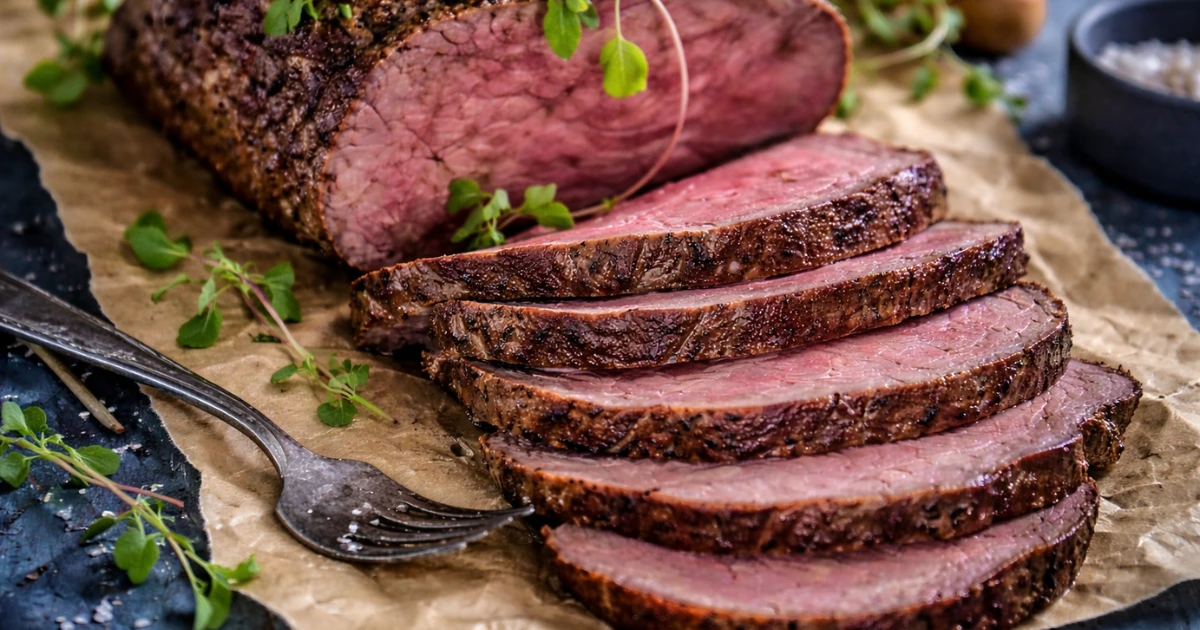
Order a steak in a restaurant, tell the server “medium,” and you’ll receive something specific: a steak with a warm, pink center that transitions gradually to a fully cooked edge, with a crust that carries the deep, caramelized flavor of high heat. Not red, not grey all the way through — somewhere in between, in a zone of doneness that millions of people have decided represents the best balance of flavor, juiciness, and food safety.
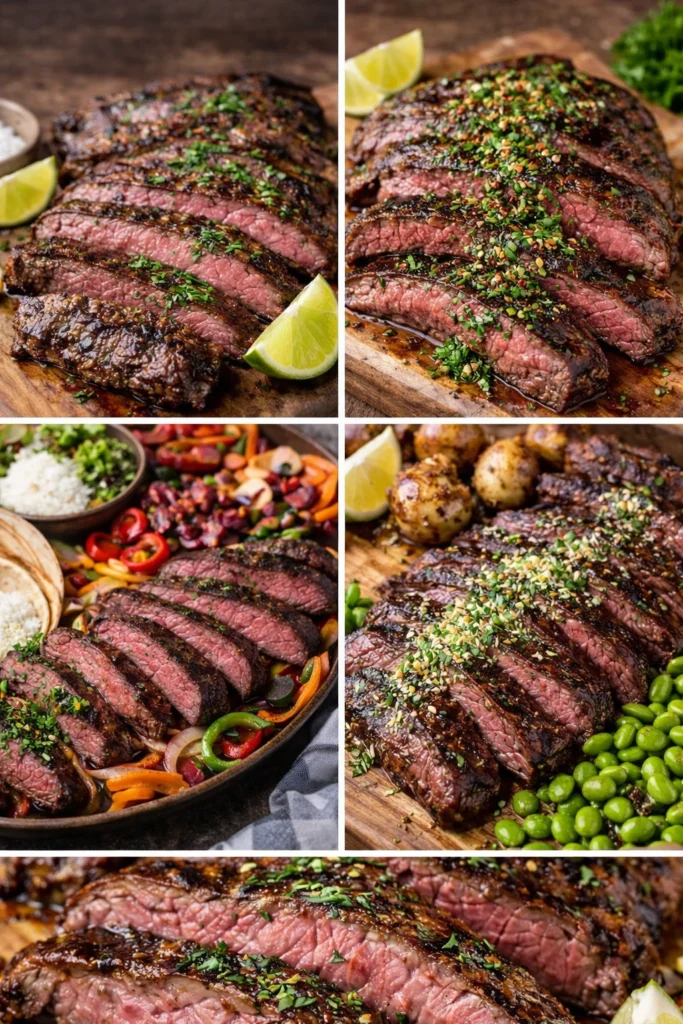
But “medium” is not a feeling or a color. It’s a temperature. And knowing the exact number — and more importantly, knowing when to pull the steak off the heat to reach that number — is what separates home cooks who produce consistently great steaks from those who produce great steaks occasionally and grey, overcooked ones the rest of the time.
This guide is the complete resource on medium steak temperature. You’ll learn the exact internal temp for medium steak, how it compares to every other doneness level, why pull temperature and final temperature are two different numbers, how resting changes everything, and the specific thermometer technique that professional cooks use to get it right every single time. Whether you’re cooking on a grill, in a cast iron pan, or using the reverse sear method, this guide has you covered.
Jump to a Section:
- What Temperature Is Medium Steak?
- Pull Temperature vs. Final Temperature — The Critical Difference
- Complete Steak Doneness Temperature Chart
- Medium vs. Medium-Rare: Which Is Better?
- Medium vs. Medium-Well: Where the Line Is
- How to Take a Steak’s Temperature the Right Way
- Hitting Medium Temp by Cooking Method
- Best Cuts for a Medium Steak
- Why Resting Is Not Optional
- Can You Tell Medium Without a Thermometer?
- Frequently Asked Questions
What Temperature Is Medium Steak?
A medium steak is cooked to a final internal temperature of 140°F to 145°F (60°C to 63°C). At this temperature range, the steak’s center is warm and pink — not red, not translucent, not cold — with a gradient from slightly more cooked edges to a rosy, moist core. The muscle fibers have contracted enough to give the steak a firmer texture than medium-rare, but there is still enough residual moisture in the meat to keep it juicy and satisfying. The fat, if the cut has reasonable marbling, has had enough heat exposure to render partially and distribute richness throughout the bite.
Medium is one of the most popular doneness levels ordered in American steakhouses — and for understandable reasons. It sits in a comfortable middle ground: safer than rare and medium-rare for those with concerns about undercooked beef, but still juicy and pink enough to retain the qualities that make a great steak genuinely pleasurable. For cuts with meaningful fat content like ribeye, medium allows more of that fat to render than medium-rare would, often producing a richer, more buttery bite despite the slightly higher temperature.
The USDA previously recommended cooking all beef steaks to 160°F — well done by any culinary standard. In 2011, the USDA updated its guidance to recognize 145°F as the safe minimum internal temperature for whole-muscle beef steaks (with a 3-minute rest), aligning federal food safety guidance with what professional chefs and food scientists had long understood: that a medium steak cooked to 145°F and properly rested is both safe and at its most delicious.
Medium Steak Temperature — Quick Reference
- Final Internal Temperature: 140–145°F (60–63°C)
- Pull from Heat at: 135–138°F (to account for carryover cooking)
- Rest Time: 5–8 minutes minimum
- Visual: Warm pink center fading to light grey-brown at edges
- Texture: Firm but yielding; noticeably less springy than raw, more than well-done
- USDA Safe: Yes (145°F with 3-minute rest is USDA approved for whole-muscle beef)
Pull Temperature vs. Final Temperature — The Critical Difference
This is the concept that causes more overcooked steaks than any other single mistake in home cooking, and it’s the reason why understanding medium steak temp requires more than just knowing the number 145°F.
When you remove a steak from a heat source — whether that’s a grill, a cast iron pan, or an oven — the cooking does not stop. The exterior of the steak is significantly hotter than the interior at the moment you pull it, and that heat continues migrating inward through the meat for several minutes after it leaves the heat source. This phenomenon is called carryover cooking, and it typically raises the internal temperature of a steak by 3°F to 8°F after it comes off the heat, depending on the cooking method and the thickness of the steak.
This means: if you want a final temperature of 145°F, you must pull the steak from the heat at 135°F to 138°F. Pull it at 145°F and by the time you plate it, you’re looking at 150°F to 153°F — the beginning of medium-well territory. You didn’t overcook the steak at the grill; you overcook it on the cutting board by pulling too late.
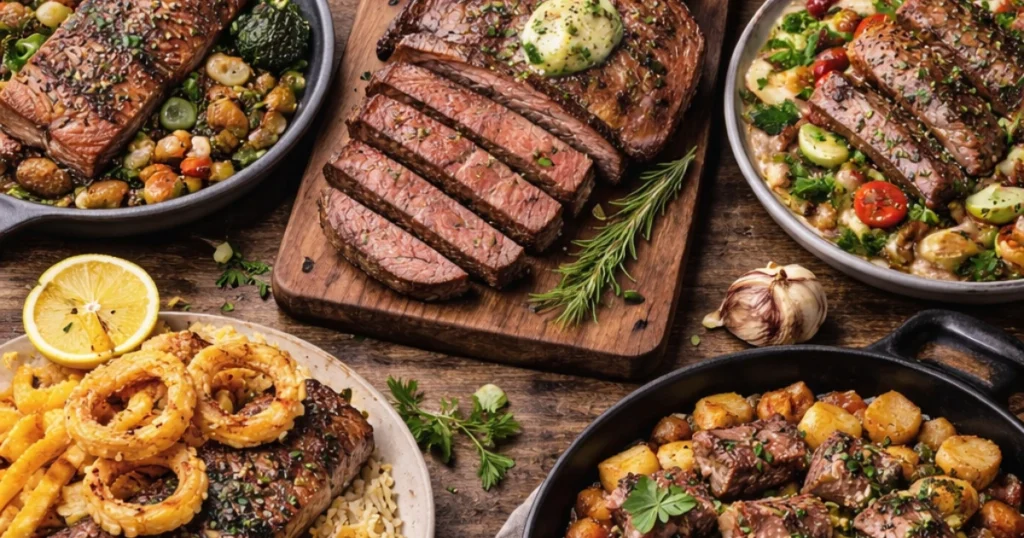
Carryover Cooking Variables
The amount of carryover cooking you’ll experience depends on several factors:
Thickness: A thicker steak stores more thermal energy in its exterior and therefore experiences more carryover cooking. A 2-inch ribeye might climb 7–8°F after pulling; a ¾-inch skirt steak might climb only 3–4°F. Know your cut and adjust accordingly.
Cooking method: High-heat cooking (direct flame, screaming-hot cast iron) creates a steeper temperature gradient between exterior and interior, producing more carryover. Low-and-slow methods like the reverse sear (where the entire steak is closer to the target temperature throughout) produce significantly less carryover — sometimes as little as 2–3°F.
Resting environment: Resting on a cold marble countertop dissipates heat faster; resting in a warm oven with the door cracked will allow more carryover. For most home cooking, resting on a wooden cutting board at room temperature is the standard, and 5°F of carryover is a reliable working estimate for a 1-to-1.5-inch steak.
Complete Steak Doneness Temperature Chart
Understanding medium steak temp means understanding how it sits in relation to the full spectrum of doneness levels. Here is the complete reference:
| Doneness Level | Pull from Heat at | Final Internal Temp | Color / Appearance | Texture | USDA Safe? |
|---|---|---|---|---|---|
| Blue / Extra Rare | 105–110°F | 110–115°F (43–46°C) | Deep purple-red; barely warm in center | Very soft, almost raw feel | No |
| Rare | 115–118°F | 120–125°F (49–52°C) | Bright red center, cool to warm | Soft with slight resistance | No |
| Medium-Rare | 125–128°F | 130–135°F (54–57°C) | Warm red to bright pink center | Tender; minimal resistance; juicy | No (but widely considered safe for intact whole cuts) |
| Medium | 135–138°F | 140–145°F (60–63°C) | Warm pink center fading to grey edges | Firm but moist; slight spring | Yes (USDA minimum with 3-min rest) |
| Medium-Well | 148–150°F | 150–155°F (66–68°C) | Slightly pink only at very center; mostly grey-brown | Noticeably firmer; less juicy | Yes |
| Well Done | 158°F+ | 160°F+ (71°C+) | Uniformly grey-brown throughout; no pink | Firm, dense; significantly drier | Yes |
Note: The temperatures above represent internal temperatures measured at the thickest point of the steak, away from bone or large fat deposits. Always insert your thermometer through the side of the steak, not the top, to reach the true center.
Medium vs. Medium-Rare: Which Is Better?
This is one of the most debated questions in steak cookery, and the honest answer is: it depends entirely on the cut, the diner’s preference, and what you’re optimizing for. But there is a legitimate culinary case to be made for each, and understanding the differences will help you make a more informed choice — and cook more deliberately to your specific target.
The Case for Medium-Rare (130–135°F)
Medium-rare is the most commonly recommended doneness level among chefs, food writers, and culinary professionals for most premium steak cuts — and the reasoning is well-grounded. At 130–135°F, the muscle proteins have contracted enough to give the steak structure and a satisfying chew, but not so much that they’ve expelled a significant amount of moisture. The steak retains maximum juiciness. The intramuscular fat has begun to soften and melt slightly, distributing richness without having fully rendered out. And the flavor compounds that develop during cooking are present in abundance without having been cooked away by excessive heat.
Medium-rare is particularly superior for lean cuts like filet mignon, flat iron, and flank steak — cuts that don’t have the fat reserves to stay juicy at higher temperatures. For these cuts, cooking to medium significantly increases the risk of a dry, disappointing result.
The Case for Medium (140–145°F)
Medium has its genuine advantages, and they’re worth taking seriously rather than dismissing as a lesser choice for timid eaters.
First: for heavily marbled cuts like ribeye and the chuck eye, the additional heat of medium doneness allows more of the intramuscular fat to render, producing a richer, more buttery bite than the same cut at medium-rare. Many ribeye enthusiasts specifically prefer medium for this reason — the fat becomes more liquid and more present in every bite at a slightly higher temperature.
Second: medium is the USDA-recognized safe minimum for whole-muscle beef with a 3-minute rest, which matters to many diners — particularly those who are immunocompromised, pregnant, elderly, or cooking for children, for whom the food safety calculus is more meaningful than the purely culinary one.
Third: medium produces a more visually appealing and texturally accessible steak for diners who find the look or feel of a red, quite soft medium-rare steak off-putting. A warm pink center reads as more conventionally “cooked” and approachable to a broader audience.
The Verdict
For lean, premium cuts: medium-rare wins on juiciness and texture. For well-marbled cuts: medium is a genuinely excellent choice and often produces a richer result. For everyday cooking and household preference: cook to the temperature the person eating the steak actually enjoys. The best steak temperature is the one that makes the person across the table happy.
Medium vs. Medium-Well: Where the Line Is
On the other side of the temperature spectrum, medium borders medium-well — and the gap between them is narrower in degrees but meaningful in result.
Medium-well (150–155°F) is characterized by a steak that is mostly grey-brown throughout with only a faint trace of pink at the very center. The muscle fibers at this temperature have contracted substantially and expelled a significant amount of moisture. The steak is noticeably drier than medium, and for most cuts — except the most heavily marbled ones where there’s enough fat to compensate for the moisture loss — medium-well is the point where the quality of the steak experience begins to decline in a way that’s difficult to reverse with technique.
The practical difference in cooking terms is about 10°F: medium pulls at 135–138°F, medium-well pulls at 148–150°F. That’s a narrow window when you’re working with high heat, which is one more reason why a reliable instant-read thermometer is the most important kitchen tool for anyone who cooks steak regularly.
If a guest requests medium-well, the best approach is to cook the steak as you normally would to a medium sear, check the temperature, and give it additional time over indirect heat or in a low oven (300°F) rather than returning it to maximum flame — which would char the exterior long before the interior reaches the target.
How to Take a Steak’s Temperature the Right Way
The thermometer doesn’t lie. The steak does. The hand poke test, the “press and feel” method, the “compare to your palm” trick — none of these are reliable substitutes for an accurate temperature reading, particularly once you’re cooking different cuts of varying thickness and fat content where the texture cues change significantly. Here’s how to use a thermometer correctly on a steak every time:
Choose the Right Thermometer
An instant-read digital thermometer — with a thin probe tip and a reading time of 2–3 seconds — is the right tool for steak. Not an oven thermometer, not a probe thermometer left in during cooking (though leave-in probes work well for reverse sear applications), not a candy thermometer. A quality instant-read thermometer accurate to ±1°F is a non-negotiable kitchen investment for anyone who cooks beef regularly. Options in the $25–$45 range from reputable brands are more than adequate.
Insert Through the Side, Not the Top
This is the technique detail most home cooks get wrong. Inserting the thermometer straight down from the top of the steak gives you a reading somewhere in the upper quarter of the steak’s thickness — not the center. For a 1.5-inch steak, the center is ¾ inch from the surface. Inserting the probe from the side — horizontally, through the thickest part of the steak — positions the tip at the true geometric center, which is the coolest point in the steak and the location that determines your actual doneness level.
Avoid Bone and Fat Pockets
Bone conducts heat differently than muscle and will give you a falsely low reading if your probe tip is touching it. Large fat deposits conduct heat more slowly than lean meat and will give you a falsely low reading as well. Position the probe tip in the leanest, most central part of the muscle.
Check More Than Once
For anything more than a very thin steak, check the temperature in two or three spots — particularly if the steak is an irregular shape (as skirt steak and some chuck cuts can be). The thickest part will lag behind the thinnest part, and you’re cooking to the temperature of the thickest section. The thinner sections will be slightly more done, which is both inevitable and fine.
Take the Reading Off the Heat
For the most accurate reading, remove the steak briefly from the grill or pan, insert the probe, and let the reading stabilize before making any cooking decisions. Temperature readings taken while the steak is still on the heat source can be influenced by the ambient temperature of the cooking environment — particularly on a very hot grill where the air around the probe is hundreds of degrees hotter than the steak itself.
Hitting Medium Temp by Cooking Method
The target temperature doesn’t change — 140–145°F final, pull at 135–138°F. But the path to get there differs meaningfully depending on how you’re cooking.
Cast Iron Pan-Sear (Stovetop + Oven Finish)
For a 1 to 1.5-inch steak cooked to medium: Sear in a preheated, smoking-hot cast iron skillet for 2.5–3 minutes per side to develop the crust. Transfer the skillet to a preheated 400°F oven. Check temperature at the 3-minute mark and every 2 minutes thereafter. Pull at 135–138°F. Carryover to 140–145°F during the 5-minute rest. Total time from raw to plated is typically 15–20 minutes including rest.
Charcoal or Gas Grill (Direct Heat)
Preheat the grill to 450–500°F grate temperature. Sear directly over heat for 3–4 minutes per side for a 1-inch steak. For medium on a thicker cut, move to indirect heat after the initial sear and continue with the lid closed until internal temp hits 135–138°F. This two-zone approach gives you the char from direct heat and the even internal cooking from the convective heat of the indirect zone.
Reverse Sear (Oven + Cast Iron)
For thick steaks (1.5 inches and above) where even medium doneness throughout is the goal, the reverse sear is the most reliable method. Start in a 225°F oven on a wire rack until the internal temperature reaches 128–130°F. This is your pull-from-oven temperature — the low oven minimizes carryover, so you pull closer to the final target than you would with high heat. Transfer immediately to a screaming-hot cast iron pan and sear 60–90 seconds per side. The sear will add approximately 5–7°F, bringing you to 133–137°F before a very short rest completes the climb to 140–145°F. The result is wall-to-wall even doneness — pink from edge to edge rather than the bullseye gradient you get from searing first.
Broiler Method
Position the oven rack 3–4 inches from the broiler element. Preheat the broiler on high for at least 5 minutes. Place the steak on a wire rack over a broiler-safe pan. Broil 3–4 minutes per side for a 1-inch steak. Monitor temperature closely after the first flip — broiler intensity varies significantly between ovens. Pull at 135°F for a final rested temperature of 140–145°F. The broiler produces a reasonable indoor crust but with less control than a cast iron pan and more variability between oven models.
Best Cuts to Cook to Medium Temperature
Not all cuts are equally suited to medium doneness, and making the right cut-to-temperature pairing will dramatically improve your results.
Ribeye — Excellent at Medium. The ribeye’s generous intramuscular fat content means it stays juicy even at the higher end of the medium range. The additional heat renders more of that fat, producing a richer, more voluptuous bite than the same cut at medium-rare. If you’re going to cook anything to medium, the ribeye is the most forgiving and most rewarding cut to do it with.
New York Strip — Very Good at Medium. The strip has moderate marbling and a firmer muscle structure that actually benefits from cooking slightly above medium-rare — the texture becomes more satisfying and the beefy flavor more pronounced. Just don’t push past 145°F; the strip becomes noticeably dry at medium-well.
T-Bone and Porterhouse — Good with Caveats. These cuts include both the strip loin and the tenderloin, separated by the T-shaped bone. The challenge: the tenderloin cooks faster than the strip. Cooking to medium may bring the tenderloin side to medium-well before the strip side reaches medium. For those who prefer medium uniformly, a porterhouse or T-bone is one of the more challenging steaks to hit precisely.
Chuck Eye — Excellent at Medium. The chuck eye’s slight additional connective tissue content actually makes medium a better choice for this cut than it would be for premium rib or loin cuts. The higher temperature softens the connective tissue slightly more than medium-rare would, and the fat content keeps the steak juicy. Always slice against the grain regardless of doneness level.
Filet Mignon — Borderline. The tenderloin is the leanest of the major steak cuts, which means it has fewer fat reserves to compensate for moisture loss at higher temperatures. Medium-rare is strongly preferred for filet. Medium is doable with careful temperature control and a generous butter baste, but the margin for error is slim and the degradation in juiciness is noticeable.
Skirt and Flank Steak — Proceed with Caution. These lean, working-muscle cuts are best at medium-rare. At medium, they become noticeably tougher and drier, and the connective tissue at this temperature has not been subjected to enough heat long enough to break down properly (that requires braising temperatures). If medium is strongly preferred, marinate aggressively and slice very thin against the grain — this mitigates but doesn’t eliminate the textural compromise.
Why Resting Is Not Optional (Especially for Medium)
Every experienced cook knows to rest a steak. But the why behind it is worth understanding, particularly in the context of cooking to a specific temperature like medium, where the resting period is part of the actual cooking process.
When a steak is cooking over high heat, the muscle fibers near the exterior contract rapidly from the intense heat and squeeze moisture toward the center of the steak. At the moment you pull the steak off the heat, those outer fibers are still contracted and under pressure — the moisture in the center is essentially under pressure from all sides. Cut into the steak now and that moisture evacuates rapidly onto the cutting board, taking all your flavor with it. You’ll see it happen: a pool of red-pink liquid spreading out from the cut steak.
During resting, the contracted outer fibers begin to relax as the temperature gradient between exterior and interior equalizes. As the fibers relax, their grip on the moisture in the center releases, allowing the juices to redistribute more evenly throughout the steak. The result: a steak that retains more of its moisture when cut, producing a juicier bite with less puddle on the board.
How Long to Rest a Medium Steak
Rest a medium steak for 5 to 8 minutes as a baseline. Thicker steaks benefit from longer resting times — a 2-inch tomahawk might need 10–12 minutes. During this time, the steak continues cooking from carryover heat, so factor this into your pull temperature calculation. A steak pulled at 135°F will typically rest to 140–145°F in 5–8 minutes, landing squarely in medium territory if rested on a wooden cutting board at room temperature.
How to Rest Without Losing Heat
Rest on a wooden cutting board rather than a cold marble or metal surface, which draws heat away too rapidly. Tent the steak very loosely with aluminum foil if you need to rest it for longer than 8 minutes — a tight tent traps steam and softens the crust you worked hard to develop. Never rest in a completely sealed environment. A loose tent with some ventilation gives you the best of both worlds: minimal heat loss without sacrificing the crust.
Can You Tell Medium Without a Thermometer?
Professional cooks, particularly those who have worked the grill station in a busy steakhouse for years, develop a reliable tactile sense for steak doneness based on the firmness of the meat when pressed. The classic hand test — pressing the pad of your thumb to your various fingers to create muscle tension and comparing that to the steak — is the most commonly taught informal method. Medium steak corresponds roughly to the firmness you feel pressing the pad of your thumb to your ring finger.
But here’s the honest assessment: the touch test is a professional shortcut developed through thousands of repetitions with similar cuts cooked on familiar equipment. For home cooks working with different cuts, thicknesses, and cooking surfaces, it’s an unreliable guide — particularly for medium doneness, which occupies a relatively narrow temperature window (10 degrees) and where the tactile difference from medium-rare or medium-well is subtle to anyone without extensive practice.
The touch test also doesn’t account for cut-specific variation: a ribeye at 140°F will feel different from a filet at 140°F because of the difference in fat content and fiber density. A flank steak at 140°F will feel firmer than either because of its tighter muscle structure.
The bottom line on visual and tactile cues: They are useful supplementary information — a very firm steak is almost certainly overcooked; a completely soft, yielding steak is almost certainly rare. But for consistently hitting medium specifically, a thermometer is the only reliable tool. Use it every time until you develop a genuine feel for your specific equipment and your preferred cuts.
Color as a Guide
The color of the meat at the center is a useful after-the-fact confirmation but a poor real-time guide — you’d have to cut into the steak to see it, which releases moisture and is generally considered bad practice during cooking. If you do cut and see a warm, rosy pink at the center fading to a lighter pink and then grey-brown toward the edges, you’re looking at medium. If it’s uniformly grey-brown: overcooked. If it’s red and translucent at the center: still underdone for medium.
Frequently Asked Questions About Medium Steak Temperature
What temperature is a medium steak in Celsius?
A medium steak’s final internal temperature is 60°C to 63°C (140°F to 145°F). Pull the steak from the heat source when it reaches approximately 57°C (135°F) to account for carryover cooking during the 5-minute rest, which will bring it to the medium range. Most quality instant-read thermometers can be switched between Fahrenheit and Celsius, making it easy to work in whichever unit you’re most comfortable with.
Is medium steak safe to eat?
Yes. The USDA updated its beef safety guidance in 2011 to recognize 145°F (63°C) with a 3-minute rest as the safe minimum internal temperature for whole-muscle beef steaks (including roasts). A properly cooked medium steak that reaches this temperature meets USDA food safety guidelines. It’s important to note that this guidance applies specifically to whole-muscle steaks — not ground beef, which must reach 160°F because any surface bacteria is distributed throughout the grind rather than confined to the exterior.
How do I cook a steak to medium without a thermometer?
The most reliable method without a thermometer is the touch test combined with time and thickness guidelines. For a 1-inch steak cooked in a very hot cast iron pan or grill, medium typically requires 3–4 minutes per side over direct high heat, followed by a 5-minute rest. The steak should feel moderately firm when pressed with a finger — similar to the resistance of pressing the area between your thumb and index finger when your hand is relaxed. That said, a thermometer will always be more accurate than any tactile test, and a basic instant-read model is inexpensive enough that the investment is easily justified.
What does a medium steak look like when cut?
A properly cooked medium steak, when cut across the center, shows a gradient from the exterior inward: a well-browned, caramelized crust on the outside, a thin grey-brown band of fully cooked meat just inside the crust, and then a warm, rosy pink center that occupies the majority of the steak’s interior. The pink should be warm and opaque — not red or translucent (which would indicate medium-rare or rarer), and not grey-brown throughout (which would indicate medium-well or well-done). The juices running from the cut should be pale pink to nearly clear — not bright red (too rare) and not completely clear with no color (overcooked).
Does the type of steak affect the ideal temperature for medium?
The target temperature for medium is the same regardless of cut — 140°F to 145°F — but the cooking experience at that temperature varies significantly by cut. A ribeye at 145°F is juicy and rich because its fat content compensates for the moisture loss at that temperature. A filet mignon at 145°F is noticeably drier than a filet at 130–135°F because it has less fat to compensate. A skirt steak at 145°F becomes tougher than it would be at medium-rare. The temperature number is universal; how it affects the eating experience is cut-specific. This is why pairing the right doneness level with the right cut is as important as hitting the temperature precisely.
How much does the steak temperature rise after removing from heat?
For a typical 1 to 1.5-inch steak cooked over high heat (cast iron or direct grill), expect a carryover rise of approximately 5°F to 8°F after pulling from the heat and resting for 5 minutes on a cutting board. This means pulling at 135–138°F to achieve a final rested temperature of 140–145°F. Thicker steaks rise more; thinner steaks rise less. Steaks cooked via reverse sear experience less carryover (approximately 2–4°F) because the initial oven phase creates a more uniform internal temperature with a smaller gradient between exterior and interior.
Can I reheat a medium steak without overcooking it?
Yes, with the right technique. The worst method is the microwave, which reheats unevenly and tends to push the interior past medium quickly while some parts remain cold. The best method: place the steak on a wire rack over a rimmed baking sheet, add a small splash of beef broth or water to the pan (the steam helps) and heat in a 275°F oven for 10–15 minutes, checking the temperature frequently. You’re aiming to bring the interior back to 130°F — it will continue climbing slightly from the pan’s residual heat. Alternatively, sous vide at 130°F until warmed through, then sear briefly in a hot pan to restore the crust. The sous vide method is the most precise and least likely to overcook a leftover steak.
The Final Word on Medium Steak Temperature
Medium steak temperature is 140°F to 145°F final, pulled from heat at 135°F to 138°F, rested for 5 to 8 minutes. Those are the numbers. Write them down if you have to. Tape them to the inside of a cabinet door near your stove if that helps. But more importantly, understand why they are what they are — because a cook who understands the science behind the numbers will adapt intelligently when something unexpected happens, rather than following a rule into a bad result.
Carryover cooking is real. Resting is not optional. The thermometer tells the truth when nothing else will. And the cut you choose matters as much as the temperature you’re targeting — because medium is the best version of a ribeye and a riskier choice for a filet, and knowing the difference is what separates a good steak cook from a great one.
Get an instant-read thermometer if you don’t have one. Use it every time until you don’t need to. Cook the steak that makes the person eating it genuinely happy. And pull it at 135°F — because the rest will take care of the rest.
Found this guide helpful? Share it with someone who’s been guessing at steak temperatures and wishing for better results. Leave a comment below with your favorite cut cooked to medium — we’d love to know what you’re cooking. And check out our companion guides to the reverse sear method, cast iron steak technique, and our complete steak cuts breakdown for everything else you need to cook steak with confidence.