
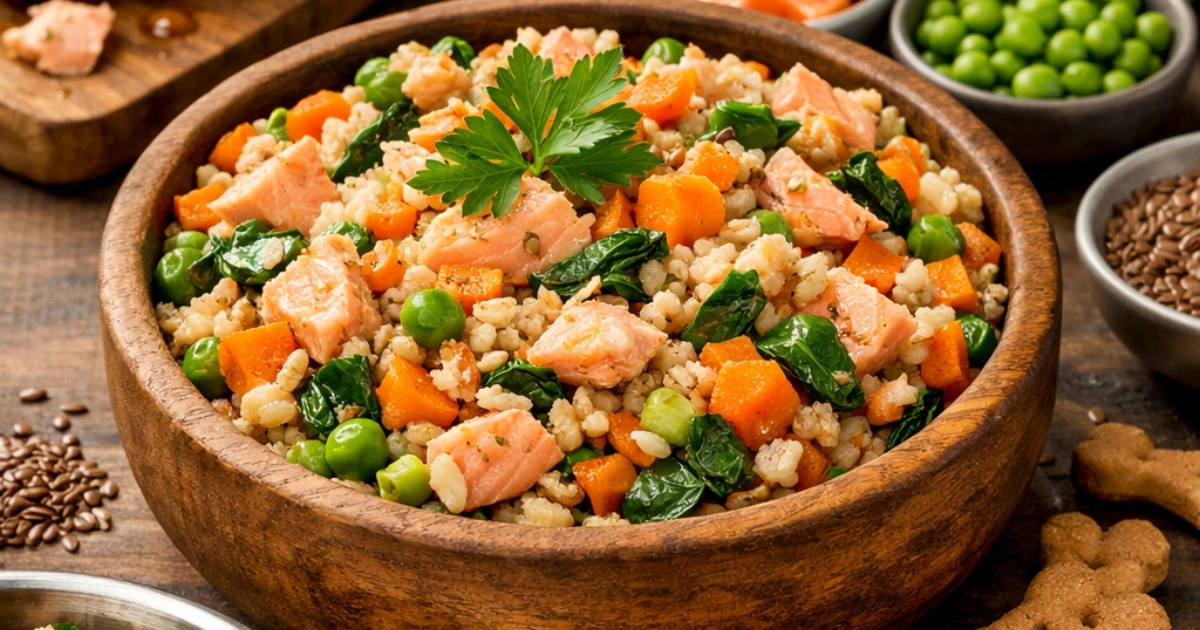
8 Homemade Salmon Dog Food Recipes Your Dog Will Absolutely Love
Homemade Pet Food · Vet-Informed Guide
Salmon Dog Food Recipes
Your Pup Will Wag For
Eight original, dog-safe salmon recipes — from quick meal toppers and hearty dinners to crunchy treats — made with whole ingredients your dog’s body will love.
Harmful Additive
Important Before You Begin
- Consult your veterinarian before making significant changes to your dog’s diet, especially if your dog has existing health conditions, allergies, or is a puppy, senior, or pregnant/nursing.
- These recipes are intended as homemade whole-food meals or supplements to a balanced diet — not as a complete replacement for a veterinary-formulated diet unless your vet approves.
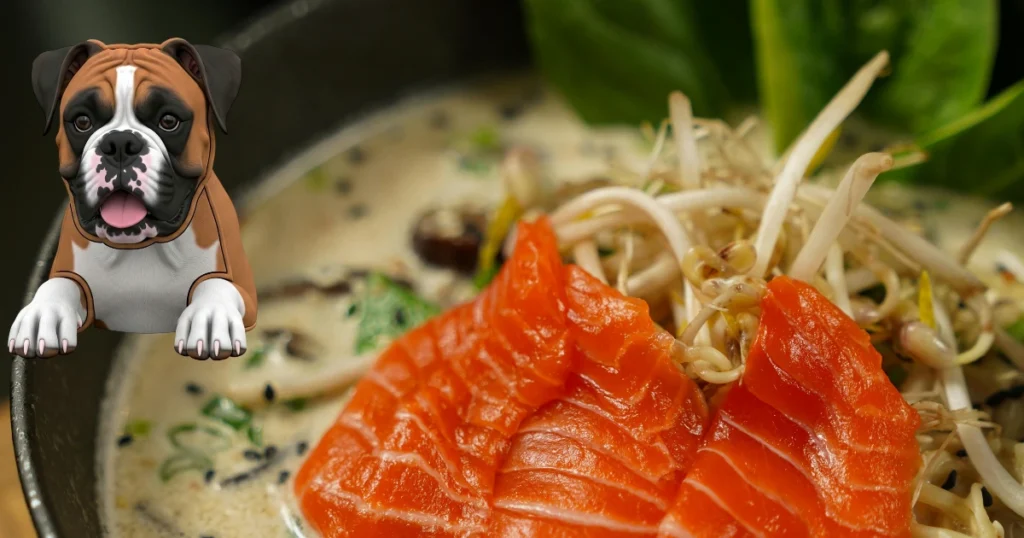
- All salmon in these recipes must be fully cooked. Raw salmon can carry a parasite called Neorickettsia helminthoeca that causes Salmon Poisoning Disease in dogs — this condition can be fatal if untreated. Cook to an internal temperature of 145°F (63°C).
- Every dog has individual nutritional needs. Portion guidance in this post is general — your vet can help you dial in the right amount for your specific dog.
What’s in This Guide
- Why Salmon Is Great for Dogs
- Safe & Unsafe Ingredients
- Salmon Safety Rules
- All 8 Salmon Dog Food Recipes
- Serving Size Guide
- Storing Homemade Dog Food
- FAQ
There is a moment every dog owner knows — that look of pure, undisguised anticipation as you prepare something that smells genuinely interesting. Salmon, with its rich aroma and deeply nutritious profile, produces that look every single time.
But making homemade dog food goes well beyond satisfying a picky eater. For dogs with sensitive stomachs, skin issues, dull coats, or food allergies to chicken or beef, a homemade salmon-based diet can be genuinely transformative. The omega-3 fatty acids in salmon are among the most bioavailable in any food source, and the anti-inflammatory benefits are well-documented in canine health research.
This guide gives you eight original, dog-safe recipes — developed with an eye toward both nutritional completeness and practical kitchentime. You will also find clear guidance on what ingredients are safe, what to absolutely avoid, and how to serve these meals correctly. Let’s get cooking.
Why Salmon Is One of the Best Foods You Can Give Your Dog
Salmon is not just a trendy ingredient in premium dog food brands — there is genuine nutritional science behind its inclusion. Here is what your dog actually gains from a salmon-rich diet:
Omega-3 Fatty Acids
EPA and DHA support brain function, reduce inflammation, and are the single biggest driver of coat shine and skin health in dogs.
High-Quality Protein
Salmon is a complete protein — all essential amino acids — that builds and repairs muscle tissue with excellent bioavailability.
Vitamin D & B12
Critical for calcium regulation, bone density, and nerve function. Salmon is one of the most concentrated natural sources of both.
Brain & Eye Health
DHA specifically supports cognitive development in puppies and helps maintain neurological function in senior dogs.
Heart Health
Regular omega-3 intake is associated with reduced cardiovascular disease risk and better heart rhythm in dogs.
Anti-Inflammatory
Salmon’s omega-3 profile helps manage chronic inflammation, particularly beneficial for dogs with arthritis or joint issues.
Dogs with chicken or beef protein allergies also frequently tolerate salmon exceptionally well, making it one of the best novel-protein options for managing food sensitivities.
What’s Safe (and What’s Absolutely Not) in Dog Food
Before you start combining ingredients, this is the most important section in the entire guide. Some very common human foods are seriously toxic to dogs — and several appear in recipes that circulate online without adequate safety warnings.
Ingredients to NEVER Include in Dog Food
- Onions and garlic — In any form (raw, cooked, powdered). Damage red blood cells and cause hemolytic anemia. Even small amounts are harmful.
- Grapes and raisins — Can cause acute kidney failure. Even a small quantity can be fatal for some dogs. No safe minimum dose is established.
- Macadamia nuts — Cause neurological symptoms, weakness, vomiting, and fever.
- Xylitol (artificial sweetener) — Found in peanut butter, some nut butters, and sugar-free products. Causes a dangerous drop in blood sugar and potential liver failure.
- Chocolate and cocoa — Contains theobromine, which is toxic to dogs.
- Avocado — Persin in avocado flesh and skin can cause vomiting and diarrhea.
- Salt in large amounts — Can cause sodium poisoning. Keep added salt to a bare minimum or none at all in dog food.
- Raw salmon — See the dedicated Salmon Safety section below.
Safe Ingredients to Use With Salmon
| Ingredient | Why It’s Beneficial | Notes |
|---|---|---|
| Sweet potato | Fiber, beta-carotene, vitamins A, B6, C | Cook thoroughly; never raw |
| Brown or white rice | Easily digestible carbohydrate, gentle on stomach | Well-cooked; good for sensitive dogs |
| Pumpkin (plain) | Excellent fiber for digestive health | Plain canned only — no pie filling |
| Carrots | Beta-carotene, low-calorie crunch, dental health | Raw or cooked, both fine |
| Peas (green) | Protein, fiber, vitamins K and B | Fresh or frozen; avoid canned with salt |
| Eggs | Complete protein, biotin, selenium | Fully cooked only |
| Oats (plain) | Soluble fiber, gentle carbohydrate | Cook well; plain rolled oats only |
| Blueberries | Antioxidants, vitamin C, low calorie treat | Fresh or frozen; excellent as training treats |
| Coconut oil | Lauric acid; supports skin and immune function | Small amounts only — high in calories |
| Parsley (flat-leaf) | Breath freshening, antioxidants, kidney support | Flat-leaf only; small amounts |
The Salmon Safety Rules Every Dog Owner Must Know
Salmon is one of the most beneficial foods you can give your dog — but raw salmon is a genuine danger. This is not a general food safety concern applicable to all pets: it is a dog-specific risk that is serious and well-documented.
Salmon Safety for Dogs — The Complete Rules
- Always cook salmon fully to 145°F (63°C) internal temperature. This kills Neorickettsia helminthoeca, the rickettsia bacteria carried by a flatworm parasite common in Pacific salmon, that causes Salmon Poisoning Disease in dogs. Note: cats, bears, and raccoons are not susceptible — dogs are uniquely at risk.
- Remove all bones before serving. Cooked salmon bones are brittle and splinter easily, posing a serious choking and puncture hazard. Run your fingers along the fillet before and after cooking to check for pin bones.
- No seasoning, oil, or butter. Prepare the salmon completely plain before using it in these recipes. Ingredients added for human palatability — salt, pepper, garlic, herbs — are either harmful or unnecessary for dogs.
- Wild-caught over farmed when possible. Wild-caught salmon (sockeye, pink, or coho) typically has a better omega-3 to omega-6 ratio. Farmed salmon is not harmful, but wild-caught provides more of the specific fatty acids most beneficial to dogs.
- Salmon skin is fine when fully cooked and free of seasoning. It is actually a concentrated source of omega-3s. Remove it if the salmon was pan-seared or baked with any oils or seasonings.
- Avoid smoked salmon. Commercially smoked salmon is extremely high in sodium and is not appropriate for dogs.
8 Original Salmon Dog Food Recipes
These recipes progress from the simplest to the most involved. Each one uses only dog-safe ingredients, all salmon is cooked, and no added salt or harmful seasonings appear anywhere in the ingredient lists.
Simple Salmon & Sweet Potato Dinner Bowl
30 minEasy 2–3 meals (medium dog)Full Meal
The foundational salmon dog food recipe. Simple, nourishing, and easy to scale. Sweet potato provides slow-burning carbohydrates and beta-carotene, while the plain cooked salmon delivers protein and omega-3s. This is the recipe to start with if you are new to homemade dog food.
Ingredients
- 8 oz boneless salmon fillet
- 1 cup sweet potato, cubed
- ½ cup green peas (frozen, no salt)
- ½ cup cooked brown rice
- 1 tsp coconut oil (optional)
Method
- Steam or bake salmon at 375°F (190°C) for 18–20 minutes until it reaches 145°F (63°C) internal temperature. Let cool completely. Remove all bones and flake into pieces.
- Boil sweet potato cubes in unsalted water 12–15 minutes until fork-tender. Drain well.
- Briefly steam or boil peas 2–3 minutes. Drain.
- Combine flaked salmon, sweet potato, peas, and cooked brown rice in a bowl. Add coconut oil if using. Mix gently.
- Serve at room temperature. Store leftovers in a sealed container in the refrigerator for up to 3 days.
- This recipe works beautifully as a complete meal or as a 50/50 mix with your dog’s regular kibble for a nutritious topper. Start with smaller portions when introducing any new food to avoid digestive upset.
No added salt, onion, garlic, or seasoning of any kind.
Salmon & Pumpkin Tummy-Soothing Meal
25 minEasy 2–3 meals (medium dog)Digestive Health
This recipe is specifically designed for dogs with sensitive stomachs or during periods of digestive upset. Plain canned pumpkin is one of the most effective natural remedies for both diarrhea and constipation in dogs. Paired with easily digestible white rice and lean salmon, this meal is as gentle as it is nourishing.
Ingredients
- 6 oz boneless salmon fillet
- ¼ cup plain canned pumpkin (not pie filling)
- 1 cup cooked white rice
- ¼ cup plain low-fat yogurt
- 2 tbsp water or unsalted chicken broth
Method
- Poach salmon in plain water or unsalted broth over medium heat for 10–12 minutes until cooked through to 145°F (63°C). Cool fully. Flake and check for bones.
- Cook white rice in unsalted water until soft and well-done — slightly overcooked is ideal for sensitive stomachs.
- Combine rice, flaked salmon, and pumpkin. Stir until evenly mixed.
- Add plain yogurt and a splash of the poaching broth to loosen the mixture to a slightly soupy consistency, which is easier for dogs with digestive issues to consume.
- Serve at room temperature. Refrigerate leftovers for up to 3 days.
The plain yogurt provides probiotics that support gut microbiome health. Make sure it contains live active cultures and zero added sweeteners or xylitol. Plain Greek yogurt works well too.
Salmon, Carrot & Oat Homemade Dog Biscuits
45 minMedium ~24 biscuitsTreat / Training
These crunchy, long-lasting biscuits make outstanding training treats or daily snacks. They smell incredible during baking — your dog will be sitting, staying, and doing everything in their repertoire before the timer goes off. The oat base makes them easy to digest, and the carrot adds a natural sweetness dogs love.
Ingredients
- 1 can (6 oz) canned pink salmon, drained (no salt added)
- 2 cups whole wheat flour (or oat flour)
- ½ cup rolled oats
- ½ cup grated carrot
- 2 eggs, beaten
- 2 tbsp coconut oil, melted
- 2–4 tbsp water (to bind)
Method
- Preheat oven to 350°F (175°C). Line two baking sheets with parchment.
- Drain and mash canned salmon thoroughly — include any soft bones from canned salmon, which are fully safe and a good calcium source once cooked and mashed.
- Combine salmon, flour, oats, grated carrot, eggs, and coconut oil. Mix until a firm dough forms, adding water one tablespoon at a time as needed.
- Roll dough to ¼-inch thickness on a lightly floured surface. Cut into shapes using a cookie cutter or simply into small squares.
- Bake 20–25 minutes until golden and firm. Let cool completely on a wire rack — they will harden further as they cool. Store in an airtight container.
- For crunchier biscuits (which last longer and are better for dental health), reduce oven to 275°F and bake for a further 20 minutes after the initial bake to fully dry them out. These keep at room temperature for up to 2 weeks in an airtight container.
Use “no salt added” canned salmon — regular canned salmon often contains significant sodium.
Salmon & Egg Breakfast Scramble (Meal Topper)
10 minEasy 1 servingMeal Topper
A quick, protein-packed topper that transforms a bowl of kibble into something your dog will be genuinely excited about. Eggs and salmon together provide one of the most complete amino acid profiles in any food combination, and this comes together in under ten minutes on a busy morning.
Ingredients
- 2 oz cooked boneless salmon, flaked
- 1 large egg
- 1 tbsp water
- 1 tbsp plain pumpkin purée (optional)
Method
- Whisk egg with water in a small bowl.
- Heat a small non-stick pan over medium-low heat with no oil or butter.
- Pour in egg mixture and cook slowly, stirring gently, until just set — soft-scrambled. Remove from heat before the eggs are fully firm.
- Fold in flaked salmon and pumpkin if using. Cool to room temperature completely before serving over kibble.
Never serve this hot — dogs have sensitive mouths and can burn themselves on hot food. Always check the temperature by holding the bowl briefly before setting it down. Warm is fine; hot is not.
Salmon, Blueberry & Oat Frozen Training Treats
15 min + freezeEasy ~20 treatsFrozen Treat
Perfect for hot weather, post-exercise cooling, or high-value training rewards. The salmon provides the irresistible scent that drives dogs wild, the blueberries add antioxidants, and freezing makes these treats last longer and easier to handle during training sessions.
Ingredients
- 4 oz cooked boneless salmon, flaked
- ½ cup plain Greek yogurt (no sweetener)
- ¼ cup fresh or frozen blueberries
- 2 tbsp rolled oats
- 2 tbsp plain pumpkin purée
Method
- Blend yogurt, pumpkin, and half the blueberries in a small food processor or blender until smooth.
- Stir in flaked salmon, oats, and remaining whole blueberries by hand.
- Spoon mixture into a silicone ice cube tray or small silicone mold. Fill each cavity about ¾ full.
- Freeze for at least 4 hours, or overnight. Once frozen, pop out and store in a zip-lock bag in the freezer for up to 3 months.
- Serve frozen directly from the freezer as a treat. For small dogs, thaw slightly before serving.
Check your Greek yogurt label carefully before using — some brands add thickeners, artificial flavors, or sweeteners. The ingredient list should read: milk, live active cultures. Nothing else.
Salmon & Quinoa Power Bowl for Active Dogs
35 minMedium 3–4 meals (medium-large dog)High Energy
Designed for active, working, or sporting dogs with higher caloric and protein needs. Quinoa is one of the few plant-based complete proteins — it contains all essential amino acids — and its combination with salmon creates an exceptionally protein-dense meal that supports muscle repair and sustained energy.
Ingredients
- 10 oz boneless salmon fillet
- 1 cup quinoa (rinsed well)
- 1 cup frozen peas
- 1 large carrot, diced small
- ½ cup baby spinach, chopped
- 1 egg, hardboiled and chopped
- 1 tsp coconut oil
Method
- Rinse quinoa thoroughly to remove saponins (naturally bitter coating). Cook in unsalted water per package directions. Fluff and cool.
- Bake or steam salmon to 145°F (63°C). Cool completely. Remove all bones and flake.
- Steam carrot and peas until tender. Briefly wilt baby spinach in the residual steam.
- Combine all ingredients including chopped hard-boiled egg and coconut oil. Mix well.
- Portion and refrigerate. This recipe stores well for up to 4 days refrigerated.
Rinsing quinoa is important for dogs — the natural saponin coating can cause digestive irritation. Rinse under cold water in a fine mesh strainer until the water runs clear before cooking.
Slow Cooker Salmon & Vegetable Stew
3–4 hrs slow cookerEasy (hands-off) 5–6 meals (medium dog)Batch Cook
The batch-cook recipe for busy pet parents. Add everything to the slow cooker in the morning and come home to a week’s worth of deeply nourishing dog food. The long, low cooking process breaks down the vegetables to their most digestible form and creates a naturally thick, appealing stew.
Ingredients
- 1.5 lbs boneless salmon (skin-on or off)
- 2 medium sweet potatoes, cubed
- 2 carrots, chopped
- 1 cup green beans, trimmed and halved
- ½ cup plain canned pumpkin
- 2 cups unsalted chicken broth (or water)
- ½ cup cooked brown rice (add last hour)
Method
- Place salmon in the slow cooker. Arrange sweet potato, carrots, and green beans around and over the salmon.
- Stir pumpkin purée into broth and pour over everything. Do not add salt or seasonings.
- Cook on LOW for 3–4 hours. The salmon will cook through and begin to break apart naturally.
- In the last 45 minutes, stir in the pre-cooked brown rice and break the salmon into large flakes, removing any bones.
- Cool completely before portioning. Refrigerate up to 4 days or freeze in portions for up to 3 months.
This stew freezes beautifully in portioned containers or zip-lock bags. Freeze flat for space efficiency, then stack once frozen. Thaw overnight in the refrigerator — never microwave dog food with salmon as uneven heating can create dangerously hot spots.
Salmon Skin Jerky (Single-Ingredient Treat)
2–3 hrs ovenMedium ~15–20 stripsChew Treat
Salmon skin jerky is a single-ingredient treat of extraordinary quality — concentrated omega-3s in a chewy, satisfying format that dogs absolutely adore. When you cook salmon fillets at home and remove the skin, save it for this recipe rather than discarding it. One simple baking step transforms it into the most nutritious treat you will ever give your dog.
Ingredients
- 4–6 pieces raw salmon skin (no seasoning, no salt)
- — Nothing else
Method
- Preheat oven to 250°F (120°C). Line a baking sheet with parchment paper.
- Lay salmon skin pieces flat on the baking sheet, skin-side down. If the skin is very thick, score it lightly with a knife to help it dry evenly.
- Bake for 2 to 3 hours, checking every 30 minutes, until the skin is completely dehydrated, stiff, and jerky-like with no soft or moist spots. Thinner pieces may be done sooner.
- Remove and cool completely on a wire rack — the jerky will crisp further as it cools.
- Break into appropriately sized pieces for your dog’s size. Store in an airtight container at room temperature up to 5 days, or refrigerate for 2 weeks.
Only use raw, completely unseasoned salmon skin — skin from salmon that was baked, poached, or grilled with any butter, oil, herbs, salt, or lemon is not appropriate. The skin needs to be completely plain before you begin this recipe. If you are processing whole salmon at home, this is a perfect zero-waste use for the skin.
How Much to Serve: General Feeding Guideline
Homemade dog food portion sizes depend on your dog’s weight, age, activity level, and whether you are using the food as a complete meal or as a topper to existing kibble. These guidelines are a starting point — always work with your vet to dial in the right amount for your individual dog.
| Dog Weight | As Complete Meal (per day) | As Topper on Kibble | Treat / Snack Only |
|---|---|---|---|
| Under 10 lbs (toy/small) | ¾ – 1 cup | 2–3 tablespoons | 1–2 small biscuits |
| 10–25 lbs (small-medium) | 1 – 1½ cups | 3–4 tablespoons | 2–4 small biscuits |
| 25–50 lbs (medium) | 1½ – 2½ cups | ¼ – ⅓ cup | 4–6 small biscuits |
| 50–75 lbs (medium-large) | 2½ – 3½ cups | ⅓ – ½ cup | 6–8 small biscuits |
| 75 lbs+ (large/giant) | 3½ – 5 cups | ½ – ¾ cup | 8–10 small biscuits |
| These are approximate guidelines only. Divide daily portions between 2 meals for adult dogs. Puppies, seniors, and pregnant/nursing dogs have different nutritional requirements — consult your vet. | |||
Storing Homemade Salmon Dog Food Safely
Proper storage is not optional with homemade dog food — the absence of preservatives means bacteria can grow more quickly than in commercial products. These rules apply to all the recipes in this guide:
Storage Rules for All Recipes
- Refrigerator: Store cooked meals and meal-toppers in airtight containers for 3–4 days maximum. The salmon skin jerky is the exception — up to 5 days at room temperature in a sealed container.
- Freezer: Most recipes freeze for 2–3 months in sealed containers or portioned zip-lock bags. Frozen treats (Recipe 5) keep for 3 months in the freezer.
- Portion before freezing: Freeze in individual meal-sized containers so you can thaw exactly what you need without refreezing.
- Never refreeze thawed salmon-based dog food — the same food safety principle that applies to human food applies here.
- Thaw in the refrigerator overnight. Never leave thawing dog food on the counter at room temperature.
- Discard promptly any food your dog does not eat within 30 minutes of serving. Do not leave homemade food in the bowl.
Frequently Asked Questions
Can Dogs Eat Salmon Every Day?
Yes, fully cooked salmon can be a regular part of your dog’s diet. Many commercial dog foods use salmon as their primary protein source. The key stipulations are: it must always be fully cooked to 145°F (63°C), it must be boneless, and it should be prepared without any salt, seasoning, or added fats. If salmon is the primary protein in your dog’s diet, consult your vet to ensure the overall meal plan is nutritionally balanced.
Can I Use Canned Salmon for These Recipes?
Yes — with one important condition. Use only “no salt added” canned salmon. Standard canned salmon contains sodium levels that are problematic for regular dog consumption. The soft bones in canned salmon are completely safe (and nutritious) once mashed, making canned salmon especially good for the biscuit recipe. Pink salmon in no-salt-added cans is widely available and cost-effective.
What If My Dog Has Never Eaten Salmon Before?
Introduce salmon gradually to avoid digestive upset. Start by adding a small amount (a tablespoon or two) as a meal topper for 2–3 days, watching for any signs of intolerance such as loose stool, vomiting, or lethargy. Most dogs handle salmon extremely well and transition quickly. A small number of dogs have fish allergies — if you observe itching, skin issues, or gastrointestinal distress, discontinue and consult your vet.
Is Salmon Better for Dogs Than Chicken?
Neither is universally better — they offer different nutritional strengths. Salmon has a significantly higher omega-3 fatty acid content, which chicken cannot match. Chicken is often leaner and can be preferable for weight management. For dogs with chicken allergies (one of the most common food allergies in dogs), salmon is an excellent alternative. Many vets recommend rotating protein sources to ensure nutritional variety and reduce the risk of developing food sensitivities.
Can Puppies Eat These Salmon Recipes?
Puppies can eat fully cooked plain salmon safely. However, puppies have very specific nutritional requirements for growth — including precise calcium-to-phosphorus ratios — that general homemade recipes may not fully meet on their own. These recipes are safest used as occasional toppers or treats for puppies, alongside a nutritionally complete puppy food. If you want salmon to form a significant part of a puppy’s diet, work with a veterinary nutritionist to design a balanced plan.
Why Can’t I Just Give My Dog Raw Salmon?
Because of Salmon Poisoning Disease, a potentially fatal condition caused by Neorickettsia helminthoeca bacteria carried by a flatworm parasite found in Pacific salmon (and some other raw fish). Dogs — unlike cats, humans, or bears — are uniquely susceptible. Symptoms include vomiting, diarrhea, fever, lethargy, and swollen lymph nodes appearing 6–10 days after consumption. Without treatment, it can be fatal. Thorough cooking to 145°F (63°C) eliminates the risk entirely. This is a non-negotiable safety rule for any dog that consumes salmon.
More Homemade Pet Food Ideas
From chicken and sweet potato bowls to homemade dog treats for every occasion — our pet food recipe library is always growing.Browse All Dog Food Recipes →
Disclaimer: This post is for informational purposes only and does not constitute veterinary advice. Always consult your veterinarian before making changes to your dog’s diet. All salmon safety information is consistent with AVMA (American Veterinary Medical Association) and general veterinary guidelines. Individual dogs have different nutritional needs — portion sizes provided are general estimates only.