
Deep Dive · Premium Ingredients
Salmon Roe: The Complete Guide to
Nature’s Most Luxurious Superfood
From ocean to table — everything you need to know about ikura, its flavor, nutrition, and how to use it.
📅 March 2026⏱ 12 min read🍣 Seafood & Specialty
📖 In This Guide
- What Is Salmon Roe, Exactly?
- Flavor & Texture Profile
- Nutritional Powerhouse: The Numbers
- Types of Salmon Roe
- How to Buy the Best Salmon Roe
- Storing & Handling Tips
- How to Eat & Serve Salmon Roe
- Perfect Pairings
- Quick Recipe: Ikura Donburi
- Frequently Asked Questions
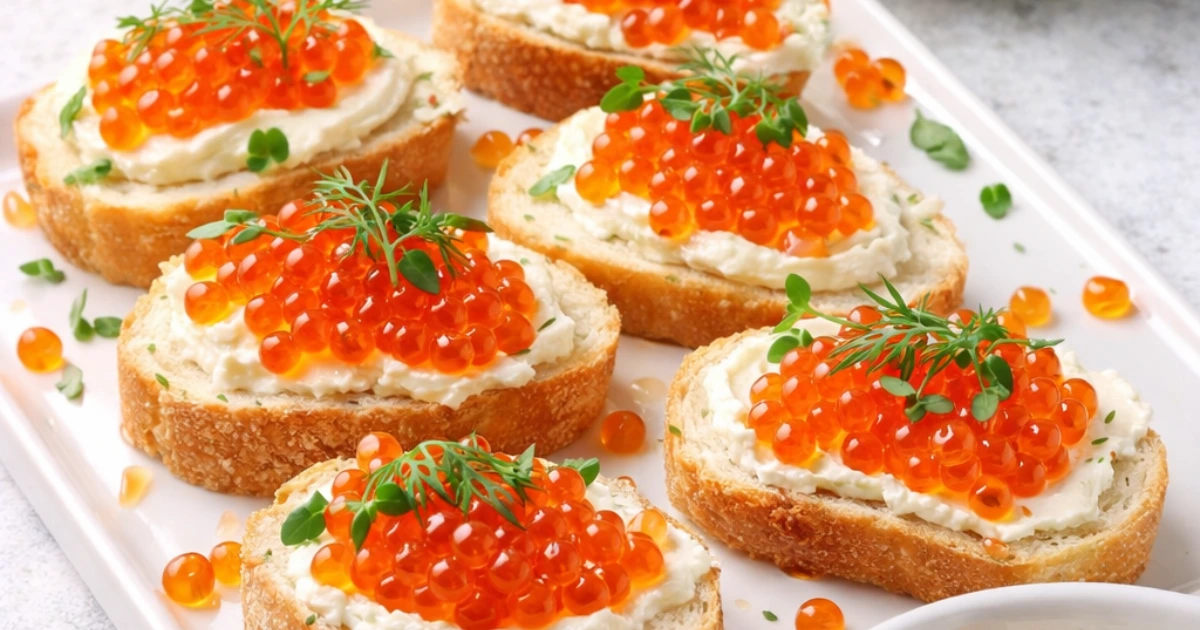
There is a moment — quiet, electric — when a salmon roe egg meets your tongue and bursts. The rush of briny, oceanic richness is immediate and deeply satisfying, unlike anything else in the culinary world. These jewel-like orange spheres have graced the tables of Japanese izakayas, Russian imperial banquets, and modern tasting menus for centuries. Yet for many home cooks, salmon roe remains something of a mystery.
This guide is here to change that. Whether you are encountering salmon roe for the first time or looking to deepen your appreciation, you will find everything here: what it actually is, why it is so remarkably good for you, how to shop for it wisely, and — most importantly — how to eat it in ways that do full justice to its extraordinary flavor.
“Salmon roe is not a garnish. It is an experience — a concentrated burst of the ocean itself, preserved in a single, luminous sphere.”
What Is Salmon Roe, Exactly?
Salmon roe refers to the mature, unfertilized eggs harvested from female salmon. The eggs are cured — most commonly in salt — to develop their signature flavor and silky, yielding texture. In Japanese cuisine, salmon roe is known as ikura (イクラ), a word borrowed from the Russian ikra, meaning fish eggs or caviar. This etymological clue hints at the long cross-cultural appreciation for this ingredient.
Unlike sturgeon caviar (what most people picture when they hear “caviar”), salmon roe eggs are substantially larger — typically 4 to 7 millimeters in diameter — and much more vibrant in color, ranging from deep amber to brilliant, translucent orange. The eggs are harvested in whole skeins (the membrane holding them together) and then carefully separated, rinsed, and cured before packaging.
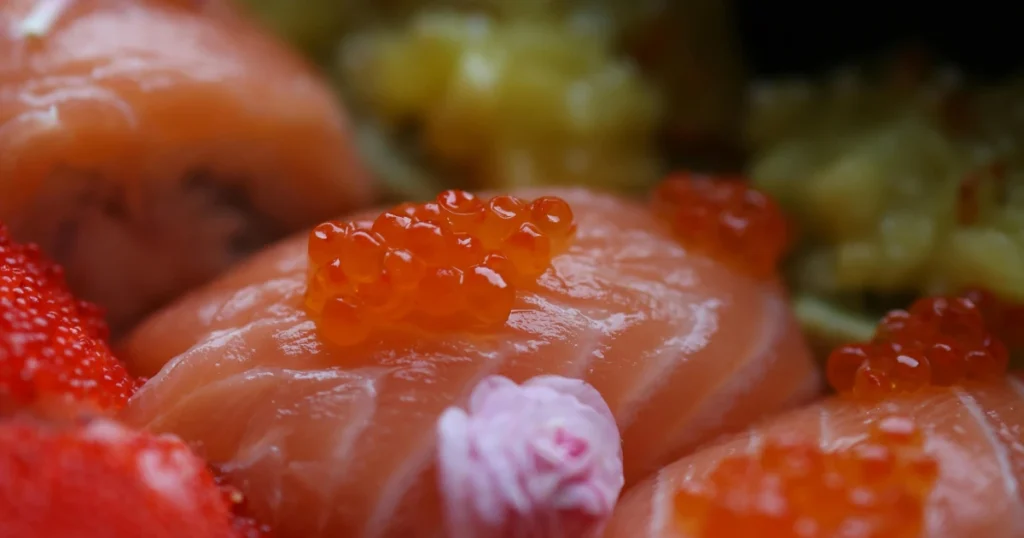
Salmon roe is distinct from tobiko (flying fish roe) and masago (capelin roe), which are far smaller, crunchier, and milder. Salmon roe occupies a unique sensory tier — large enough to pop individually, flavored deeply enough to command the center of a dish.
✦ ✦ ✦
Flavor & Texture: What to Expect
Describing the flavor of salmon roe to someone who has never tasted it is like describing a color. Words fall short, but let us try. The immediate impression is brininess — a clean, forward saltiness that evokes the open sea. This is quickly followed by a rich, buttery quality that comes from the eggs’ high content of omega-3 fatty acids. Then comes a faint sweetness and a long, mineral finish.
The texture is arguably as important as the flavor. Each egg has a thin, delicate membrane that gives way with almost no pressure, releasing its contents in a single satisfying pop. This quality — known in Japanese culinary language as puchi puchi (プチプチ) — is one of the primary reasons salmon roe is so beloved. It is a textural delight with no real parallel in food.
Factors That Influence Flavor
Not all salmon roe tastes the same. Several variables shape the final flavor of what ends up in your jar:
- Species: Sockeye salmon roe tends to be the most intensely flavored, with bold brininess. Coho roe is slightly milder and sweeter. Chum salmon yields the largest, most visually striking eggs.
- Curing method: Salt-cured roe (the most traditional) allows the natural flavor to shine. Soy-marinated roe (shoyu ikura) adds umami depth and a subtle sweetness.
- Freshness: Truly fresh roe has a clean, oceanic scent. Older or poorly stored roe can develop a fishy, metallic edge.
- Harvest season: Fall-harvested roe, taken from salmon at peak spawning readiness, tends to be the richest and most deeply flavored.
✦ ✦ ✦
Nutritional Powerhouse: The Numbers
Salmon roe is not just delicious — it is one of the most nutrient-dense foods on the planet. A modest serving delivers an extraordinary concentration of vitamins, minerals, and healthy fats that would take a much larger quantity of most other foods to match.
| Nutrient | Per 30g Serving | % Daily Value |
|---|---|---|
| Calories | 72 kcal | 4% |
| Protein | 7.8 g | 16% |
| Total Fat | 4.3 g | 6% |
| Omega-3 (EPA+DHA) | ~1,600 mg | ★ Exceptional |
| Vitamin B12 | 3.1 µg | 129% |
| Vitamin D | 5.4 µg | 27% |
| Selenium | 15 µg | 27% |
| Choline | ~60 mg | 11% |
| Sodium | 480 mg | 21% |
| Values are approximate and vary by species and preparation method. | ||
🧠 Why Nutritionists Pay Attention
- Brain health: The EPA and DHA in salmon roe are among the most bioavailable forms of omega-3s. DHA in particular is structurally critical for brain and retinal cell membranes.
- Anti-inflammatory: Omega-3 fatty acids actively help modulate inflammatory pathways, supporting cardiovascular and joint health.
- Vitamin B12: A single serving provides more than a full day’s requirement, making salmon roe one of the most concentrated B12 sources in existence.
- Astaxanthin: The vibrant orange color is not just beautiful — it comes from astaxanthin, a potent antioxidant that also gives salmon flesh its pink hue.
- Complete protein: Salmon roe contains all essential amino acids in a highly digestible form.
It is worth noting that salmon roe is also relatively high in sodium due to the curing process. Those monitoring salt intake should treat it as a flavorful condiment rather than eating it by the spoonful — though doing so is admittedly tempting.
✦ ✦ ✦
Types of Salmon Roe Worth Knowing
The world of salmon roe is more varied than most people realize. Here is a breakdown of what you are most likely to encounter:
🟠
Sockeye Ikura
Deep orange-red, bold and briny. The most assertive flavor of the group — a favorite among serious roe enthusiasts.
🟡
Coho Ikura
Lighter amber color and a sweeter, more delicate taste. A good starting point for those new to salmon roe.
🔴
Chum Ikura
The largest eggs, with a mild flavor and striking visual impact. Prized in Japan as the classic ikura of sushi bars.
🍶
Shoyu Ikura
Any of the above, marinated in soy sauce, sake, and mirin. Deeper umami flavor with a glossy, lacquered finish.
✦ ✦ ✦
How to Buy the Best Salmon Roe
Quality varies enormously in the salmon roe market, and knowing what to look for can be the difference between an extraordinary experience and a disappointing one. Here is what to prioritize:
Visual Cues
Look for eggs that are plump, uniformly round, and glistening. Each egg should be distinct and separate — not collapsed, shriveled, or sticking together in clumps. The color should be vivid and consistent throughout the jar. Pale, dull, or graying eggs are a sign of age or improper handling.
Smell
Fresh salmon roe smells clean and oceanic — like a morning at the beach. A strong, ammonia-like, or overly “fishy” odor is a warning sign. Trust your nose; it will rarely steer you wrong with seafood.
Where to Buy
Japanese grocery stores and specialty fishmongers consistently offer the best quality. Look for imported Japanese brands such as Nissui or Maruha Nichiro for reliable ikura. In the United States, wild Alaskan salmon roe — particularly from small-batch producers in Alaska — has become increasingly available and is superb in quality. Online specialty seafood retailers are also a strong option if local sources are limited.
Fresh vs. Frozen
Salmon roe freezes exceptionally well. High-quality frozen roe, thawed properly in the refrigerator overnight, is often indistinguishable from never-frozen product — and sometimes superior, since flash-freezing at sea locks in peak freshness. Do not hesitate to buy frozen if the fresh alternative looks questionable.
✦ ✦ ✦
Storing & Handling Salmon Roe
Salmon roe is perishable and deserves careful handling to preserve both its safety and its extraordinary flavor.
📦 Storage Quick Reference
- Unopened jar (refrigerated): Follow the best-by date, typically 2–4 weeks from purchase.
- After opening: Consume within 3–5 days. Keep tightly sealed and refrigerated at all times.
- Frozen (unopened): Up to 6 months in a proper freezer at 0°F / -18°C or below.
- Never refreeze roe that has already been thawed — the cell membranes rupture and the texture deteriorates significantly.
- Serving temperature: Remove from the fridge 10 minutes before serving for the fullest flavor expression.
When handling salmon roe, use non-reactive spoons — mother-of-pearl, wood, or plastic are ideal. Metal spoons, particularly silver, can impart a metallic taste and are traditionally avoided when serving fine roe of any kind.
✦ ✦ ✦
How to Eat & Serve Salmon Roe
The golden rule of salmon roe: apply no heat. These eggs are meant to be eaten cold or at room temperature. Heat destroys their delicate membranes and cooks away the very qualities that make them special. Beyond that principle, the possibilities are genuinely wide.
The Classic Approaches
On sushi rice (ikura nigiri or donburi): This is the canonical preparation — a mound of perfectly seasoned, warm rice topped generously with salmon roe. The contrast between the warm, slightly acidic rice and the cool, briny eggs is one of Japanese cuisine’s great pleasures.
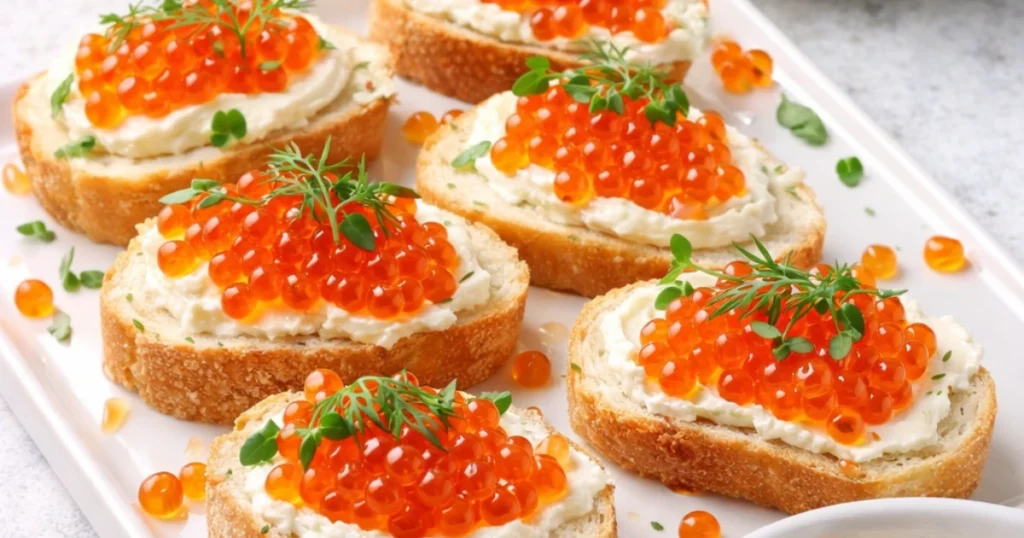
On blini with crème fraîche: The Russian-inspired approach. A small buckwheat pancake, a dollop of crème fraîche, and a spoonful of roe create a bite that is simultaneously rich, tangy, briny, and deeply satisfying. Perfect for elegant entertaining.
On a baked potato: This is not a joke — it is magnificent. A properly baked potato with good butter, sour cream, and a generous spoonful of salmon roe is a luxurious comfort food combination that plays the starchy, creamy base against the oceanic burst of the eggs.
On pasta: Toss hot pasta with butter, a little lemon zest, and fresh herbs, then remove from heat before folding in the roe at the very last moment. The residual warmth softens the eggs slightly without cooking them, creating a sauce of extraordinary richness.
On scrambled eggs: Soft, barely-set scrambled eggs finished with a spoonful of salmon roe on top is a breakfast for people who take mornings seriously.
✦ ✦ ✦
Perfect Pairings for Salmon Roe
Understanding what salmon roe pairs well with helps you build dishes that feel intentional rather than accidental. The key principle is contrast: pair the salty, rich, ocean-forward flavor of roe with ingredients that are neutral, creamy, acidic, or starchy.
Crème fraîche — creamy tangSushi rice — classic baseBlini — buckwheat earthinessAvocado — buttery neutralCucumber — fresh, clean crunchLemon zest — bright citrus cutChampagne — fine bubbles, yeasty depthChilled sake — umami harmonyBrioche toast — buttery richnessSoft-boiled egg — doubles the egg magicWasabi — sharp heat contrastShiso leaf — herbal anise freshness
What to avoid: heavy red meat, bold red wines (the tannins clash harshly with the brininess), and heavily spiced preparations that will overwhelm the roe’s nuanced flavor. Salmon roe is the star of any dish — build around it, do not compete with it.
✦ ✦ ✦
Quick Recipe: Classic Ikura Donburi (Salmon Roe Rice Bowl)
This is the dish that best showcases what salmon roe can do. It requires almost no cooking and takes about 15 minutes from start to finish. The result is something that looks and tastes like it belongs in a high-end Japanese restaurant.
Ikura Donburi — Salmon Roe Rice Bowl
Serves 2 · 15 minutes · No cooking required beyond rice
Ingredients
- 2 cups cooked Japanese short-grain rice (still warm)
- 2 tsp rice wine vinegar + 1 tsp sugar + ½ tsp salt (sushi seasoning)
- 100g (3.5 oz) salmon roe (ikura)
- 2 shiso leaves, finely shredded
- 1 tsp toasted sesame seeds
- Strips of toasted nori (optional but recommended)
- Soy sauce, to serve on the side
Method
- While the rice is still warm, gently fold through the rice wine vinegar, sugar, and salt. Fan the rice briefly to cool it slightly — you want it warm but not steaming hot.
- Divide the seasoned rice between two deep bowls, packing it gently into a slightly domed mound.
- Spoon the salmon roe generously over the rice, covering most of the surface. Do not be timid — this is the centerpiece.
- Scatter the shredded shiso and sesame seeds over the top. Add nori strips around the edge of the bowl if using.
- Serve immediately with a small dish of soy sauce on the side for optional drizzling. The roe is already salted, so taste before adding more.
✦ ✦ ✦
Frequently Asked Questions
Is salmon roe the same as caviar?
Technically, “true” caviar refers only to eggs from sturgeon species. Salmon roe is more correctly called roe, though in common usage many people use the terms interchangeably. In culinary quality and price, high-grade salmon roe is absolutely in the same tier as many types of caviar.
Can you eat salmon roe if you are pregnant?
Properly cured (salt-cured) salmon roe purchased from a reputable source is generally considered safe in moderation during pregnancy because the curing process addresses pathogen concerns. Raw or freshly separated roe without proper curing is a different matter. Always consult your healthcare provider for personalized dietary guidance during pregnancy.
Why does some salmon roe taste metallic or bitter?
A metallic taste usually indicates the roe has been in contact with metal utensils or containers, or that it is past its prime freshness. Bitterness can result from over-salting or from eggs harvested at the wrong point in the salmon’s cycle. Both are signs of quality issues rather than inherent characteristics of salmon roe.
How much salmon roe is a typical serving?
For a topping or condiment, 15–30 grams per person is a generous amount. As the main event on a donburi or similar rice dish, 50–80 grams per serving is more satisfying. Given its richness and sodium content, most people find that natural appetite guides an appropriate serving size.
Is salmon roe sustainable?
Wild Alaskan salmon (including sockeye, coho, and chum) is widely regarded as one of the most sustainably managed fisheries in the world. Roe from these fisheries carries the same sustainability credentials. Look for products with Marine Stewardship Council (MSC) certification if sustainability is a priority for your purchasing decisions.
Can you make salmon roe at home from fresh eggs?
Yes — if you have access to a whole fresh salmon with a skein of roe still inside, home-curing is entirely feasible. The process involves separating the eggs from the membrane, rinsing thoroughly, and brining in a solution of salt (and optionally soy sauce and mirin for shoyu ikura). The results can be extraordinary, and the process is less intimidating than it sounds.
Ready to Explore More Extraordinary Ingredients?
From truffles to sea urchin to aged miso — our deep-dive ingredient guides go beyond the recipe to tell the full story of the foods worth knowing.Browse All Ingredient Guides →
About this post: All content is original and written in-house. Nutritional values are approximate and based on USDA data and published food science literature. This post does not constitute medical or dietary advice.