
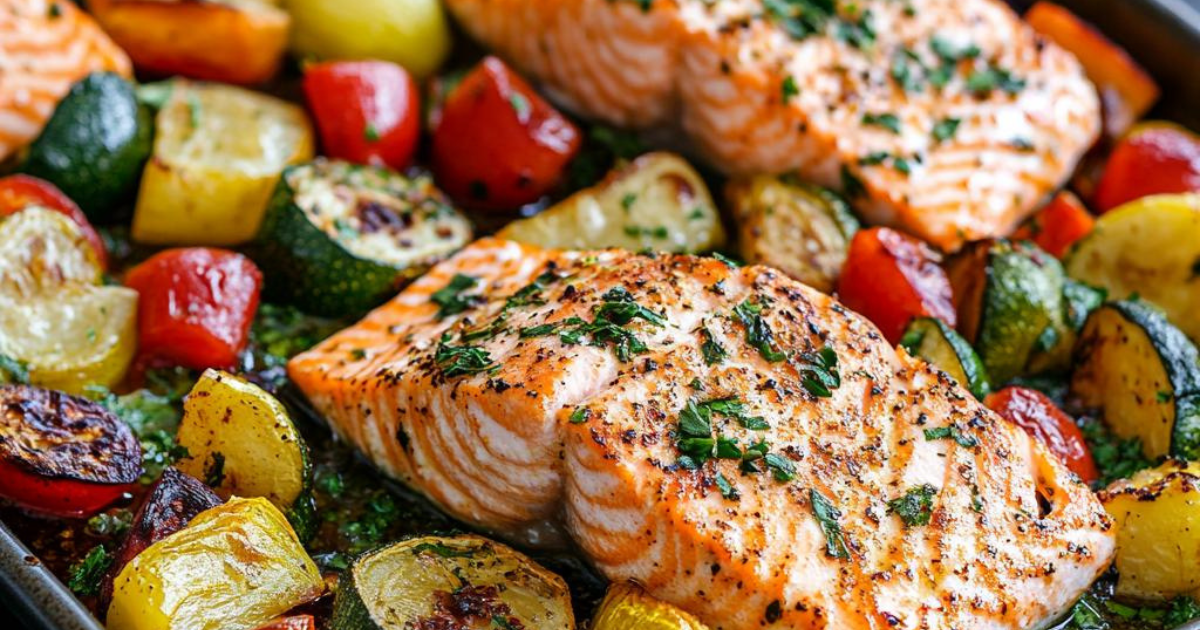
Healthy Dinners · One Pan · Seasonal Cooking
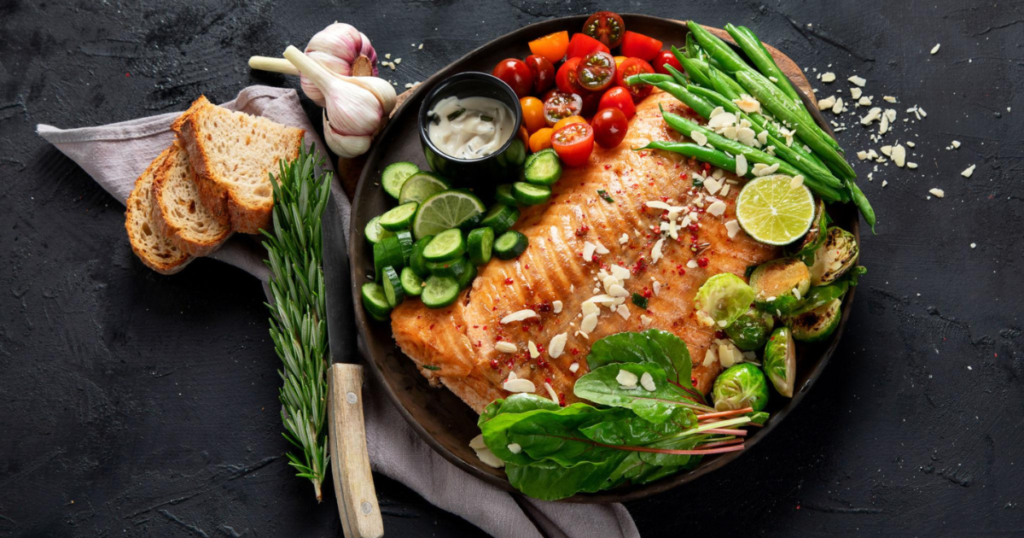
Salmon
with Vegetables
6 Vibrant Recipes
Sheet pan, foil packet, wok-tossed, and oven-roasted — six original, colorful ways to turn salmon and vegetables into a complete, nourishing meal in under 30 minutes.
One-Pan Cleanup Under 30 Minutes High Protein Meal-Prep Friendly Gluten-Free Options
Updated · 2025 · 6 Original Recipes Scroll to explore ↓
If there is one dinner formula that earns its place on the weekly rotation above all others, it is salmon with vegetables. The combination isn’t just convenient — it’s genuinely complete. Protein, healthy fats, fiber, vitamins, and color all on one pan, in one oven, ready before the table is even set. And yet, despite how straightforward the concept sounds, most people cook the same version on repeat, rarely exploring how wildly different this pairing can taste depending on how you season it, which vegetables you choose, and what method you use.
This guide changes that. Below you’ll find six fully original salmon and vegetable recipes, each with its own flavor identity — from a Mediterranean sheet pan loaded with olives and cherry tomatoes, to a ginger sesame stir-fry, a smoky foil packet with corn and zucchini, and a Provençal roasted tray bake perfumed with herbs. Every recipe is built for real weeknight cooking: minimal prep, smart technique, and results that taste like you put in far more effort than you actually did.
Contents
- The Best Vegetables to Cook with Salmon
- Sheet Pan Mediterranean Salmon with Roasted Vegetables
- Ginger Sesame Salmon Stir-Fry with Bok Choy & Snap Peas
- Foil Packet Salmon with Corn, Zucchini & Smoky Butter
- Provençal Herb-Roasted Salmon Tray Bake
- Garlic Butter Salmon with Asparagus & Cherry Tomatoes
- Thai Basil Salmon with Roasted Sweet Potato & Broccolini
- Pro Tips for Perfectly Cooked Salmon & Vegetables
- Seasonal Vegetable Pairings by Season
- Nutrition & Health Benefits
- Frequently Asked Questions
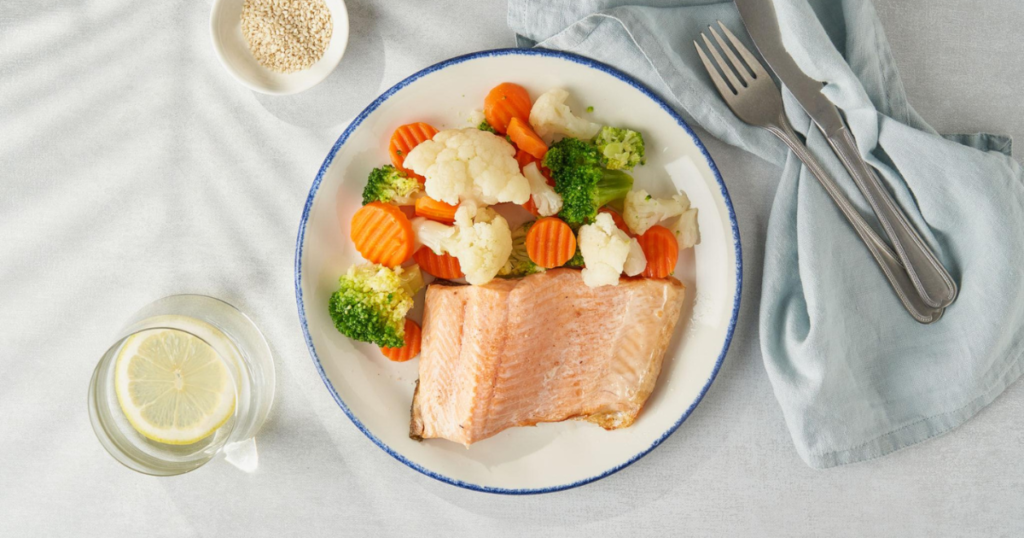
The EssentialsThe Best Vegetables to Cook with Salmon
Not all vegetables are created equal when it comes to salmon pairing. The best choices share two qualities: they can handle the oven or pan temperature that salmon needs, and their flavor profiles either contrast or harmonize with the fish’s natural richness without competing with it.
🥦BroccoliniCaramelizes beautifully; slightly bitter edge cuts richness
🍅Cherry TomatoesBurst into a natural sauce; bright acidity balances fat
🌽CornSweet, charred kernels pair with smoky and herby seasonings
🥬Bok ChoyQuick-cooking; crisp stems absorb Asian sauces perfectly
🌿AsparagusClassic pairing; grassy sweetness complements the fish
🫑Bell PeppersRoast to sweet softness; add vivid color and mild flavor
🍠Sweet PotatoEarthy sweetness; holds shape; needs a head start in the oven
🥒ZucchiniMild, quick-cooking; absorbs surrounding flavors beautifully
The one key principle governing vegetable selection for salmon is cook time alignment. Salmon takes 12–18 minutes to cook through depending on thickness. Dense vegetables like sweet potato, beetroot, and carrots need 25–35 minutes at the same temperature — which means they must be given a head start. Quick-cooking vegetables like cherry tomatoes, asparagus, snap peas, and spinach are added later. Get this timing right and everything finishes simultaneously, perfectly.
The Rule of Thumb: Cut dense vegetables into smaller pieces (¾ inch) and give them a 15-minute head start. Cut quick-cooking vegetables into larger pieces so they don’t overcook during the salmon’s time in the pan.
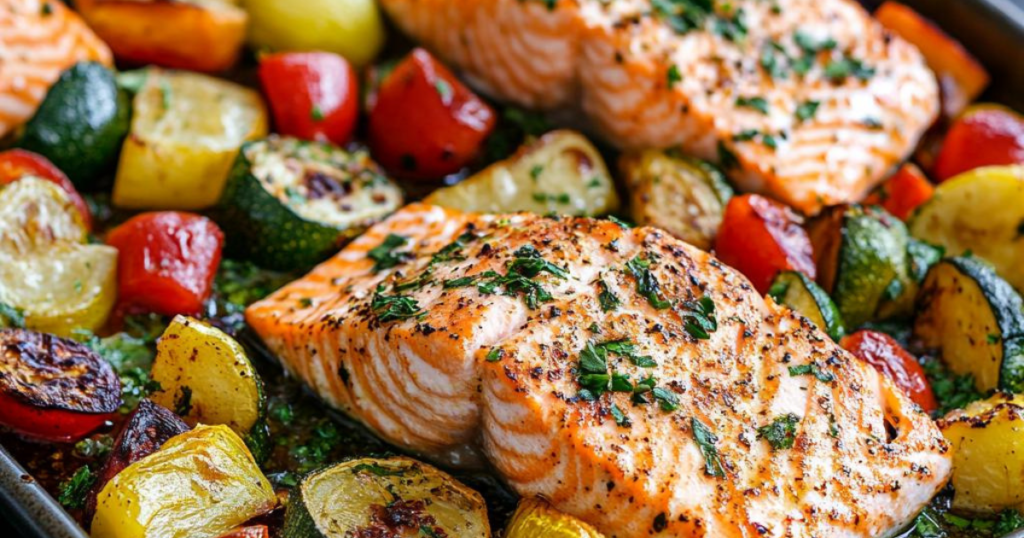
Recipes
Recipe 01Sheet Pan Mediterranean Salmon with Roasted Vegetables Most Popular
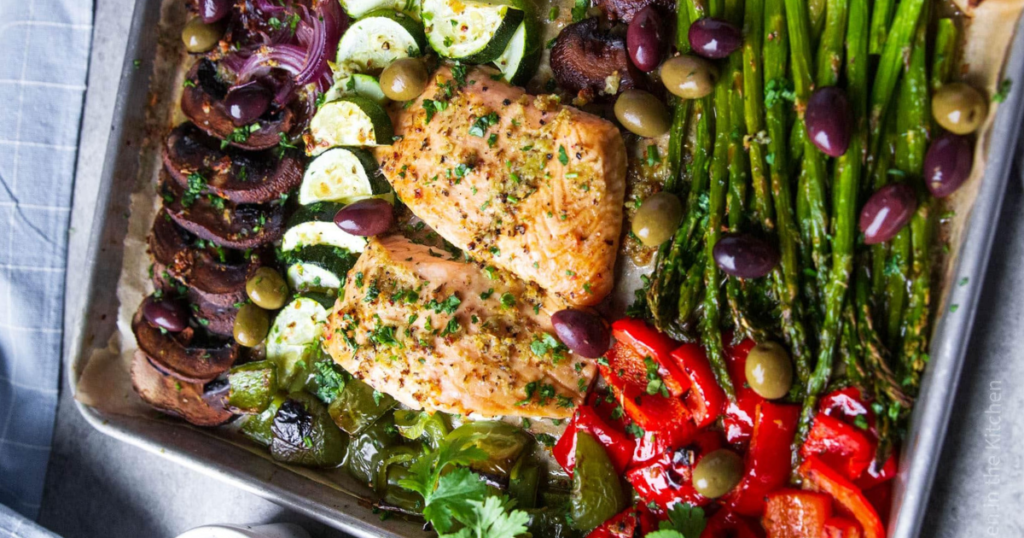
This is the one you’ll make on a Tuesday night and serve to guests on a Saturday without changing a thing. A single sheet pan carries everything — salmon fillets resting on a bed of roasted bell peppers, zucchini, and red onion, surrounded by burst cherry tomatoes and kalamata olives that collapse into a natural sauce, all brightened at the end with lemon zest and fresh oregano.
Recipe 01 — Sheet Pan
Mediterranean Sheet Pan Salmon
Roasted peppers, olives, burst tomatoes, and fresh herbs — all on one pan
12mPrep
25mCook
4Servings
375Cal/serving
425°FOven
Ingredients
- 4 salmon fillets (6 oz each, skin-on)
- 2 bell peppers (mixed colors), sliced
- 1 medium zucchini, half-moon slices
- 1 red onion, cut into wedges
- 250g cherry tomatoes
- 80g kalamata olives, pitted
- 4 tbsp good extra-virgin olive oil
- 4 garlic cloves, thinly sliced
- 2 tsp dried oregano
- 1 tsp smoked paprika
- Zest and juice of 1 lemon
- Flaky sea salt & black pepper
- Fresh basil to serve
Instructions
- Preheat oven to 425°F (220°C). Line a large rimmed baking sheet with parchment paper. Toss bell peppers, zucchini, and red onion with 3 tbsp olive oil, garlic, oregano, smoked paprika, salt, and pepper. Spread in a single layer and roast for 15 minutes until edges begin to caramelize.
- Remove the tray from the oven. Nestle cherry tomatoes and olives among the vegetables. Create four spaces and place the salmon fillets skin-side down. Drizzle salmon with remaining olive oil and season generously with salt, pepper, and a pinch of smoked paprika.
- Return to oven and roast for 12–14 minutes, until salmon is just cooked through — it should flake easily at the thickest part and show a slight translucency at the very center for medium doneness.
- Remove from oven. Squeeze lemon juice over the entire pan and scatter lemon zest on top. Let rest 2 minutes — the tomatoes will have burst and created a natural, jammy sauce around everything.
- Tear fresh basil generously over the tray at the table. Serve directly from the sheet pan with crusty bread to mop up the tomato-olive pan juices.
💡 Tip: For extra depth, add 1 tbsp capers and a ½ tsp dried chili flakes with the tomatoes in step 2. The capers add a briny pop that plays beautifully against the sweet roasted peppers.
Recipe 02Ginger Sesame Salmon Stir-Fry with Bok Choy & Snap Peas Quick & Bright
Everything about this recipe moves fast and tastes vivid. Cubed salmon takes on a deep sear in a screaming-hot wok, then gets tossed with crisp bok choy, snap peas, and a glossy ginger-sesame sauce that coats every surface. Ready in 20 minutes from start to finish — this is the stir-fry that converts people who think they don’t like salmon.
Recipe 02 — Stir-Fry
Ginger Sesame Salmon Stir-Fry
Wok-seared salmon cubes, snap peas, and bok choy in a glossy ginger-sesame glaze
10mPrep
10mCook
4Servings
340Cal/serving
HighHeat
Ingredients
- 1.5 lbs salmon, skinless, cubed (1.5″)
- 3 heads baby bok choy, halved lengthwise
- 200g sugar snap peas, strings removed
- 1 red bell pepper, thinly sliced
- 3 spring onions, cut into 1″ pieces
- 3 tbsp low-sodium soy sauce
- 2 tbsp toasted sesame oil
- 1 tbsp rice vinegar
- 1 tbsp honey
- 1 tbsp fresh ginger, microplaned
- 2 cloves garlic, minced
- 1 tsp cornstarch + 2 tbsp water
- 2 tbsp neutral oil (for wok)
- Sesame seeds & chili flakes to serve
Instructions
- Whisk soy sauce, sesame oil, rice vinegar, honey, ginger, and garlic in a bowl. Stir in cornstarch slurry (cornstarch + water) and set aside. Pat salmon cubes completely dry — this is non-negotiable for a proper sear in a stir-fry context.
- Heat a wok or large skillet over maximum heat for 2 minutes until smoking. Add 1 tbsp neutral oil. Sear salmon cubes in a single layer, undisturbed, for 90 seconds per side until golden. Do not crowd — work in batches if needed. Remove salmon to a plate.
- Add remaining oil to the hot wok. Add bell pepper and stir-fry 2 minutes. Add snap peas and bok choy — stir constantly, keeping everything moving. Cook 2–3 minutes: you want vibrant color and a slight char at the edges, not steamed-soft vegetables.
- Add spring onions and pour the sauce over the vegetables. Toss constantly as the sauce bubbles and thickens — about 60–90 seconds.
- Return salmon to the wok, gently folding to coat in the sauce without breaking the pieces. Cook 30 seconds to warm through. Serve immediately over steamed jasmine rice, topped with sesame seeds and chili flakes.
💡 Tip: Mise en place is critical for stir-fry. Have every ingredient prepped, measured, and at arm’s reach before you turn the heat on — this recipe moves too fast to be chopping mid-cook.
Recipe 03Foil Packet Salmon with Corn, Zucchini & Smoky Butter Grill Friendly
Foil packets are the most underrated cooking method in home kitchens. Salmon sealed inside with corn, zucchini, and a compound smoky butter steams in its own juices, the flavors concentrating and merging into something deeply satisfying. These packets work equally well in an oven at 400°F or directly on a grill over medium-high heat — making them as perfect for a weeknight dinner as a summer cookout.
Recipe 03 — Foil Packet
Foil Packet Salmon with Corn,
Zucchini & Smoky Butter
Self-basting, mess-free, and explosively flavorful — oven or grill
15mPrep
18mCook
4Servings
355Cal/serving
400°FOven/Grill
Ingredients
- 4 salmon fillets (6 oz each)
- 2 ears of corn, kernels cut off (or 300g frozen)
- 2 medium zucchini, diced small
- 1 cup cherry tomatoes, halved
- 4 tbsp unsalted butter, softened
- 1½ tsp smoked paprika
- 1 tsp garlic powder
- ½ tsp cumin
- ½ tsp chipotle chili powder
- Zest of 1 lime
- Salt, black pepper
- Fresh cilantro & lime wedges to serve
Instructions
- Make the smoky compound butter: mash softened butter with smoked paprika, garlic powder, cumin, chipotle powder, lime zest, salt, and pepper until fully combined. Taste — it should be smoky, fragrant, and bold. Adjust seasoning.
- Preheat oven to 400°F (200°C) or grill to medium-high. Cut four sheets of heavy-duty aluminum foil, each large enough to fold into a sealed packet around a portion of food (approx. 14″ × 12″).
- Divide corn, zucchini, and cherry tomatoes evenly among the four foil sheets. Season vegetables with salt and pepper. Place one salmon fillet on top of each pile of vegetables. Top each fillet with a generous tablespoon of the smoky compound butter.
- Fold the foil tightly to create sealed packets — fold the long edges together twice, then crimp the short ends. Leave a little air space inside for steam to circulate. Do not wrap too tightly against the food.
- Oven: Place packets on a baking sheet and bake 16–18 minutes. Grill: Place directly on the grate over medium-high and cook 14–16 minutes. The packets will puff slightly when done.
- Allow packets to rest 2 minutes before carefully opening — steam inside is intense. Serve in the foil or transfer to bowls. Squeeze lime over everything and scatter fresh cilantro.
💡 Tip: Make the compound butter up to 3 days ahead and refrigerate, or freeze for up to 1 month. Roll it into a log in plastic wrap — slice off a disc per serving whenever you need it.
Recipe 04Provençal Herb-Roasted Salmon Tray Bake
Southern France in a roasting pan. This recipe layers salmon over a bed of fennel, tomatoes, black olives, and capers, scented with herbes de Provence and a generous pour of white wine that steams up through the vegetables and bastes the fish as it roasts. The result is aromatic, light, and utterly transportive — the kind of dish that makes a Tuesday feel like a holiday in the south of France.
Recipe 04 — Tray Bake
Provençal Herb-Roasted
Salmon Tray Bake
Fennel, tomatoes, capers, white wine, and herbes de Provence — the south of France on a tray
14mPrep
28mCook
4Servings
360Cal/serving
400°FOven
Ingredients
- 4 salmon fillets (6 oz each)
- 1 large fennel bulb, cored and thinly sliced
- 400g cherry tomatoes, whole
- 1 red onion, thinly sliced
- 80g black olives (Niçoise preferred)
- 2 tbsp capers, drained
- 5 tbsp good olive oil
- 100ml dry white wine
- 4 garlic cloves, sliced
- 2 tsp herbes de Provence
- 1 tsp fennel seeds, lightly crushed
- Zest and juice of 1 orange
- Fresh tarragon or flat-leaf parsley to serve
Instructions
- Preheat oven to 400°F (200°C). In a large, deep roasting pan, toss fennel, red onion, and garlic with 4 tbsp olive oil, herbes de Provence, fennel seeds, orange zest, salt, and pepper. Roast 15 minutes until fennel begins to soften and turn golden at the edges.
- Remove tray from oven. Add cherry tomatoes, olives, and capers, scattering them among the fennel. Pour the white wine and orange juice over the vegetables — it will sizzle. Stir briefly.
- Season salmon fillets on both sides. Nestle skin-side down into the vegetable mixture. Drizzle remaining olive oil over the salmon. Sprinkle with a pinch more herbes de Provence.
- Return to oven for 13–15 minutes. The wine will have mostly evaporated, the tomatoes will have burst, and the fennel will be very tender and beginning to caramelize. Salmon should flake with gentle pressure.
- Rest 3 minutes. Scatter fresh tarragon or flat-leaf parsley over the tray and serve immediately, spooning the fragrant vegetable and wine juices over each portion.
💡 Tip: Don’t skip the fennel seeds — they reinforce the subtle anise note in the fennel bulb and bridge everything together. Crush them lightly in a mortar or under a heavy pan to release their essential oils before adding.
Recipe 05Garlic Butter Salmon with Asparagus & Cherry Tomatoes Classic
Some combinations are classic because they are simply, objectively, perfectly balanced — and garlic butter salmon with asparagus and cherry tomatoes is one of them. This one-pan recipe is the fastest and most approachable in the collection: everything cooks in a single skillet in under 20 minutes, and the garlic butter sauce that forms in the pan is worth spooning over every surface of every component.
Recipe 05 — Skillet
Garlic Butter Salmon
Asparagus & Cherry Tomatoes
One skillet. Twenty minutes. The garlic butter sauce makes this unforgettable.
8mPrep
16mCook
4Servings
385Cal/serving
SkilletMethod
Ingredients
- 4 salmon fillets (6 oz, skin-on)
- 1 bunch asparagus (1 lb), tough ends snapped
- 250g cherry tomatoes
- 5 tbsp unsalted butter
- 5 garlic cloves, minced
- 1 tbsp fresh thyme leaves
- 2 tbsp avocado or olive oil
- Juice of 1 lemon
- 2 tbsp fresh flat-leaf parsley, chopped
- ½ tsp red pepper flakes
- Flaky sea salt & black pepper
Instructions
- Pat salmon dry. Season skin and flesh generously with salt and pepper. Heat oil in a large skillet over medium-high until shimmering. Place salmon skin-side down and cook undisturbed for 5–6 minutes until skin is deeply golden and crispy.
- Flip salmon. Add 2 tbsp butter and the asparagus to the pan. Cook salmon a further 2–3 minutes, turning asparagus occasionally so it picks up color on all sides.
- Remove salmon to a warm plate. Add cherry tomatoes to the pan — they’ll blister and start to burst within 2 minutes. Push them gently with a wooden spoon to release their juices.
- Reduce heat to medium. Add remaining butter, garlic, thyme, and red pepper flakes. Stir as the butter melts and the garlic softens and turns fragrant (not brown) — about 60–90 seconds. Add lemon juice and swirl to emulsify into a sauce.
- Return salmon to the pan for 30 seconds to warm and glaze. Spoon garlic butter over everything. Scatter parsley and serve directly from the pan.
💡 Tip: Choose asparagus spears that are roughly the same diameter for even cooking. Very thick spears can be scored lengthwise with a peeler to speed up their cook time to match the thinner spears.
Recipe 06Thai Basil Salmon with Roasted Sweet Potato & Broccolini Bold Flavor
This recipe commits fully to bold Southeast Asian flavors — a fish sauce-forward glaze spiked with lime, chili, and palm sugar creates a lacquered, caramelized surface on the salmon, while roasted sweet potato brings earthy sweetness and broccolini adds a slightly charred, bitter counterpoint. The fresh Thai basil stirred through at the end is the aromatic flourish that ties everything together.
Recipe 06 — Oven + Stovetop
Thai Basil Salmon, Roasted
Sweet Potato & Broccolini
Fish sauce glaze, chili heat, sweet potato, and the unmistakable fragrance of Thai basil
15mPrep
30mCook
4Servings
410Cal/serving
425°FOven
Ingredients
- 2 medium sweet potatoes, 1″ cubes
- 2 bunches broccolini, trimmed
- 3 tbsp neutral oil
- 4 salmon fillets (6 oz each)
- 2 tbsp fish sauce
- 1 tbsp palm sugar or brown sugar
- Juice of 2 limes
- 2 red bird’s-eye chilies, finely sliced
- 3 garlic cloves, microplaned
- 1 tbsp neutral oil
- Large handful Thai basil leaves
- 2 spring onions, thinly sliced
- Lime wedges to serve
Instructions
- Preheat oven to 425°F (220°C). Toss sweet potato cubes with 2 tbsp oil, salt, and pepper. Spread on a lined baking sheet and roast 15 minutes — they need a head start because they take longer than both the broccolini and salmon.
- Whisk fish sauce, sugar, lime juice, chilies, and garlic until sugar dissolves. Taste: it should be a balanced punch of salty, sweet, sour, and hot. Adjust with more lime or sugar to balance. Reserve 2 tbsp for finishing.
- After sweet potato’s 15 minutes, add broccolini to the tray, drizzle with remaining oil, toss with sweet potato, and return to oven for 5 minutes.
- Remove tray again. Push vegetables to the edges. Place salmon fillets in the center skin-side down and brush generously with the Thai glaze. Return to oven for 12–14 minutes, brushing with more glaze halfway through. The glaze should caramelize into a lacquered, sticky coating.
- Remove from oven. Drizzle reserved glaze over everything. Immediately scatter Thai basil and spring onions over the hot pan — the basil will wilt slightly in the residual heat, releasing its extraordinary fragrance. Serve with lime wedges and jasmine rice.
💡 Tip: Thai basil (horapa) is distinctly different from Italian basil — it has an anise-clove fragrance that is irreplaceable in this dish. Find it at any Asian grocery store. Regular basil is not an adequate substitute here.
Reference GuideSalmon & Vegetable Flavor Pairing Chart
Use this as a quick reference when improvising your own salmon and vegetable combinations. The strongest dishes pair salmon with vegetables that offer contrast in at least two of the three categories below.
| Vegetable | Flavor Profile | Best Cooking Method | Ideal Sauce Pairing |
|---|---|---|---|
| Asparagus | Grassy, slightly sweet, vegetal | Skillet sauté, oven roast | Lemon butter, hollandaise |
| Cherry Tomatoes | Sweet, acidic, jammy when roasted | Sheet pan, skillet blister | Basil oil, garlic butter |
| Fennel | Mild anise, sweet when roasted | Tray bake, braise | Orange, Pernod, tarragon |
| Sweet Potato | Earthy, caramel sweet | Oven roast (pre-cook) | Thai chili, miso, chipotle |
| Broccolini | Bitter, slightly charred | Oven roast, wok blister | Sesame, garlic, fish sauce |
| Bok Choy | Mild, slightly peppery, crisp | Stir-fry, steam | Ginger soy, oyster sauce |
| Zucchini | Neutral, mild, absorbs flavor | Foil packet, pan sauté | Herbs, lemon, smoked butter |
| Bell Peppers | Sweet, fruity when roasted | Sheet pan, foil packet | Mediterranean herbs, feta |
| Corn | Sweet, starchy, smoky when charred | Foil packet, grill | Chipotle butter, cilantro lime |
| Spinach/Greens | Bitter, iron-rich, wilts fast | Quick wilt in residual heat | Cream, nutmeg, lemon |
TechniquePro Tips for Perfectly Cooked
Salmon & Vegetables
01
Stagger Dense Vegetables
Sweet potato, carrots, and beets need 15–20 more minutes than salmon. Give them a head start in the oven, then add salmon when they’re halfway done.
02
Don’t Crowd the Pan
Overcrowded vegetables steam instead of roast. Use the largest sheet pan you own, or roast in two batches. Single layer only — vegetables touching is fine, overlapping is not.
03
Use Convection When You Have It
Convection oven setting circulates hot air, reducing sheet pan cook time by about 25% and producing better caramelization on both vegetables and salmon skin.
04
Season in Layers
Season the vegetables with their own oil and salt. Season the salmon separately. Each component should be correctly seasoned before they meet on the pan — not corrected after.
05
Rest Salmon Before Serving
90 seconds of rest off the heat allows carry-over cooking to finish the center without the exterior drying out. The difference in moisture at the first bite is dramatic.
06
Finish with Something Bright
A squeeze of lemon, a drizzle of good olive oil, or a scatter of fresh herbs added after cooking — not before — lifts every finished dish. Heat destroys fresh aromatic compounds; add them last.
By SeasonSeasonal Vegetable Pairings for Salmon
Cooking with the season isn’t just better for the environment — it produces dramatically better flavors. Seasonal vegetables are harvested at peak ripeness, which means more sugar, more color, and more complexity in every bite. Here’s how to build your salmon and vegetable dinners around what’s actually at its best right now:
SpringAsparagus · Peas · Spring onions · Spinach · Fennel · Radishes · Artichokes
SummerZucchini · Corn · Cherry tomatoes · Bell peppers · Green beans · Eggplant · Cucumber
AutumnSweet potato · Broccolini · Butternut squash · Kale · Brussels sprouts · Leeks
WinterBok choy · Cauliflower · Cavolo nero · Celeriac · Beetroot · Purple sprouting broccoli
Health & NutritionWhy Salmon with Vegetables is One of the Healthiest Dinners You Can Make
The salmon and vegetables combination is about as close to a complete nutritional profile as a single-plate dinner can get. Here’s an approximate per-serving snapshot for our Sheet Pan Mediterranean Salmon (Recipe 1) as a reference:
375Calories
36gProtein
18gHealthy Fat
2,100mgOmega-3
8gFiber
Vit. D71% DV
Vit. C85% DV
B12190% DV
The vegetables in these recipes are not just filler — they contribute meaningfully to the nutritional profile. Bell peppers and cherry tomatoes are exceptional sources of Vitamin C. Sweet potato provides beta-carotene and potassium. Broccolini and bok choy offer Vitamin K, folate, and cruciferous compounds associated with reduced inflammation. Combined with salmon’s extraordinary omega-3, Vitamin D, and B12 content, this is a dinner that genuinely earns the word “healthy” in every sense.
Meal Prep Note: All six recipes reheat well for up to 3 days. Store salmon and vegetables together in airtight containers. Reheat in a skillet with a splash of water over medium heat — avoid the microwave, which tends to make salmon rubbery and dilutes the vegetable textures.
Questions & AnswersFrequently Asked Questions
What vegetables go best with salmon?
Asparagus, cherry tomatoes, broccolini, zucchini, and fennel are among the best vegetables to pair with salmon. They share similar cooking times, their flavor profiles complement rather than overpower the fish, and they all benefit from similar seasoning approaches. See the full pairing chart above for a comprehensive guide by flavor, method, and sauce affinity.
How do you cook salmon and vegetables at the same time without overcooking?
The key is understanding cook time differences. Dense vegetables like sweet potato and carrots need a 15–20 minute head start in a 400–425°F oven. Quick-cooking vegetables like cherry tomatoes, asparagus, and spinach go in when the salmon does. Uniformly sized vegetable pieces and a hot, well-preheated oven are the two biggest factors in achieving everything finishing at the same time.
Can I use frozen salmon for these recipes?
Yes — thaw it completely overnight in the refrigerator and pat it very dry before cooking. Frozen salmon releases more water as it cooks, so drying it thoroughly is essential for achieving good color and preventing steaming. Avoid quick-thawing in warm water, which can affect texture and promotes uneven thawing.
What temperature should I roast salmon with vegetables?
A range of 400–425°F (200–220°C) is ideal for most sheet pan and tray bake salmon recipes. This temperature is hot enough to roast vegetables properly — caramelizing their sugars and creating color — while cooking salmon in the 12–15 minute window that keeps it moist. Lower temperatures (325–350°F) produce softer textures suitable for foil packet cooking.
How do I prevent vegetables from getting soggy?
Three rules: dry all vegetables thoroughly before oiling, use a single layer with space between pieces, and use a preheated oven. Moisture on the surface of vegetables creates steam, which prevents roasting. Crowding the pan also creates steam. The difference between a properly roasted vegetable and a soggy one is almost always one of these three factors.
Is salmon with vegetables good for weight loss?
Salmon and vegetable meals are among the most nutritionally efficient options for those managing their weight. They are high in protein (which promotes satiety), rich in fiber from the vegetables, and relatively low in refined carbohydrates. The healthy fats in salmon also support hormonal function and help with fat-soluble vitamin absorption from the vegetables. As always, portion size and overall dietary context matter — but this is genuinely one of the better meal formats available.
Now Choose Your Recipe
& Get Cooking
Six recipes, six flavor directions, one simple principle: salmon and vegetables belong together. Start with whichever recipe matches the ingredients you already have, and then work your way through the rest. Every one is worth making.