S
Wild-Caught · Pacific Northwest · Premium Seafood
Sockeye Salmon Recipes 7 Original Recipes for Wild Red Salmon — Done Right
7Recipes
30mOr Less
WildCaught
125°FIdeal Temp
HighOmega-3
Sockeye salmon is in a different category. It is not simply “salmon” the way Atlantic farmed fillets are salmon — it is the wild, deep-red, intensely flavored king of Pacific fish, prized by Indigenous peoples of the Pacific Northwest for millennia and by chefs for its unmatched color and character. But that same intensity that makes sockeye extraordinary also makes it unforgiving: cook it even slightly past medium and it transforms from supremely moist and vibrant to dry and chalky in a matter of minutes.
This guide is the definitive resource for cooking sockeye salmon at home. You’ll learn exactly what makes sockeye different from other salmon varieties, how to handle its leaner flesh correctly, what temperatures and methods to use, and — most importantly — seven original recipes that celebrate everything that makes this wild fish worth seeking out.
Every recipe here is built specifically around sockeye’s unique characteristics: bold, minerally flavor that stands up to assertive seasonings; a lean, firm flesh that benefits from shorter cook times; and a deep garnet color that looks stunning against contrasting sauces and garnishes. These are not generic salmon recipes with “sockeye” substituted in. They are crafted for the fish.
Contents
- What Makes Sockeye Salmon Different?
- How to Cook Sockeye Correctly
- Brown Butter Pan-Seared Sockeye with Capers
- Cedar Plank Grilled Sockeye with Dill Rémoulade
- Miso Ginger Glazed Broiled Sockeye
- Herb-Crusted Baked Sockeye with Lemon Crème Fraîche
- Chili Maple Glazed Sockeye with Roasted Corn Salsa
- Poached Sockeye with Cucumber Yogurt & Dill Oil
- Smoked Paprika Sockeye Tacos with Avocado Crema
- Flavor Pairing Guide
- How to Buy & Store Sockeye Salmon
- Frequently Asked Questions
The FishWhat Makes Sockeye Salmon Different?
To cook sockeye well, you first need to understand what it is — and critically, how it differs from the salmon most people are familiar with. The sockeye (Oncorhynchus nerka) is a Pacific salmon species that spawns in cold, clear, lake-fed rivers along the Pacific coast of North America and Russia. Its name comes from a corruption of the Halkomelem word “sθəqéy'” — its color and flavor are products of its wild diet, which is unusually rich in carotenoid-containing krill and zooplankton.
Sockeye Salmon
Wild Pacific Red Salmon
- Deep garnet-red flesh color
- Firm, dense texture; holds shape well
- Bold, full-flavored, slightly mineral
- Lower fat content than Atlantic (leaner)
- Best at 120–130°F internal temp
- Always wild-caught — cannot be farmed
- Seasonal availability (June–September peak)
- Higher omega-3 density per calorie
Atlantic (Farmed) Salmon
Standard Supermarket Salmon
- Pale orange-pink flesh
- Softer, fattier, more forgiving texture
- Milder, buttery, neutral flavor
- Higher fat content — more moisture buffer
- Tolerates 130–145°F without drying
- Year-round farmed availability
- Less seasonal, more consistent
- More affordable, widely available
The critical practical takeaway from this comparison: sockeye’s lower fat content means it has far less margin for overcooking. The fat in farmed Atlantic salmon acts as a buffer — it stays relatively moist even at higher internal temperatures. Sockeye has no such insurance policy. This is why understanding temperature and timing is not optional with sockeye — it’s the entire game.
Key Insight: Sockeye’s bold flavor means it can handle — and actually benefits from — more assertive seasonings than milder salmon. Miso, chili, smoked paprika, strong herbs, and acidic citrus don’t overpower sockeye; they meet it as equals. This is what makes it so exciting to cook with.
TechniqueHow to Cook Sockeye Salmon Correctly
The single most important rule for sockeye salmon: cook it to a lower internal temperature than you would other salmon. Because it’s leaner, it continues cooking rapidly with carryover heat after leaving the pan or oven. Target 120–125°F for medium (slightly translucent center, vibrantly moist), or 130°F maximum if you prefer fully set flesh. A reliable instant-read thermometer is not a luxury with sockeye — it is the only way to be consistently accurate.
120°FMedium-RareTranslucent, deeply moist center. Best for sashimi-grade wild sockeye.
125°FMedium ✦ IdealJust set, moist throughout, peak flavor. The target for all recipes here.
130°F+Well-DoneFully opaque, noticeably drier. Acceptable, but the fish loses some moisture.
The Three Non-Negotiable Rules for Sockeye
- Pat it aggressively dry. Surface moisture prevents proper searing and creates steam that dries the flesh. Use kitchen paper and press firmly on skin and flesh before any cooking method.
- Don’t walk away from it. The difference between perfect and overcooked sockeye is literally 90 seconds. Set a timer. Stay at the stove. This fish rewards attention in a way that farmed salmon simply doesn’t require.
- Rest it before cutting. Carryover heat continues cooking the center after removal from heat. Resting for 2 full minutes on a warm plate lets that process complete gently without the exterior continuing to cook.
Sockeye is not a fish that tolerates distraction. Give it your full attention for twelve minutes and it will give you one of the finest bites in all of seafood.
✦ Recipes ✦
Recipe 01 — Pan-SearBrown Butter Pan-Seared Sockeye with Capers & Lemon Signature
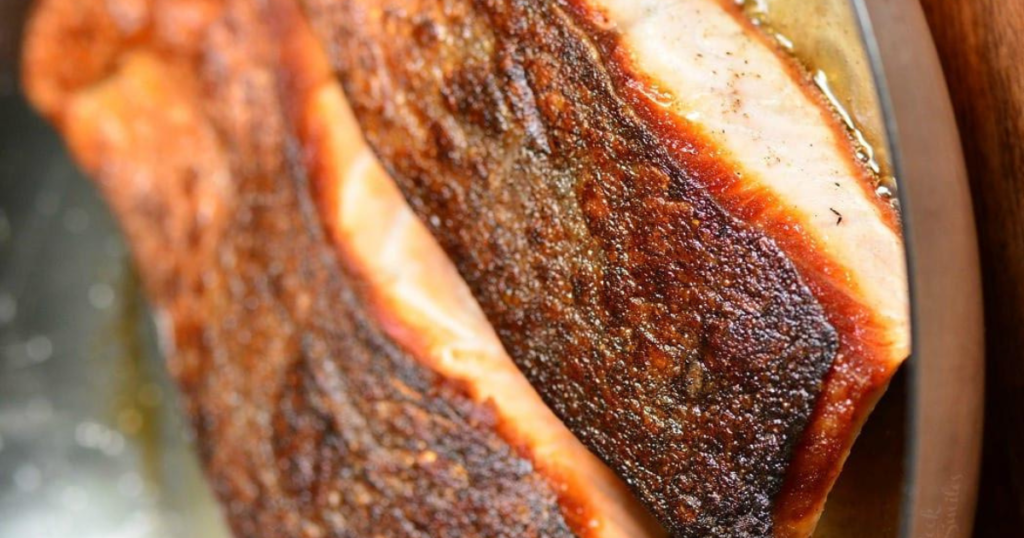
The foundational sockeye recipe. Brown butter’s nutty, caramel complexity pairs extraordinarily well with sockeye’s bold flavor — each elevates the other in a way that feels more than the sum of its parts. Crispy skin, a perfectly medium interior, and a tangy caper-lemon butter sauce spooned over at the end. Simple, powerful, and done in 15 minutes.
Recipe 01 · Pan-Sear · Stovetop
Brown Butter Pan-Seared Sockeye
Capers, Lemon & Crispy Skin
Nutty beurre noisette meets wild red salmon — this is the one to master first
8mPrep
12mCook
4Servings
360Cal
125°FTarget
Ingredients
- 4 sockeye salmon fillets (5–6 oz, skin-on)
- 4 tbsp unsalted butter, cold, cubed
- 2 tbsp extra-virgin olive oil
- 3 garlic cloves, lightly crushed
- 3 sprigs fresh thyme
- 2 tbsp capers, drained and chopped
- Juice of 1 lemon + zest
- 1 tbsp flat-leaf parsley, chopped
- Flaky sea salt & white pepper
Method
- Remove sockeye from the fridge 10 minutes before cooking. Pat both sides bone dry with kitchen paper. Score the skin with 2 shallow diagonal cuts. Season flesh side with salt and white pepper; brush skin lightly with olive oil, salt lightly.
- Heat a stainless steel or cast-iron skillet over medium-high for 2–3 minutes until very hot. Add olive oil and heat until it shimmers and begins to smoke at the edges. Lay fillets skin-side down — press gently with fingertips for the first 10 seconds to ensure full contact. Do not move.
- Cook skin-side down 5–6 minutes — the flesh will turn opaque up about 65–70% of the fillet’s height. The skin should be audibly crackling and completely golden. Flip fillets.
- Immediately add cold butter cubes, garlic, and thyme. As butter foams, tilt pan and baste the flesh continuously with the foaming butter for 60–75 seconds. Remove fillets to a warm plate to rest.
- Keep pan on medium heat. Continue cooking the butter (without the fish) until it turns deep amber and smells nutty — 30–45 more seconds. Watch carefully; it turns from golden to burnt quickly. Off heat, add capers and lemon juice. Swirl. Add parsley and lemon zest.
- Rest salmon 2 minutes. Spoon the brown butter caper sauce over each fillet generously and serve immediately with crushed new potatoes or simple green salad.
💡 Chef’s Tip: Because sockeye is leaner, it releases from the pan more cleanly than farmed salmon once a proper sear develops. If it’s resisting your spatula, it simply needs 30 more seconds — never force it.
Recipe 02 — Cedar Plank GrillCedar Plank Grilled Sockeye with Dill Rémoulade Grill Classic
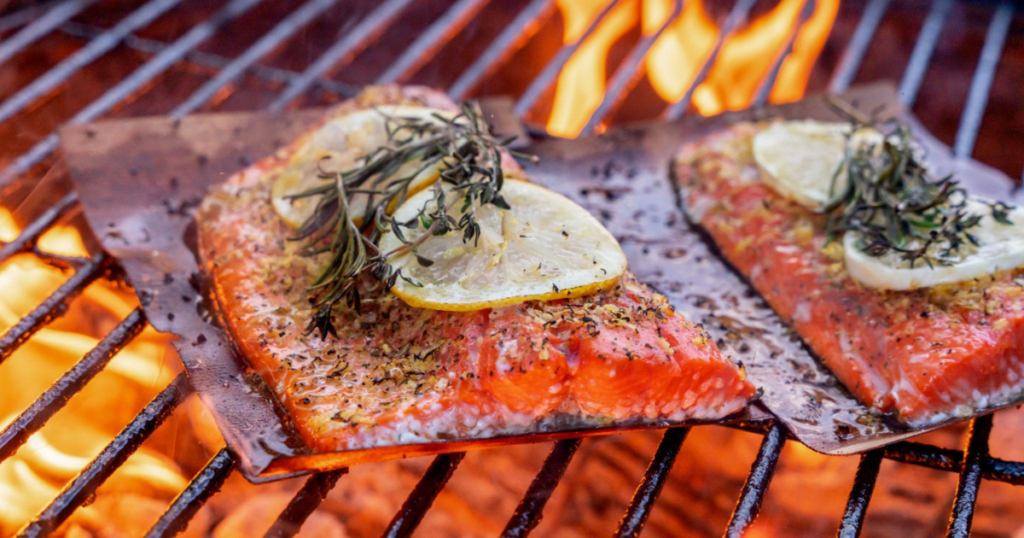
Cedar plank grilling is the Pacific Northwest’s definitive gift to outdoor cooking, and sockeye on cedar is as natural a pairing as food gets — both products of the same rivers, forests, and coastlines. The cedar smoke infuses the fish gradually, the plank insulates the bottom from direct heat, and the result is sockeye that is smoky, fragrant, and perfectly, gently cooked through from edge to edge. The cool, herby dill rémoulade is the ideal counterpoint.
Recipe 02 · Cedar Plank · Grill
Cedar Plank Grilled Sockeye
with Dill Rémoulade
Smoke, cedar, wild salmon — the Pacific Northwest on a plate
15mPrep + Soak
15mGrill
4Servings
345Cal
Med-HiHeat
Ingredients
- 1 large sockeye fillet (2 lbs, skin-on, whole side)
- 2 tbsp olive oil
- 1 tsp garlic powder
- 1 tsp smoked sea salt
- ½ tsp cracked black pepper
- 1 cedar grilling plank, soaked in water 1 hour
- ½ cup good mayonnaise
- 2 tbsp Dijon mustard
- 3 tbsp fresh dill, chopped
- 1 tbsp capers, finely chopped
- 1 tbsp lemon juice + zest
- 1 small garlic clove, grated
- Pinch cayenne & salt to taste
Method
- Soak cedar plank in cold water for at least 1 hour (weigh it down — it will float). This prevents burning and generates the fragrant steam that flavors the fish. Meanwhile, make the rémoulade: mix all ingredients, taste, adjust seasoning. Refrigerate until serving.
- Preheat grill to medium-high (400–425°F). Place the soaked cedar plank directly on the grill grates. Close lid and heat the plank for 3–4 minutes until it begins to smoke and crackle.
- Pat sockeye completely dry. Rub flesh side with olive oil, garlic powder, smoked salt, and pepper. Place skin-side down on the hot cedar plank.
- Close the grill lid. Cook for 12–15 minutes without opening the lid — the trapped cedar smoke is doing the work. The fillet is done when the flesh flakes at the thickest point and internal temperature reads 125°F. The edges will be opaque, the center just barely set.
- Remove the entire plank from the grill (it may be charred on the bottom — this is correct). Bring to the table on the plank for dramatic presentation. Serve directly from the wood with the chilled dill rémoulade alongside.
💡 Cedar Note: Use food-grade untreated western red cedar planks. Never use cedar from a hardware store or garden center — these may be treated with chemicals. Cooking-specific cedar planks are available at any good kitchen store.
Recipe 03 — BroilMiso Ginger Glazed Broiled Sockeye Editor’s Pick
Few flavor combinations work as well with sockeye’s bold character as white miso and ginger. The miso’s fermented sweetness and depth match the fish’s intensity rather than fighting it; the ginger adds a bright heat and fragrance; and the honey in the glaze caramelizes under the broiler into a lacquered, mahogany crust that looks and tastes extraordinary. This is weeknight luxury done properly.
Recipe 03 · Broil · Oven
Miso Ginger Glazed
Broiled Sockeye
Lacquered, caramelized, deeply savory — the most visually stunning of the seven
5mPrep
30mMarinate
8mBroil
4Servings
330Cal
Ingredients
- 4 sockeye fillets (5–6 oz, skinless)
- 3 tbsp white (shiro) miso paste
- 1 tbsp raw honey
- 1 tbsp mirin
- 1 tbsp sake or dry sherry
- 1 tbsp fresh ginger, microplaned
- 2 tsp toasted sesame oil
- 1 tsp rice vinegar
- Sesame seeds & sliced scallions
- Pickled cucumber to serve
Method
- Whisk miso, honey, mirin, sake, ginger, sesame oil, and rice vinegar into a smooth glaze. Taste: it should be sweet-savory-fragrant with a bright ginger kick. Reserve 1 tbsp for finishing.
- Pat sockeye fillets dry. Place in a shallow dish and coat all sides with the miso glaze. Marinate for 30 minutes at room temperature (or up to 2 hours refrigerated). Longer marination deepens the flavor penetration significantly.
- Preheat broiler to high. Line a baking sheet with foil; place a wire rack on top and oil the rack lightly. Place marinated fillets on the rack — the rack elevates the fish so heat circulates underneath.
- Broil 5–7 inches from the element for 6–8 minutes. Watch closely from the 5-minute mark. You want the glaze to darken to a deep mahogany-amber with slightly charred edges, not uniformly black. Rotate pan once for even caramelization.
- Remove fillets and brush immediately with the reserved fresh glaze — this restores the bright miso flavor that the heat has mellowed. Rest 2 minutes. Top with sesame seeds and scallions, and serve with steamed rice and pickled cucumber.
💡 Miso Note: White (shiro) miso is essential here — it’s sweeter, milder, and higher in sugar content, which means it caramelizes beautifully under the broiler. Red or mixed miso will burn before it glazes. Shiro miso is widely available in Asian grocery stores and most supermarkets.
Recipe 04 — BakeHerb-Crusted Baked Sockeye with Lemon Crème Fraîche
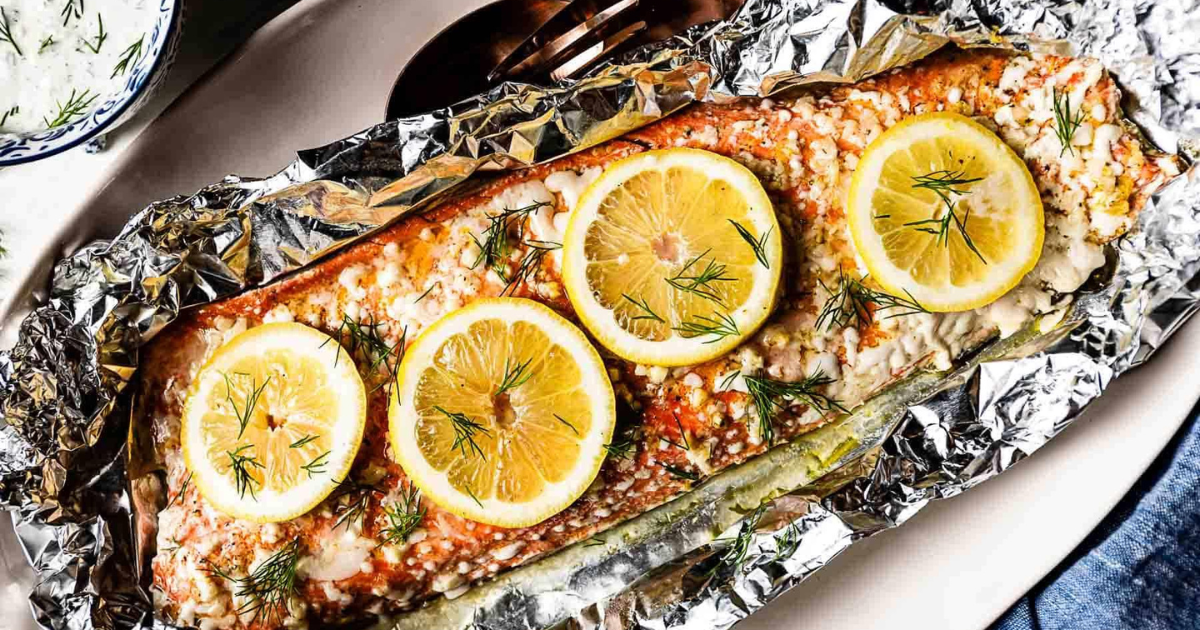
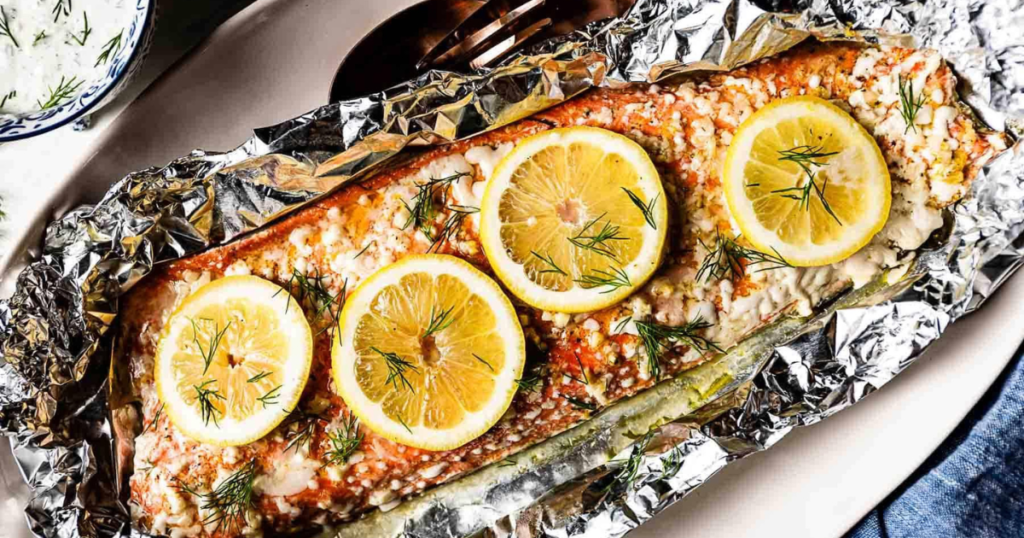
This is the dinner-party recipe in the collection — it looks composed and deliberate, tastes refined, and requires less active attention than the stovetop recipes. A vivid herb crust (parsley, tarragon, chives, lemon zest) pressed onto the flesh creates a fragrant, crunchy top layer that protects the sockeye as it bakes. The cool lemon crème fraîche alongside provides rich creaminess and acidity in equal measure.
Recipe 04 · Bake · Oven
Herb-Crusted Baked Sockeye
Lemon Crème Fraîche
Elegant, fragrant, and perfectly suited for entertaining
14mPrep
14mBake
4Servings
385Cal
400°FOven
Ingredients
- 4 sockeye fillets (5–6 oz, skinless)
- 2 tbsp Dijon mustard (as binder)
- 60g panko breadcrumbs
- 3 tbsp flat-leaf parsley, finely chopped
- 2 tbsp fresh tarragon, chopped
- 1 tbsp fresh chives, minced
- Zest of 1 large lemon
- 2 tbsp good olive oil
- Salt and white pepper
- 200ml crème fraîche
- Juice and zest of 1 lemon
- 1 tbsp fresh dill, chopped
- 1 small shallot, very finely minced
- Salt and a pinch of white pepper
Method
- Make the lemon crème fraîche: stir all ingredients together, taste for seasoning, cover and refrigerate. It improves after 20 minutes as the shallot mellows and flavors meld.
- Preheat oven to 400°F (200°C). Mix panko with all herbs, lemon zest, and olive oil. The mixture should be evenly green and hold together slightly when pressed. Season generously.
- Pat fillets dry. Season both sides with salt and white pepper. Brush the flesh side of each fillet with Dijon mustard — this acts as the adhesive for the crust and adds a subtle, complementary heat.
- Press the herb crust firmly onto the mustard-coated flesh. Use your palm to compact it — a properly adhered crust won’t fall off when sliced.
- Place on a lightly oiled wire rack over a baking sheet, crust-side up. Bake 12–14 minutes until the crust is golden and the flesh flakes at its thickest point. Because sockeye is lean, the window between underdone and overdone is small — check at 12 minutes with a thermometer.
- Rest 2 minutes. Serve each fillet alongside a generous spoonful of lemon crème fraîche and steamed asparagus or wilted spinach.
💡 Ahead of Time: The herb crust can be mixed and the crème fraîche prepared up to 24 hours ahead. The crust can even be pressed onto the raw fillets and refrigerated for up to 4 hours before baking — this actually helps it adhere more firmly.
Recipe 05 — Glaze & GrillChili Maple Glazed Sockeye with Roasted Corn Salsa Summer Dish
This recipe is built for the height of summer when corn is at its sweetest and sockeye season is running at full strength. The chili-maple glaze creates a beautiful sweet-heat lacquer on the fish, while the roasted corn salsa — charred, bright with lime, and punctuated by red onion and cilantro — provides textural contrast and freshness that makes every bite balanced. It’s also stunning on a plate: deep red fish, golden corn, green herbs.
Recipe 05 · Glaze · Grill or Oven
Chili Maple Glazed Sockeye
Roasted Corn Salsa
Sweet heat lacquer, charred corn, cilantro lime — peak summer on a plate
15mPrep
16mCook
4Servings
370Cal
GrillMethod
Ingredients
- 4 sockeye fillets (5–6 oz, skin-on)
- 3 tbsp pure maple syrup
- 1½ tsp chipotle chili powder
- 1 tbsp soy sauce
- 1 tsp garlic powder
- 1 tsp smoked paprika
- Juice of ½ lime
- 2 ears corn (or 300g frozen, thawed)
- ½ red onion, finely diced
- 1 jalapeño, seeds removed, minced
- Large handful fresh cilantro, chopped
- Juice of 1–2 limes
- 2 tbsp olive oil
- Salt to taste
Method
- Make the corn salsa first. If using fresh corn, char the ears directly over a gas flame or on a grill, turning until kernels are charred in spots — 8–10 minutes. If using frozen, dry-char in a hot cast-iron skillet with no oil until each side blisters. Cut kernels off cob. Mix with red onion, jalapeño, cilantro, lime juice, and olive oil. Season and set aside.
- Whisk maple syrup, chipotle powder, soy sauce, garlic powder, smoked paprika, and lime juice into a smooth glaze. Reserve 1 tbsp for post-cook brushing.
- Pat sockeye completely dry. Brush generously with glaze on the flesh side. Heat grill to medium-high and oil the grates well (sockeye sticks easily — oiled grates are essential).
- Place fillets skin-side down on the grill. Close lid and cook 5–6 minutes. Brush flesh with more glaze. Carefully flip and cook flesh-side down for just 2–3 minutes. The glaze will caramelize and develop char marks.
- Remove from grill and brush immediately with reserved fresh glaze. Rest 2 minutes. Plate each fillet over a generous spoonful of corn salsa, with lime wedges alongside.
💡 Grill Tip: Sockeye skin sticks to grill grates far more than farmed salmon skin. Oil the grates thoroughly with a folded paper towel dipped in neutral oil, held with tongs. Do this three times before adding the fish. Do not attempt to move the fillets until they release naturally.
Recipe 06 — PoachPoached Sockeye with Cucumber Yogurt & Dill Oil
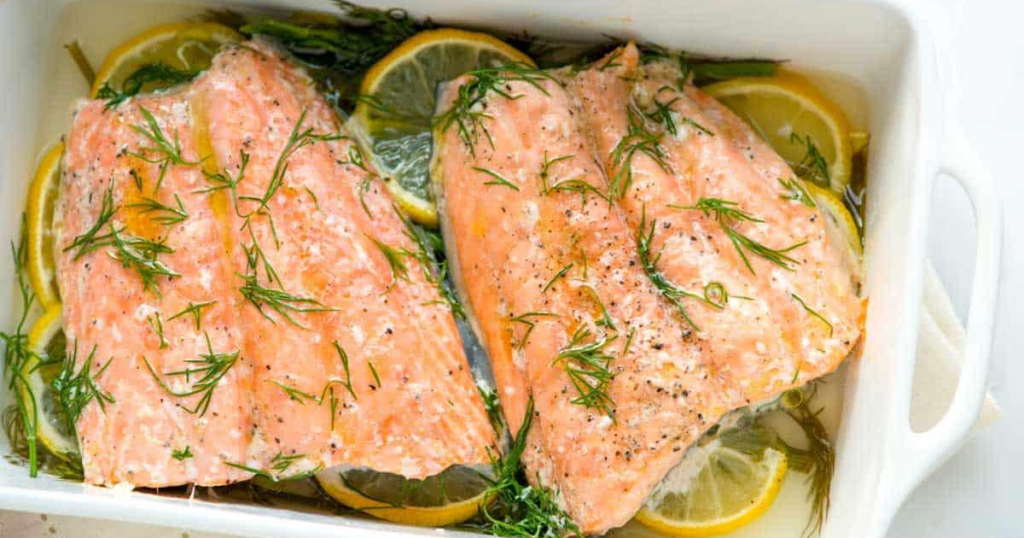
Poaching is the most underrated technique for sockeye salmon. When done correctly — in a barely-simmering aromatic court-bouillon — it produces the most delicately textured, moist sockeye imaginable. The fish never exceeds a gentle 170°F environment, internal temperature climbs slowly and evenly, and the result is a fillet of extraordinary tenderness. The cucumber yogurt and dill oil provide cool, herbaceous accompaniment that makes this feel like something from a Scandinavian fine-dining kitchen.
Recipe 06 · Poach · Stovetop
Poached Sockeye
Cucumber Yogurt & Dill Oil
The most delicate texture possible — Nordic elegance, minimal effort
16mPrep
14mPoach
4Servings
300Cal
GentleHeat
Ingredients
- 4 cups cold water
- 200ml dry white wine
- 1 shallot, halved
- 1 lemon, sliced
- 8 black peppercorns
- 2 bay leaves, 3 sprigs dill
- 1 tsp salt
- 200ml full-fat Greek yogurt
- ½ cucumber, grated and squeezed dry
- 1 tbsp fresh dill, chopped
- 1 tbsp lemon juice, zest of ½ lemon
- 1 small garlic clove, microplaned
- Large handful fresh dill fronds
- 100ml good olive oil
- Pinch of salt
- 4 sockeye fillets (5–6 oz, skinless)
Method
- Make the dill oil: blanch dill fronds in boiling salted water for 15 seconds, immediately transfer to ice water. Squeeze completely dry in a clean towel. Blend with olive oil and a pinch of salt until vivid green. Pass through a fine sieve. This keeps refrigerated for 3 days and is worth making in double quantity.
- Make the cucumber yogurt: combine all ingredients, taste for seasoning, refrigerate. Mix the grated cucumber in a clean cloth and wring out all liquid before adding — watery tzatziki is a common mistake.
- Build the court-bouillon: combine water, wine, shallot, lemon slices, peppercorns, bay, dill, and salt in a wide shallow pan. Bring to a boil, reduce to a bare simmer (170–180°F — you should see occasional lazy bubbles only) and simmer 5 minutes to develop flavor.
- Slide the sockeye fillets into the simmering court-bouillon. They should be submerged or nearly so. Cover with a lid or parchment cartouche and poach at a constant bare simmer for 8–10 minutes per inch of thickness. The fish is done when it feels firm but yielding when pressed, and internal temp reads 120–125°F.
- Lift fillets carefully with a slotted spatula — they are fragile after poaching. Plate over a generous swoosh of cucumber yogurt. Drizzle dill oil around and over. Finish with a few fronds of fresh dill and flaky sea salt.
💡 Temperature Watch: A full boil ruins poached fish — the vigorous agitation breaks apart the flesh’s delicate protein structure. Invest 2 minutes confirming your poaching liquid is truly at a bare simmer (170–180°F) before adding the salmon. A probe thermometer in the liquid takes the guesswork out completely.
Recipe 07 — TacosSmoked Paprika Sockeye Tacos with Avocado Crema Crowd Pleaser
The final recipe in this collection is the most social — a taco build that turns sockeye into the star of a sharable, festive spread. Smoked paprika and cumin create a dry rub with depth and warmth; the sockeye is pan-seared in pieces for maximum crust; and the cool, rich avocado crema and crunchy cabbage slaw provide the textural contrast that makes fish tacos so endlessly satisfying. These convert even committed skeptics.
Recipe 07 · Tacos · Stovetop
Smoked Paprika Sockeye Tacos
with Avocado Crema
The most crowd-pleasing recipe in the collection — sockeye goes to the taco party
18mPrep
10mCook
4–6Servings
420Cal
HighHeat
Ingredients
- 1.5 lbs sockeye, skin removed, cubed
- 2 tsp smoked paprika
- 1 tsp ground cumin
- 1 tsp garlic powder
- ½ tsp dried oregano
- ½ tsp cayenne pepper
- 1 tbsp cornstarch (for crust)
- 2 tbsp avocado oil
- 2 ripe avocados
- 200ml sour cream
- Juice of 2 limes
- 1 small garlic clove, grated
- Small handful cilantro
- 12 small corn tortillas, warmed
- 2 cups purple cabbage, shredded
- Pickled jalapeños, lime wedges, cilantro
Method
- Make the avocado crema: blend avocados, sour cream, lime juice, garlic, and cilantro until completely smooth. Season generously with salt. Transfer to a squeeze bottle or piping bag for easy taco assembly. Refrigerate.
- Combine all spice rub ingredients including the cornstarch in a bowl. Pat sockeye cubes completely dry — very thoroughly, as moisture is the enemy of taco crunch. Toss in the spice mixture until every surface is evenly coated.
- Heat avocado oil in a cast-iron skillet over high heat until almost smoking. Sear sockeye cubes in a single layer, undisturbed, for 90 seconds per side. Work in two batches — crowding produces steam and loses the crust. The cornstarch creates an extraordinary, crackling exterior.
- Rest fish on a wire rack (not paper towels — the rack keeps it crispy). While fish rests, warm tortillas directly over a gas flame or in a dry skillet until charred in spots.
- Build tacos: a swipe of avocado crema, a small pile of shredded purple cabbage, 3–4 pieces of sockeye, pickled jalapeños, fresh cilantro, and a squeeze of lime. Serve immediately while the fish is still crackling.
💡 Assembly Note: Lay out all taco components in separate bowls and let everyone build their own. This is not just convenient — it keeps the fish crispy longer, since assembled tacos soften quickly as moisture from the cabbage and crema migrate into the tortilla.
ReferenceSockeye Salmon Flavor Pairing Guide
Sockeye’s bold, mineral-rich flavor profile opens it up to a wider range of assertive seasonings than milder salmon varieties. Use this table as a creative starting point when building your own sockeye recipes beyond the seven above.
| Flavor Category | Works Exceptionally Well | Why It Works | Cooking Method |
|---|---|---|---|
| Umami / Fermented | White miso, soy sauce, fish sauce, tamari | Matches sockeye’s natural depth and amplifies savory complexity | Broil, pan-sear, glaze |
| Smoke | Cedar plank, smoked paprika, chipotle, alder wood | Complements the fish’s bold flavor without masking it | Grill, cold smoke, broil |
| Acid / Citrus | Lemon, lime, yuzu, sherry vinegar, pomegranate | Cuts richness and brightens the deep red flesh flavor | Sauce, marinade, finish |
| Herbs | Dill, tarragon, chives, flat-leaf parsley, Thai basil | Fresh brightness contrasts the mineral, full-flavored flesh | Crust, oil, garnish |
| Heat / Spice | Cayenne, chili flakes, ginger, wasabi, horseradish | Sockeye’s intensity stands up to heat that would overpower milder fish | Rub, glaze, condiment |
| Nuts / Butter | Brown butter, hazelnuts, toasted almonds, sesame | Roasted, nutty notes complement the savory flesh without competing | Pan sauce, crust, finish |
| Sweet / Glazing | Maple syrup, honey, palm sugar, pomegranate molasses | Caramelizes under high heat to create lacquered, visually stunning crust | Grill glaze, broil, roast |
Technique Masterclass
9 Pro Tips for Cooking
Sockeye Salmon Perfectly
🌡️
Use a Thermometer
125°F is the number. Don’t guess with sockeye — its lean flesh dries out faster than any other salmon. A thermometer removes the guesswork entirely.
🧻
Dry It Completely
Pat skin and flesh with kitchen paper until no moisture remains. Surface water creates steam that prevents crust formation and draws out interior moisture.
🔪
Score the Skin
Two shallow diagonal scores prevent the fillet from curling as heat causes the skin to contract — ensuring full contact with the pan across the entire surface.
⏱️
Set a Timer
The difference between perfect and overcooked sockeye is under 2 minutes. Set a timer and stay close. This fish rewards your full attention.
🍳
Room Temp Before Cooking
Take sockeye out of the fridge 10–15 minutes before cooking. Cold fish creates an uneven thermal gradient — the exterior overcooks before the center reaches temperature.
🧈
Add Fat at the Finish
Because sockeye is lean, finishing with butter or a good olive oil drizzle compensates for the fat naturally present in fattier salmon varieties. Never skip this step.
⏸️
Rest Every Time
2 full minutes of rest off the heat allows carryover cooking to finish the center gently. Cut into it immediately and you lose interior moisture to the plate.
🫙
Store Correctly
Fresh sockeye keeps 1–2 days refrigerated. For frozen (which is often fresher than “fresh”), thaw overnight in the refrigerator — never in warm water.
🎣
Seek Wild-Caught
Sockeye cannot be farmed commercially. Any sockeye you buy is wild-caught. Look for the MSC blue label for verified sustainable Pacific wild fisheries certification.
SourcingHow to Buy & Store Sockeye Salmon
When to Buy Fresh
Sockeye season runs from late May through September, with the peak typically occurring in July and August along the Pacific coast. During this window, fresh wild sockeye is available at fishmongers, quality supermarkets, and directly from fishing operations. Outside of season, high-quality frozen sockeye is often the better choice — fish that is flash-frozen at sea within hours of being caught is frequently of superior quality to “fresh” fish that has spent days in transit.
❄️Jan – MayOff-season. Frozen is best. Look for IQF (individually quick-frozen) wild sockeye.
🌸JuneSeason opens. Early-run sockeye available fresh, typically smaller fish.
☀️July – AugPeak season. Best quality, largest volumes, most competitive pricing for fresh.
🍂Sep – DecLate-run fish. Season closes. Frozen product becomes primary option again.
What to Look for When Buying
- Color: Sockeye should be a deep, vivid garnet-red — almost jewel-like. Pale or dull orange flesh indicates lower quality or old fish.
- Smell: Fresh sockeye smells of the ocean — clean, briny, and slightly mineral. Any ammonia, sulfur, or strong “fishy” odor means it’s past its prime.
- Texture: Flesh should spring back when gently pressed. If it leaves an indentation, it’s breaking down. Firm is what you want.
- Eyes (whole fish): Bright, clear, and full. Cloudy, sunken eyes indicate age.
- Source certification: The Marine Stewardship Council (MSC) blue label certifies sustainable wild fishery practices. For sockeye specifically, Alaskan fisheries are among the best-managed in the world.
Frozen Sockeye: Don’t be deterred by frozen. IQF (individually quick-frozen) wild sockeye, frozen within hours of being caught at sea, often outperforms “fresh” fish that has been transported for days. Look for fillets with no ice crystals inside the packaging, no freezer burn at the edges, and flesh that is vibrantly colored even through the packaging.
HealthWhy Sockeye Salmon Is Nutritionally Exceptional
Sockeye salmon is not just the most flavorful Pacific salmon — it’s also among the most nutritionally concentrated. Its deep red color comes from astaxanthin, a powerful antioxidant carotenoid derived from its natural diet of krill and zooplankton. This is not a cosmetic feature: astaxanthin is associated with anti-inflammatory effects, cardiovascular protection, and UV skin protection. Here’s an approximate per-serving (6 oz) nutritional snapshot:
280Calories
39gProtein
2,400mgOmega-3
204%B12 DV
71%Vitamin D DV
73%Selenium DV
13gTotal Fat
0gCarbohydrates
*Values are approximate and vary by source, preparation method, and individual fish. Based on wild sockeye salmon, raw weight.
FAQFrequently Asked Questions About Sockeye Salmon
What is the best way to cook sockeye salmon?
Pan-searing skin-side down in a very hot stainless steel or cast-iron skillet is the best all-around method for sockeye fillets — it produces the crispiest skin and most control over internal temperature. Cedar plank grilling is the best outdoor method. Broiling works exceptionally well for glazed preparations like miso or chili-maple. All methods must respect sockeye’s leaner flesh by targeting 125°F internal temperature to avoid drying out.
How long do you cook sockeye salmon?
For a 1-inch thick fillet: pan-sear 5–6 minutes skin-side down, then 1–2 minutes flesh-side. In a 400°F oven: 12–14 minutes. Under a high broiler: 6–8 minutes. On a cedar plank at medium-high grill: 12–15 minutes. All timing assumes a fillet brought to room temperature before cooking, and a target internal temperature of 125°F. Always verify with a thermometer — timing alone is insufficient for the precision sockeye requires.
Is sockeye salmon better than Atlantic salmon?
They serve different purposes. Sockeye has bolder flavor, firmer texture, deeper color, and is always wild-caught — making it the superior choice for recipes that celebrate the salmon itself, where flavor is the point. Atlantic farmed salmon is fattier, milder, more forgiving to cook, less expensive, and available year-round — making it better for preparations where the fish is a vehicle for other flavors, or when budget and convenience are priorities. Neither is categorically better; they are suited to different applications.
Why is sockeye salmon so red?
The deep garnet-red color of sockeye comes from astaxanthin, a carotenoid pigment they accumulate from eating krill, shrimp, and zooplankton throughout their oceanic life stage. Sockeye’s diet is unusually rich in these crustaceans compared to other Pacific salmon species, producing the deepest red flesh of any salmon. This is why farmed Atlantic salmon (which cannot access this diet) has pale orange flesh — their color is achieved through carotenoid supplements added to feed, not natural diet.
Can you eat sockeye salmon skin?
Yes — and on sockeye specifically, the skin is worth eating. When properly seared until crackling crisp, it provides extraordinary textural contrast to the tender flesh. It also contains the highest concentration of omega-3 fatty acids in the fillet. The caveat is sourcing: wild sockeye skin is safe to eat (and better for you). Ensure your sockeye comes from a reputable source, as all sockeye sold commercially in North America is wild-caught and subject to regulated fishing standards.
What temperature should sockeye salmon be cooked to?
The USDA recommends 145°F as the safe minimum internal temperature for fish. However, most chefs and seafood professionals target 120–125°F for sockeye specifically because its lean flesh dries out significantly at higher temperatures. At 125°F, sockeye is safe to eat (the fish has been handled correctly from a reputable commercial source), moist, and at peak flavor. If you are cooking for immunocompromised individuals, pregnant people, young children, or the elderly, follow the USDA recommendation of 145°F.
Seven Recipes.
One Exceptional Fish.
Sockeye salmon rewards the cooks who understand it. Learn the temperature, respect the timing, and meet its bold flavor with seasonings equal to its character. Start with Recipe 1 — master the skin — and then work your way through every method in this guide. Each one teaches you something different about this extraordinary wild fish.